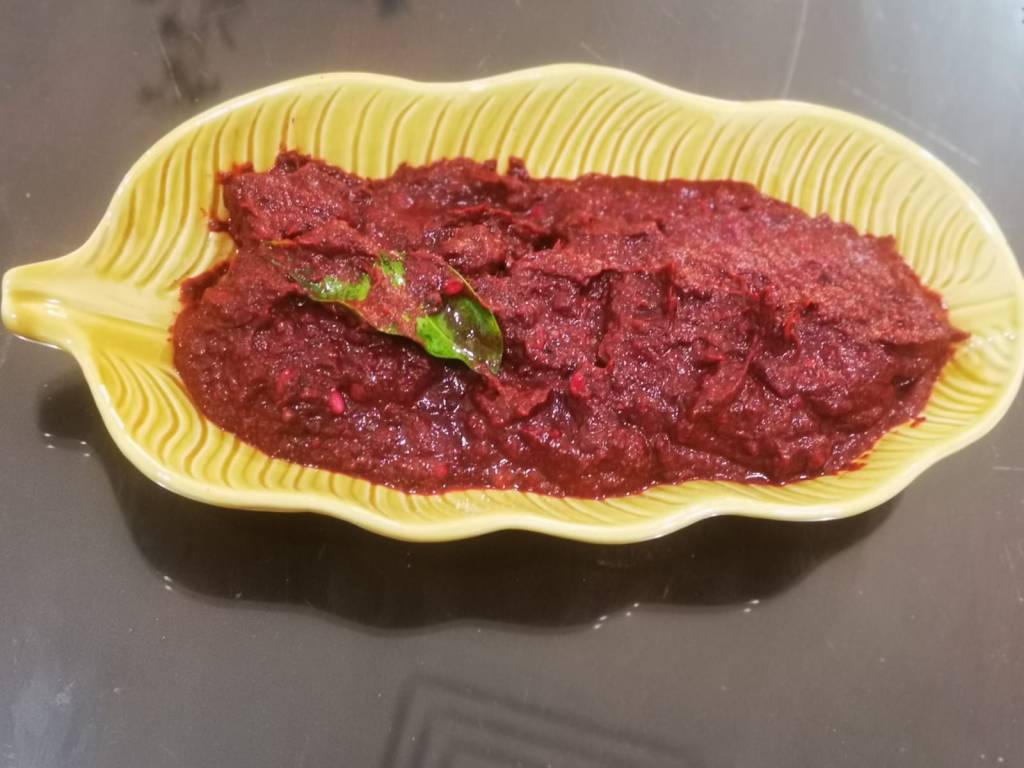
This recipe does not include dal in it. Masiyal is usually eaten with rice and ghee. A healthy nutritious recipe full of goodness…..
Ingredients:
Red Palak – 1 bunch
Whole Red chillies – 2
Tomato – 1 small chopped
Tamarind – a small ball or piece
Onions – 1 big chopped
Garlic pods – 3 pieces chopped
Seasonings:
Mustard – 1 tsp
Udad dal – 1/2 tsp
Curry leaf – 1 sprig
Asafoetida – a pinch
Preparation:
Clean the palak leaves, wash them well and pass it through a colander and let the water drain. Chop the palak fine.
Heat oil in a kadai. Add the red chillies and garlic chopped and saute well. Add chopped onions and tomato. After it is sauteed, add the chopped palak and the tamarind. Saute it again and close it with a lid and let it cook. Add salt. Let it cool a bit.
Take a blender and grind all the above ingredients coarsely. Transfer it to a serving bowl and add the seasonings to it.
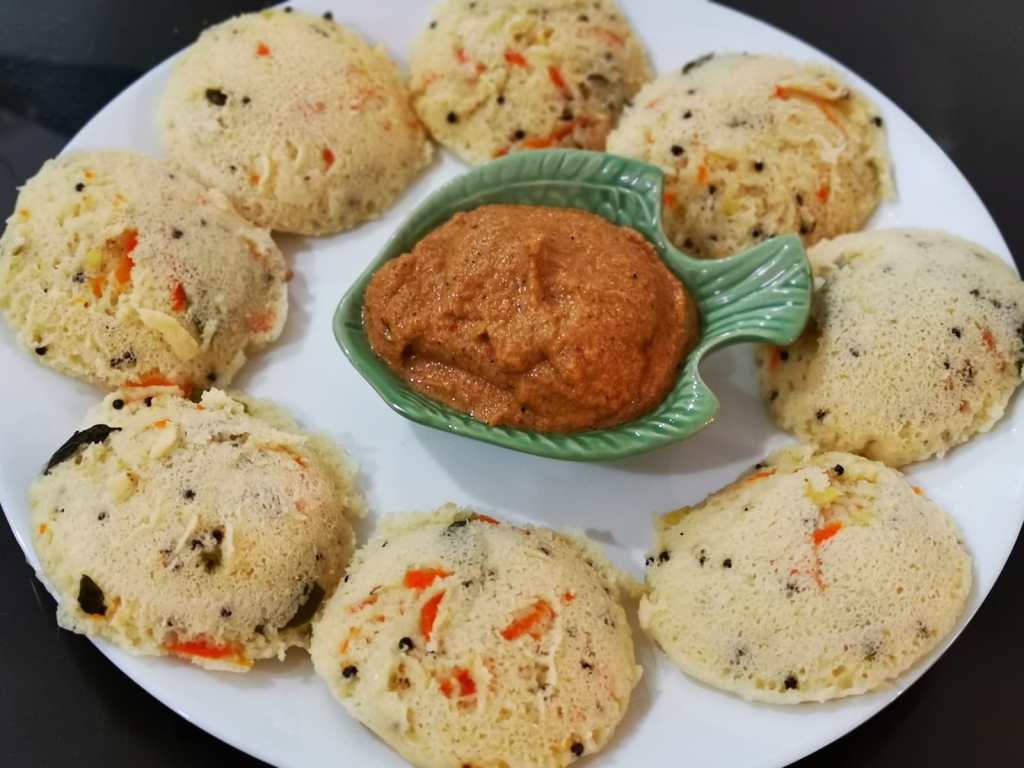
Healthy version of idlis for those who avoid rice. Diabetic friendly , this batter does not call for rice in the recipe.
My first recipe from the idli repetoire…….
Ingredients:
Moong dal – 2 cups
Udad dal – 1/2 cup
Grated carrots – 1/2 cup
Coriander leaves – 1 sprig chopped
Roasted cashews – 10
Eno fruit salt – 1/2 tsp
Seasoning:
Mustard seeds- 1 tsp
Curry leaf – 1 sprig
Preparation:
Soak 2 cups moong dal and 1/2 cup urad for 3 hrs and grind and add salt. Ferment it overnight and add grated carrots, cashewnuts and coriander leaves. Season with mustard, curry leaf and add to the batter. Add 1/2 tsp of eno and pour it into idli moulds and steam for 12 minutes. Add eno just before steaming the batter and do not keep for a long time.
Note: You must add eno for making these idlis. I fermented the batter and added 1/2 tsp of eno.
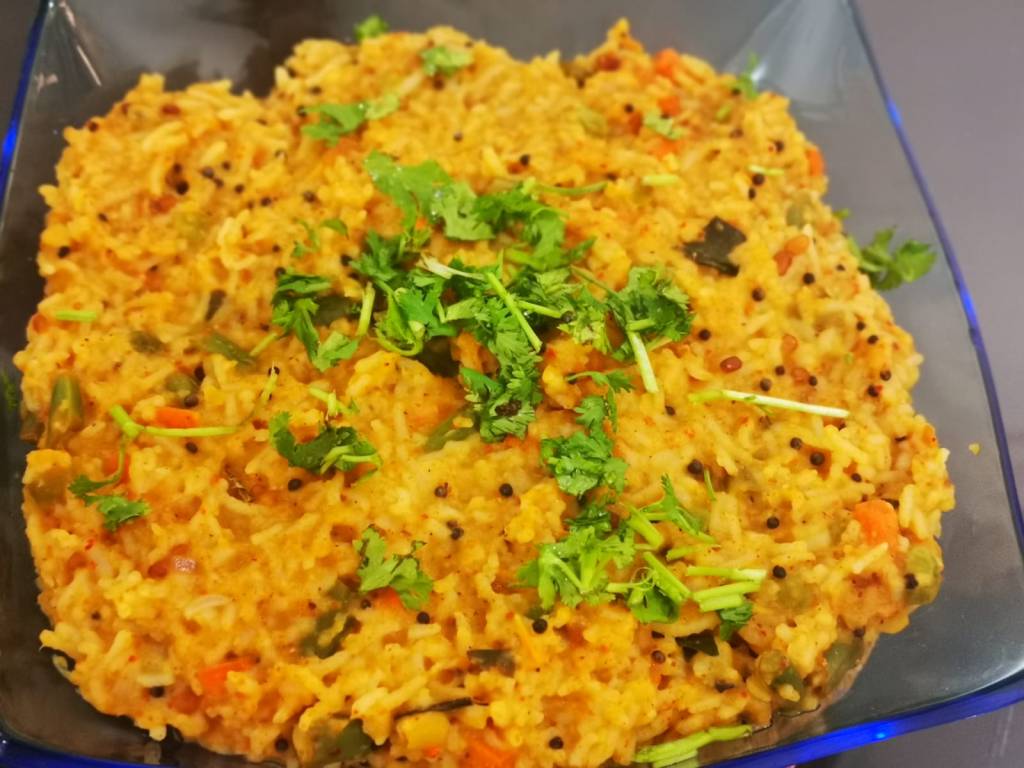
Also known as Bisi Bele Huli Anna, it is a hot lentil rice which is tasty, delicious and a wholesome complete meal with vegetables. It is one of the most popular dishes of Karnataka and my favourite too…..
Ingredients:
Raw rice – 1 cup
Tur dal – 1 cup
Water – 4 1/2 cups
Peas – 6 to 7 pods
Carrot – 1 small
Beans – 4 to 5
Shallots – 5
Potato – 1 small
Ghee – 2 to 3 tablespoon
Tamarind water – 1/4 cup
Bisi bela powder – 4 tablespoons
Jaggery – 1/4 tablespoon
Cashews – 10 – 12 pieces
Salt to taste
Seasoning:
Red chillies – 1
Curry leaves – 1 sprig
Mustard seeds – 1tsp
Urad dal – 1/2 tsp
Home made powder
Oil – 1 tsp
Coriander seeds – 3 tsp
Urad dal – 2 tsp
Bengal gram/Channa Dal – 1 tsp
Cinnamon – 2 inch stick
Cloves – 2
Dry red chillies – 7 or 8
Khus khus – 1/2 tsp
Jeera – 1/4 tsp
Pepper – 1/4 tsp
Dry coconut (Copra) – 1 or coconut – 1/2
Instructions:
Heat 1 tsp of oil and saute coriander seeds, jeera, pepper bengal gram dal, urad dal, fenugreek seeds, cardamom, cinnamon, cloves and red chillies.
Saute until dal starts to change color.
Add khus khus and saute for few seconds on low heat.
Add the dry coconut and saute for few minutes on low heat, stirring continuously. Or if coconut is used, it is to be roasted slightly and then powdered alongwith the other ingredients.
Turn off the heat and leave it to cool and powder it coarsely.
Preparation:
Wash rice and dal first and cook it in pressure cooker with water for 2 whistles and keep it on low flame for 5 to 6 minuts. Open the cooker after it is cooled, mash it a little and close and keep it aside, once the dal is cooked.
Heat 1 tsp ghee. Add shallots, beans cut into 1/4 inch pieces, peas and carrot sliced small and saute for some time. When it is cooked, add tamarind water and jaggery powder.
Let it boil until raw smell leaves. Add bisi bele bath powder (I use home made powder). Let it boil for 2 minutes. And then add the mashed rice and dal and stir well.
Heat a tbsp of ghee and fry cashews until golden, remove. In the same kadai, add the seasonings listed under ‘seasoning’ and let it splutter.Add the seasonings also to the rice and dal. Mix well and serve hot with a tsp of ghee. Garnish with coriander leaves.
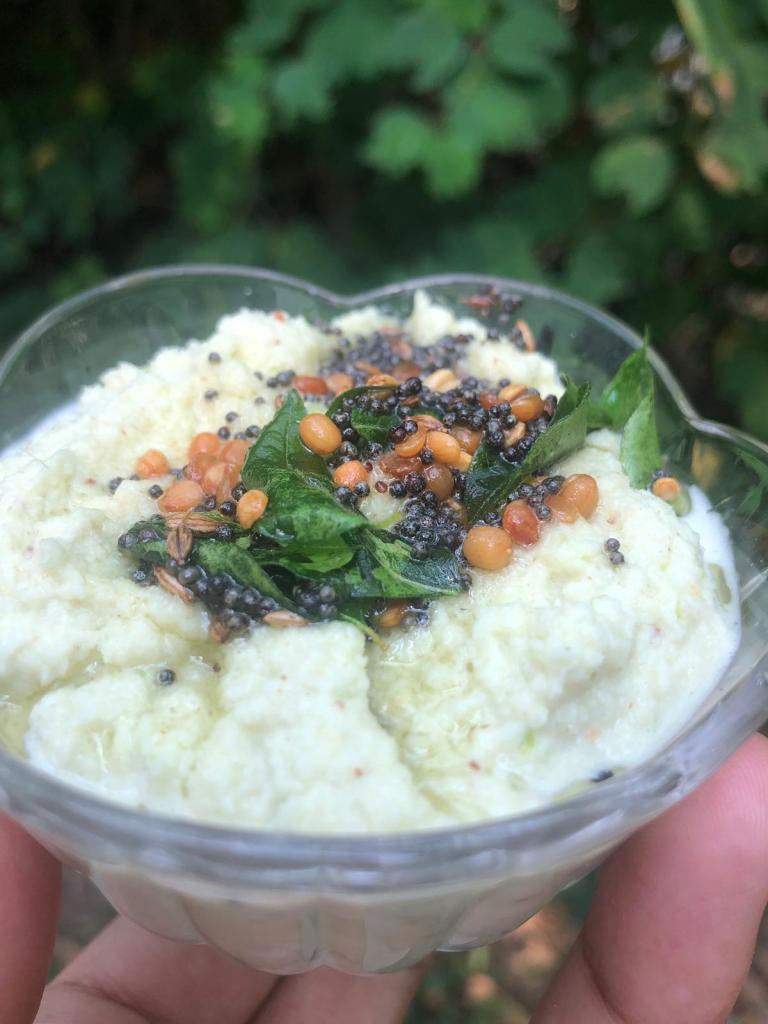
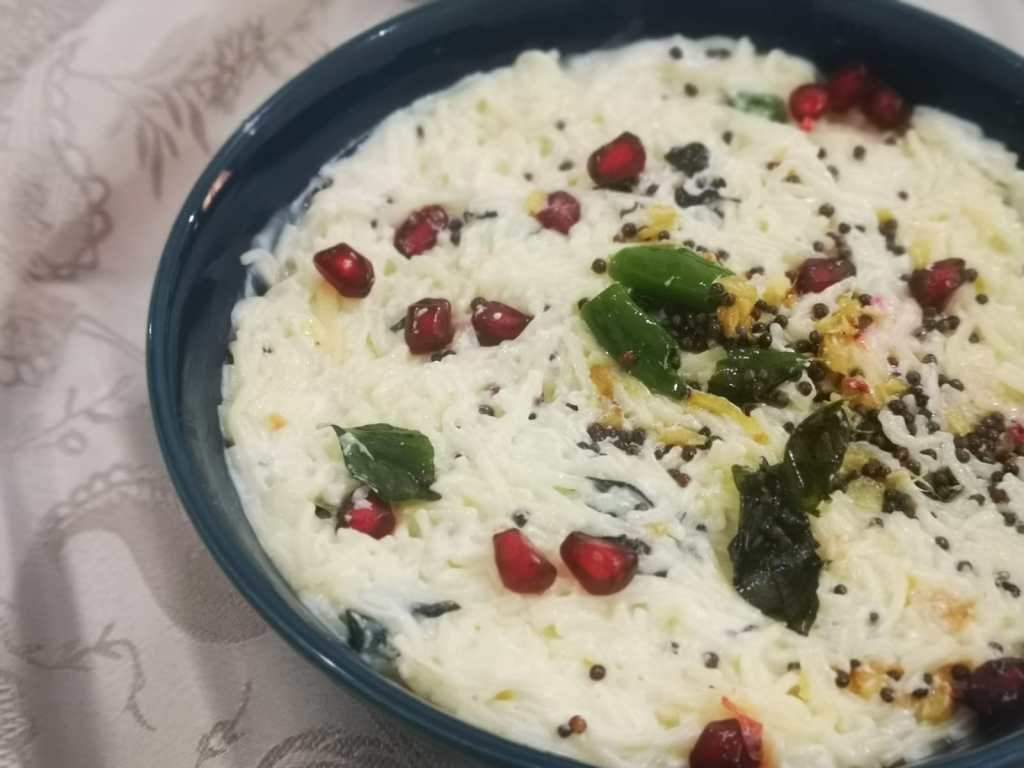
A South Indian meal is never complete without curd and rice at the end. Why not try a little variation and use vermicelli, also known as semiya instead of rice. It tastes great chilled and can be paired with any pickle or subji.
Ingredients:
Vermicelli – 1 cup
Water – 3 cups
Fresh yogurt – 2 cups
Mustard – 1/2 teaspoon
Udad dal -1/2 teaspoon
Green chillies slit – 2
Curry leaf – 1 sprig
Coriander leaves – 2 sprigs
Asafoetida – a pinch
Ginger finely chopped – 1/2 inch piece
Salt to taste
Preparation:
Boil vermicelli until cooked with water and little salt. Drain off the excess water and transfer it to a sieve. Pour cold water immediately so that it doesnt become too mushy. Add enough salt and yogurt to it.
Heat oil in a kadai and add mustard, udad dal, curry leaves, asafoetida and ginger to it. Put off the flame and add it to the vermicelli. Mix wel and serve . Garnish it with coriander leaves and pomegranate seeds.
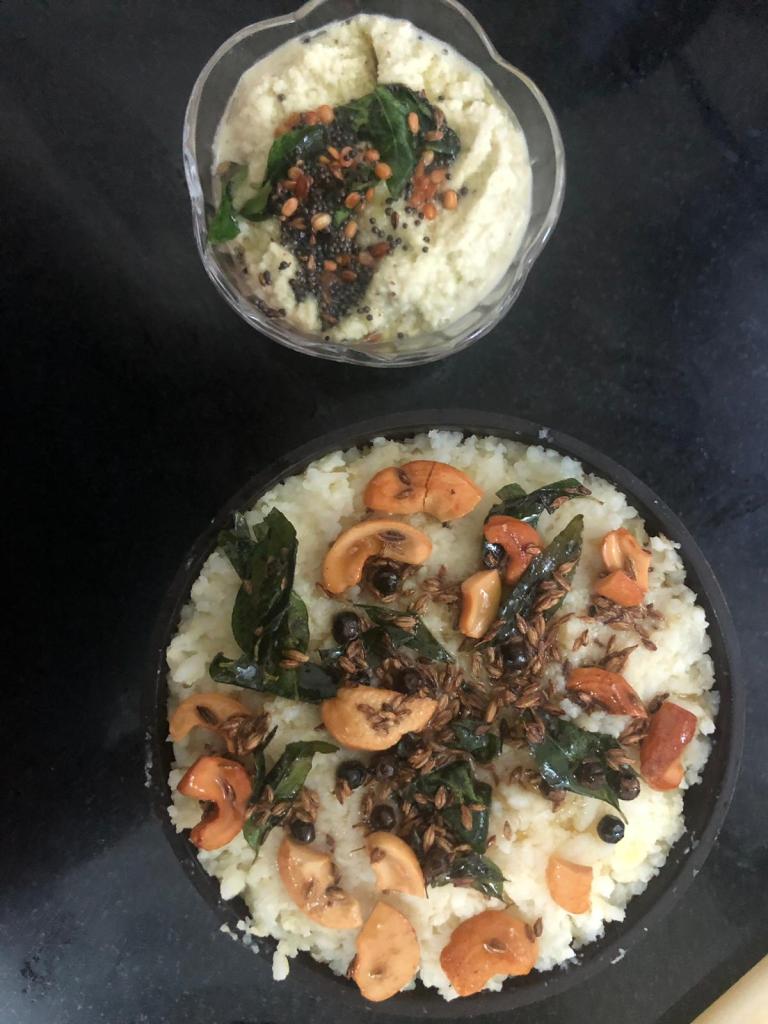
A staple, healthy and nutritious breakfast from South India which is usually served with coconut chutney and sambar. It is my mom’s favourite breakfast alongwith with a cup of South Indian filter coffee.
Ingredients:
Raw Rice – 1 cup
Yellow moong dal – 1/2 cup
Water – 4 cups
Salt to taste
Seasonings:
Ginger – 1 inch piece grated
Black pepper corn – 3/4 tbsp whole
Cumin seeds – 3 tsp
Cashew nuts –2 tbsp broken
Asafoetida – 1/2 tsp
Curry leaves – 2 sprig
Ghee or clarified butter – 3 tbsp
Oil – 1 tbsp
Preparation:
Wash rice well and add it to the pressure cooker. Add salt, water and the moong dal, mix well and pressure cook for 4 to 5 whistles.
Heat a pan with ghee and oil. Add jeera and pepper corns followed by other seasonings.
Open the cooker lid and check the consistency of the rice between your fingers whether its soft and easily mashable.
Pour the seasoning to the pressure cooker and using a spatula mix vigorously distributing the seasoning evenly.
Serve this ven pongal very hot along with coconut chutney, sambar and filter coffee for a sumptuous breakfast.
You can drizzle more ghee on top of ven pongal before serving, in case you like it.
Fried doughnut shaped dumplings made out of lentils. It is usually served as a snack alongwith tea. It is an India street food and is part of many festive menus. This recipe is slightly different than the usual dahi vadas or thayir vadas.
Ingredients
Split Urad dal-1 cup
Besan or Gram flour – 3 tbsp
Raw Rice – 2 tbsp
Curds – 1/2 cup
Green chillies – 2
Onions – 1 big chopped fine
Whole pepper corns – 10
Salt – as needed
Black salt- as required
Spices- Chat masala, kashmiri red chilli powder, jeera powder
Seasoning:
Mustard seeds – 1 tsp
Green Chillies – 2
Ginger – 1 inch piece chopped
Curry leaf – 1 sprig
Asafoetida – a pinch
Cashews and Ompudi (Sev) for garnish
Preparation:
Wash and soak dal for 5 hours. Grind it to a smooth batter in a mixer or grinder. Sprinkle very little water. Continue to grind until the batter looks fluffy and white. Add only a tbsp of cold water again, if required to grind. Add required salt. To check if the batter is ground to the correct consistency, drop 1/2 tsp of batter into the water. It should float on top of the water. Now, transfer it to a bowl. Add chopped onions, green chillies cut and whole pepper (you can skip if you do not like it). Lastly, add besan to the ground udad dal batter and mix well.
Heat oil in a kadai. Dip your fingers in water to moisten your fingers. Take small portions of the batter and shape it like a ball and make a hole in the center. Gently slide the vadas in the hot oil and deep fry the vadas. Once the oil is really hot, reduce the heat to medium and fry the vadas. Take it out when both the sides turn golden brown.
When the vadas becomes slightly cold, drop them in a bowl of warm water once, dip it and squeeze it well .Beat the curd well add little salt to it and add the seasonings and keep it ready. Now pour the beaten curd mixture on each of the vadas which have been arranged in a serving plate or bowl. Sprinkle Chat, jeera powder, red chilli powder, black salt. Garnish with sev and coriander leaves. Enjoy!
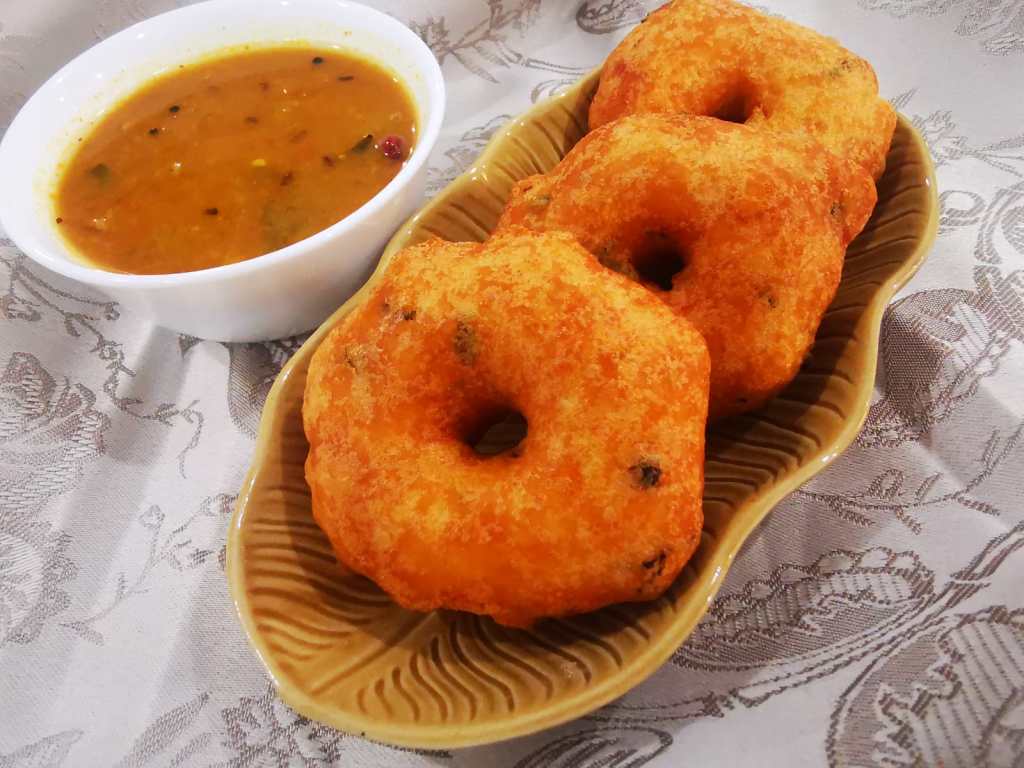
An authentic South Indian breakfast item ! No celebratory breakfast is complete without the awesome combination of idli, vada, pongal. It is a South Indian fritter, light and fluffy, shaped like a donut and made from udad dal lentils. Tastes good with sambar and coconut chutney.
Ingredients:
Whole white urad dal – 1 cup
Rice flour – 1 tbsp
Oil to deep fry
Onion – 1 big
Green chillies – 2 (chopped into pieces)
Curry leaves – 1 sprig (chopped)
Coriander leaves – 2 sprigs (chopped)
Whole Peppercorns – 1/2 tsp (optional)
Ginger chopped – 1 tsp
Salt – 1/2 tsp or as required
Preparation:
Wash urad dal thoroughly and soak for two hours.
Drain and grind urad dal using very less water, in a wet grinder. If you are using mixie, use ice water for grinding to avoid heat generation. Grind as a thick fluffy batter by sprinkling very little water only when needed. Keep adding just 1/2 tbsp of water at a time to grind. To check if it has the right consistency, take a bowl of water. Drop 1/2 tsp of the ground batter into the water. The batter should float on the water and not sink. If it floats, you can remove the batter and transfer to a bowl.
Add chopped onions, ginger, peppercorns, chopped green chillies, chopped curry leaves, coriander leaves, salt and add it to the batter.
Heat enough oil to deep fry the vadas.
Check the temperature of the oil by dropping a small pinch of batter. If the batter rises immediately to the top, the temperature of the kadai is right. Now, reduce the temperature to medium flame and start dropping vadas carefully.
Take some water in a bowl, dip your fingers. Scoop out small ball size of vada batter with your wet fingers, flatten slightly, and make a hole and gently slid it into the hot oil. When both the sides turn golden brown, take the vadas out of the oil. You can fry 3 to 4 vadas at a time depending on the amount of oil. Serve with coconut chutney or sambar.
Notes: If the vada batter is not thick and is a bit watery, add some more rice flour to it. Do not soak the udad dal for more than 2 hours.
A rich dessert from the South Indian State of Kerala, this payasam is made specially on the occasion of the festival “Onam”. This payasam prepared with jaggery and coconut milk imparts a lot of flavour and colour which is simply yum…….Usually this dessert is prepared with rice ada (dried ground rice paste cut into pieces) or with moong dal. I have made this with sabudana and rice ada, which I prefer to moong dal.
Saute coconut bit pieces followed by nuts.
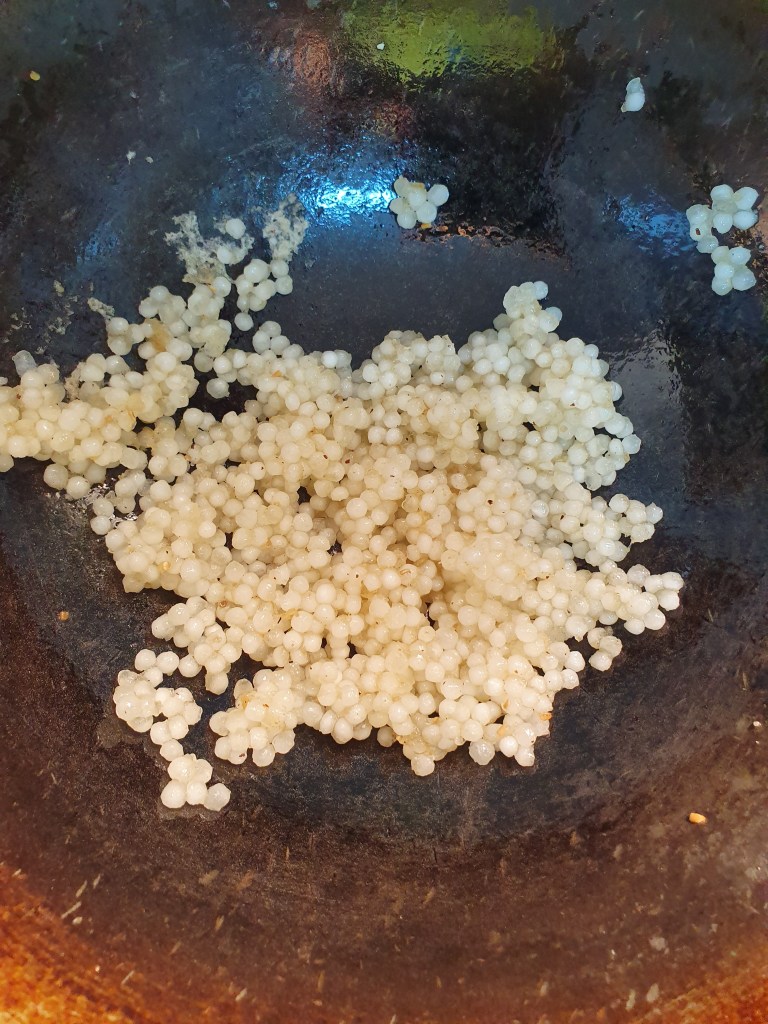
Saute the sago follwed by rice ada/broken wheat.
Add the coconut milk to the sago and rice ada/broken wheat
Add the melted jaggery
Ingredients:
Rice ada or samba godhuma (broken samba wheat/dalia) – 1/3 cup
Sabudana – 1/3 cup
Ghee – 1 tbsp
Jaggery – 3/4 cup
Water – 1 cup + 2/3 cup to melt jaggery
Cardamom powder – 1/2 tsp
Coconut milk – 1 1/4 cup thick milk or 3/4 cup cup coconut milk powder
Cashews fried in ghee – 10
Coconut pieces or bits fried in oil – 15 pieces
Preparation:
Soak the sago in 1/4 cup of water for 2 -3 hours.
In a heavy bottomed kadai or pan, add ghee. When it is hot, add the coconut pieces and fry until golden brown in colour. Remove and keep it aside. Add the nuts and fry it until it turns golden in colour. Keep it aside.
Add 1 tsp of ghee again and add the sabudana and saute a bit. Then add the rice ada and saute. If using dalia/wheat, saute it in ghee separately and cook in cooker with 1 1/4 cup of water for 2 whistle on medium flame or for 8-10 minutes. Make sure that it does not burn. ). Add 1 cup of water to the sabudana and rice ada. ( If using fresh coconut milk, instead of adding 1 cups of water, add 1/2 cup of water and 1/2 cup of thin coconut milk). If using coconut milk powder, add 1/2 cup of coconut milk powder to 1 cup of water ) .
Meanwhile, heat another pan, powder the jaggery and add it to the pan alongwith 2/3 cup water and melt it. Stir well until the jaggery thickens and starts bubbling. Pass it through a sieve and add it to the kadai in which rice ada and sabudana has been boiled. (If using dalia or broken wheat, add the cooked wheat to the pan/kadai). Add the thick coconut milk on slow fire and stir for 3 minutes. Add cardamom powder and stir well. Add the ghee fried cashews and roasted coconut chunks/bits to it and serve.







 Meal Haven