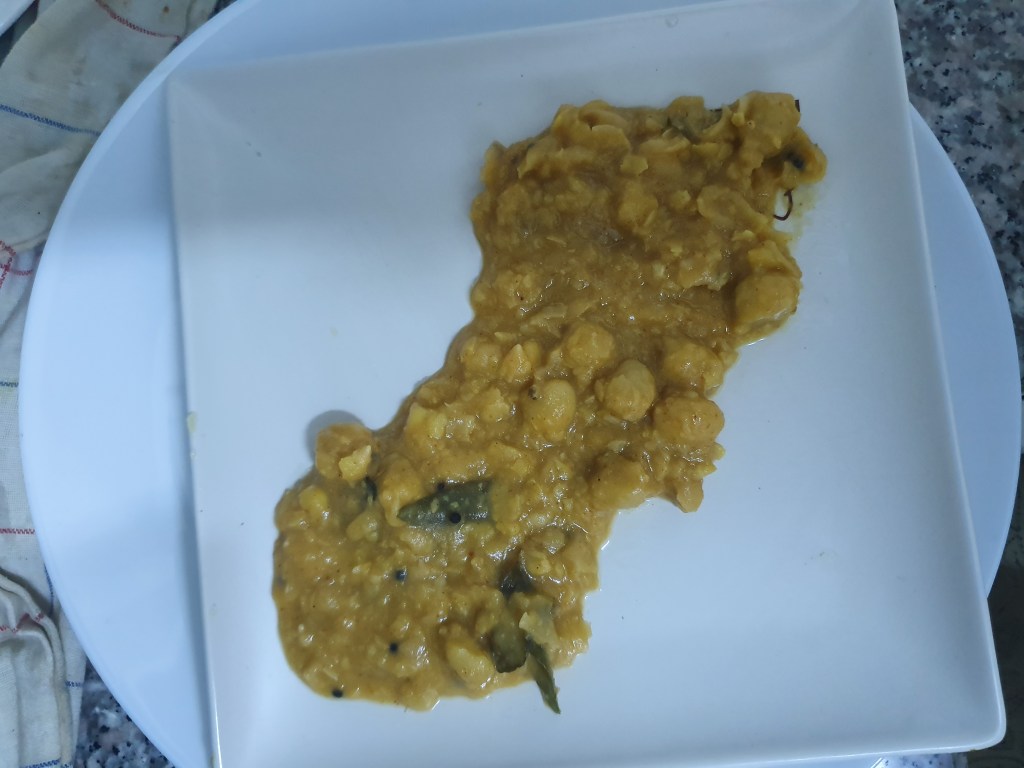
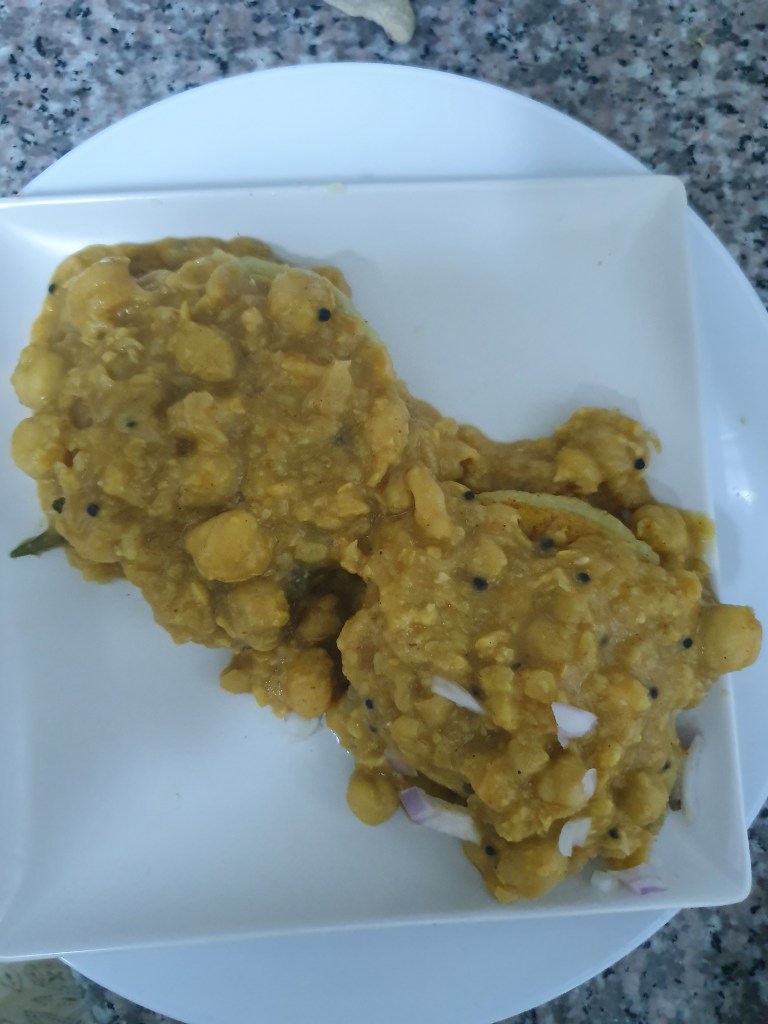
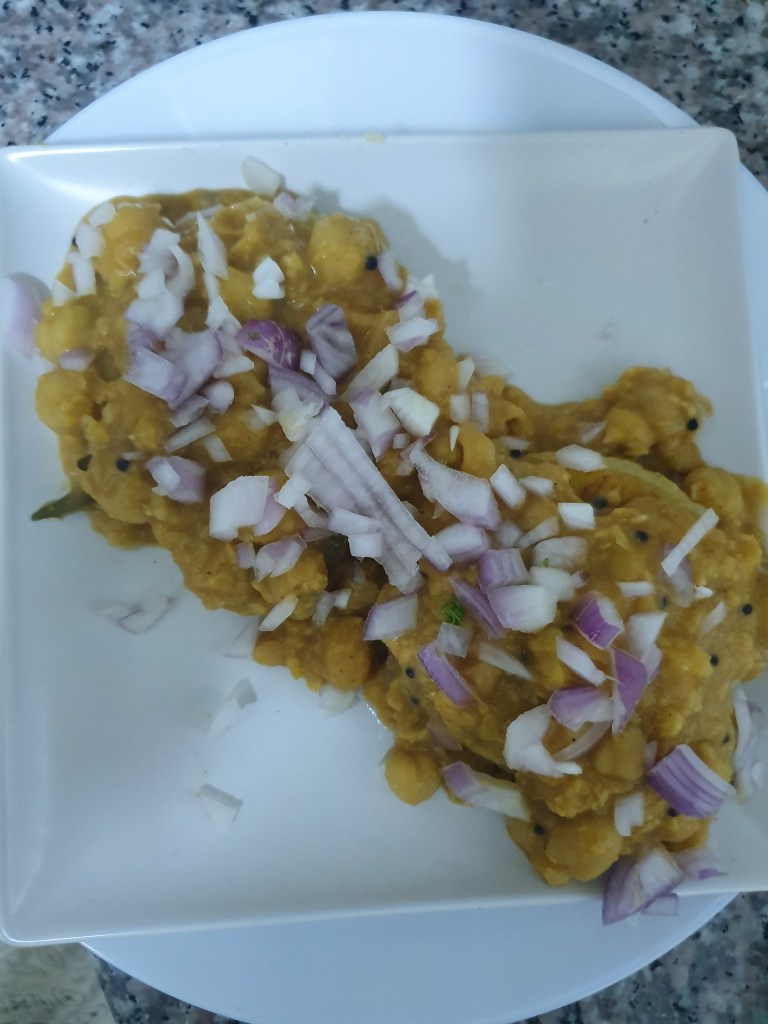
South Indian Poori and Aloo (Potatoes)

A Popular Indian deep fried and puffed bread made from whole wheat flour or all purpose flour. Pooris is a very versatile dish as it can be paired with savoury curries like potato curry or chicken curry or with sweet dishes like Maharshtrian aamras or Gujarati suji halwa.

Makes 8-10 medium sized puris. (Check the notes below to make crispy puris).
Ingredients:

For Pooris

Whole wheat flour or all purpose flour – 2 cups

Hot oil – 2 tsp

Water – 1/2 cup

Semolina/Rava – 3 tbsp

Salt – to taste

Oil for deep frying

For Potato baaji or curry:

Potatoes – 5 medium

Garlic – 4- 5 sliced (optional)

Onion – 1 large (sliced or chopped)

Tomato – 1 medium

Ginger chopped – 3/4 tsp

Curry leaves – 1 1/2 sprigs

Chana dal/Bengal gram dal – 3/4 tbsp

Urad dal – 3/4 tbsp

Green chillie – 3 or 4 slit

Coriander leaves – 2 tbsp chopped

Water – 1 cup

Oil – 1 1/2 tbsp

Mustard – 1/2 tsp

Turmeric powder – 1/2 tsp

Preparation of Potato masala

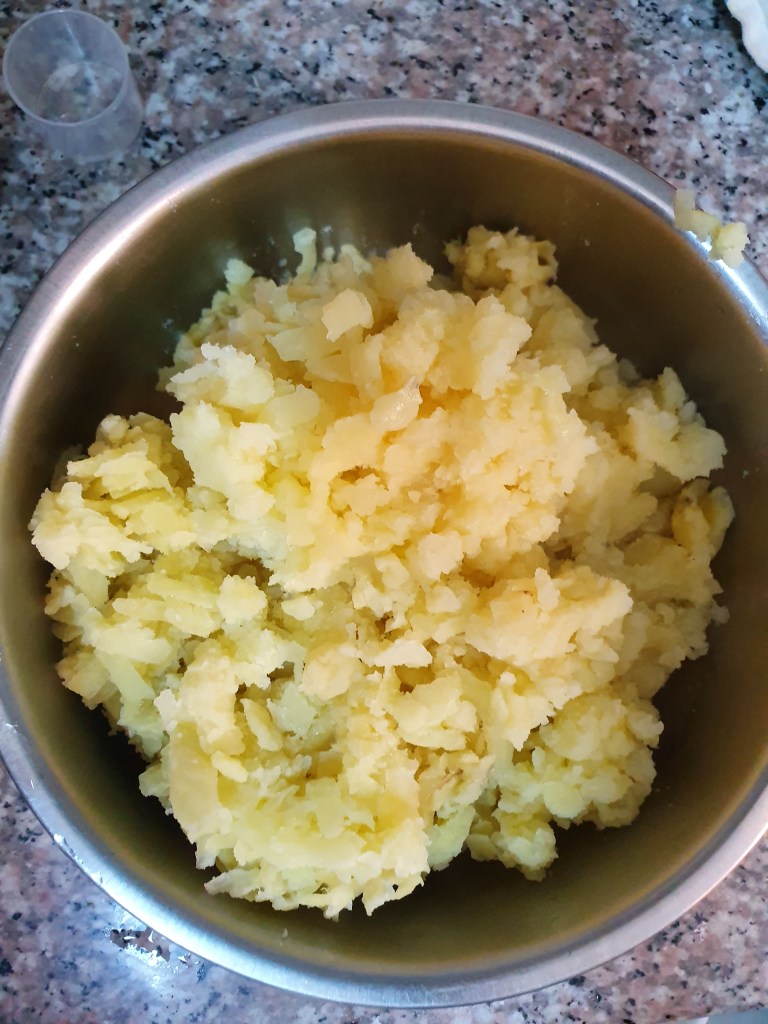
Wash potatoes and cut them into 4 pieces. Pressure cook them in a cooker for 2 whistles or cook them in a pot until they are soft.

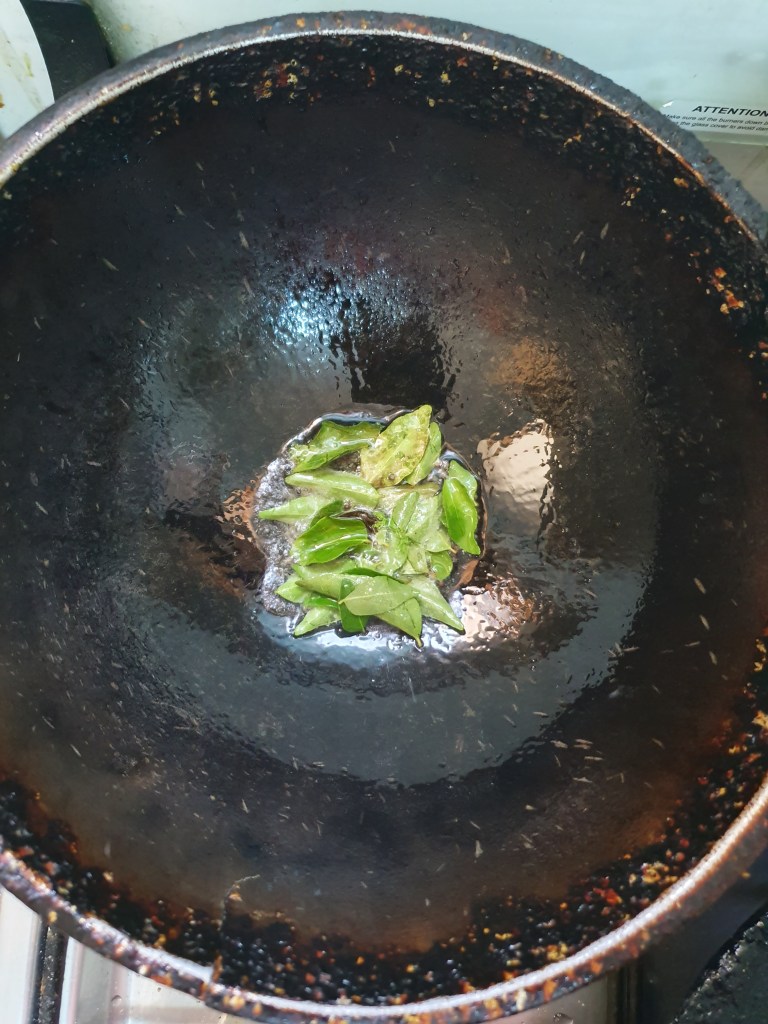
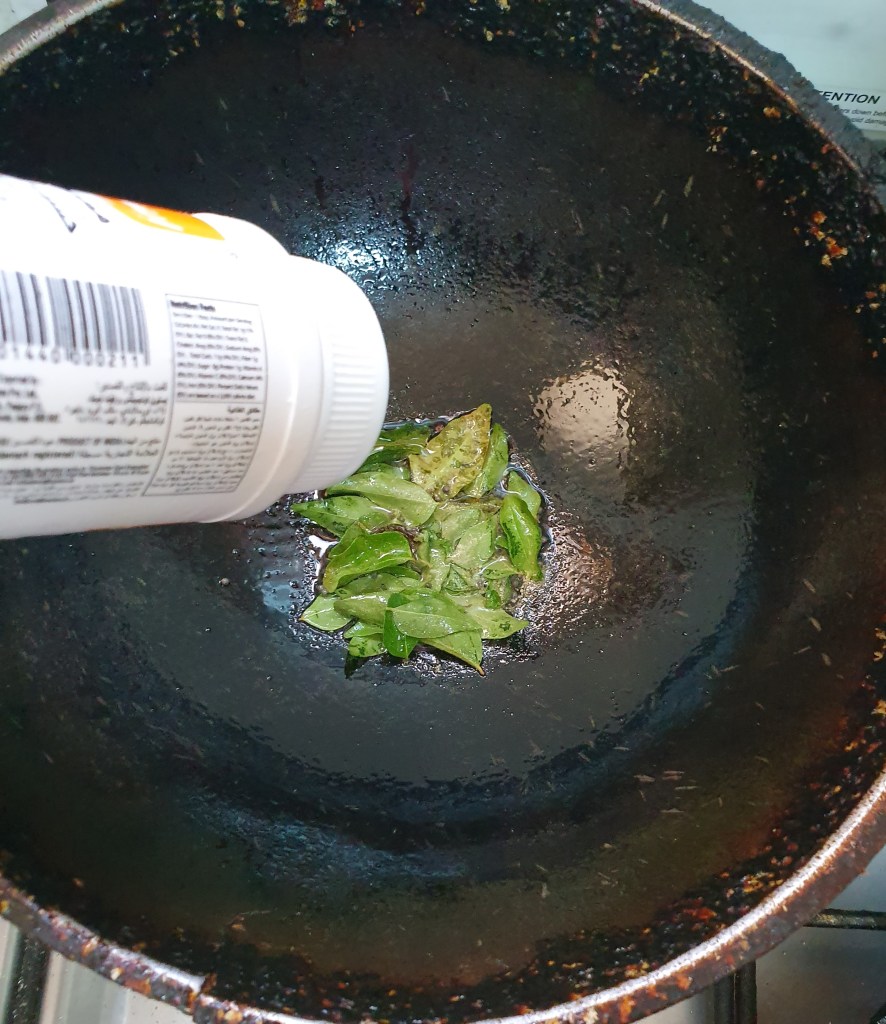
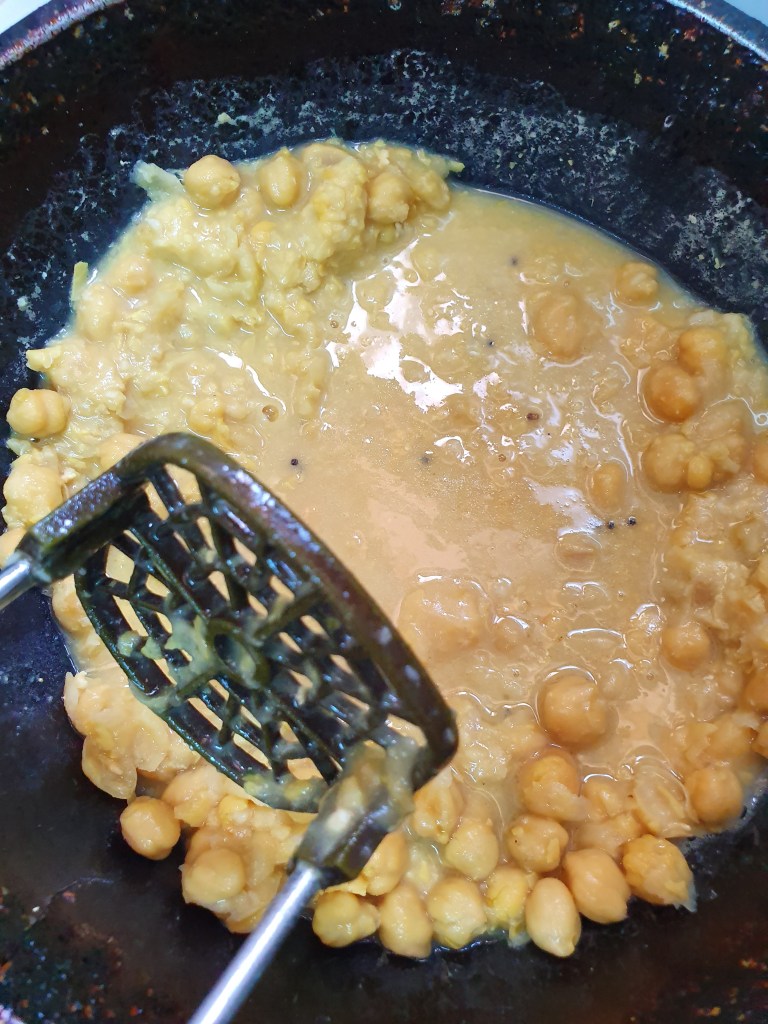
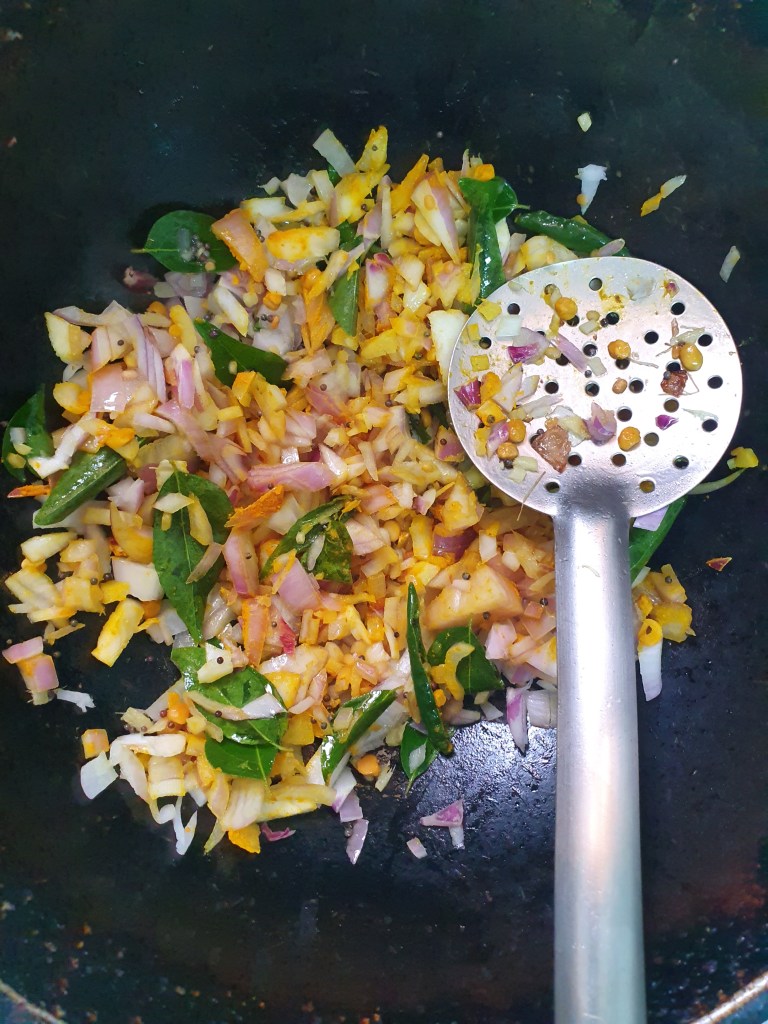
Heat oil in a pan. Add mustard and when it starts to sizzle, add the chana dal and udad dal. Then add the curry leaves, green chillies and ginger and saute them for a minute. Next, add the chopped or sliced onions and turmeric powder and saute until it becomes translucent. Add the tomatoes and fry until it becomes mushy. Now, mash the potatoes well and add it to the pan. Check salt and add water. Cover and let it simmer for 3-4 minutes on medium flame.

Mix well and when it beome slightly thick, sprinkle coriander leaves. Serve it with hot puris.

Preparation of Pooris:

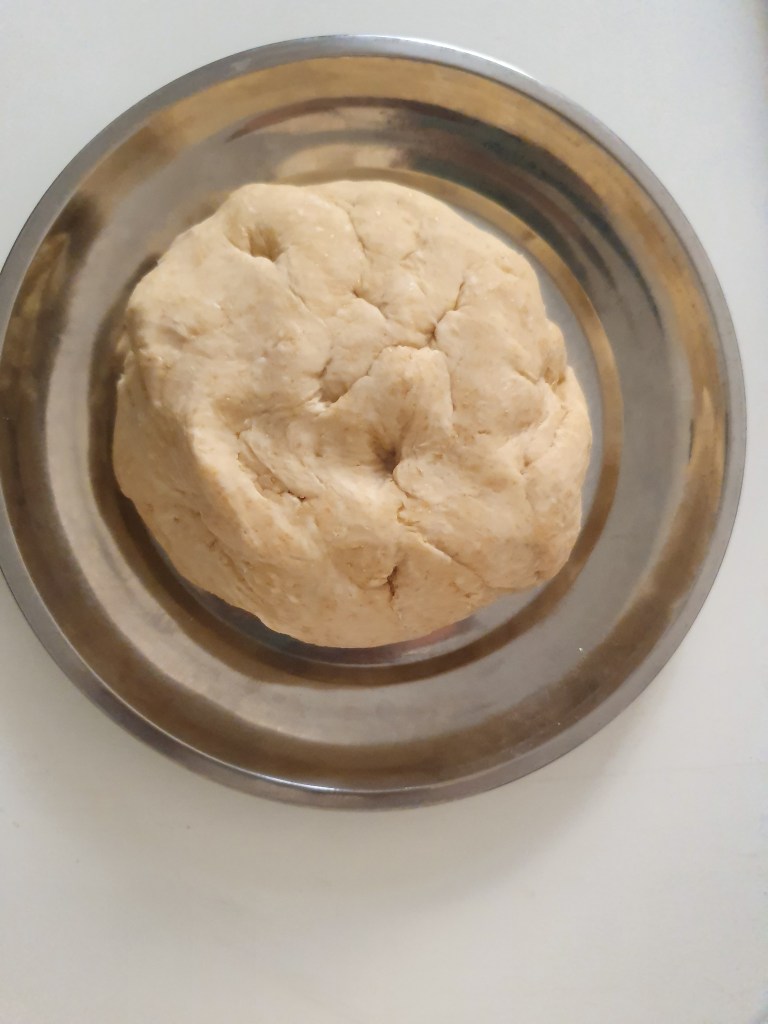
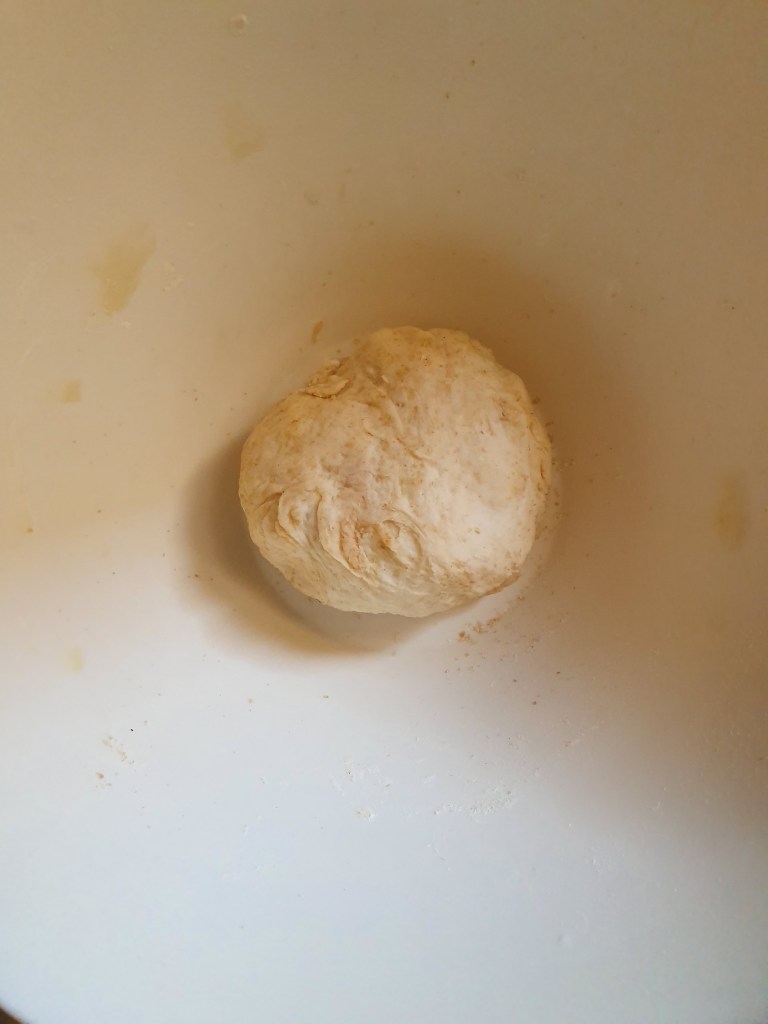
Take the flour in a bowl and add salt. Add a tsp of very hot oil to it and semolina. Mix well with your fingertips and adding little water at a time, knead it into a smooth and tight dough. It should not be soft like chapathi or roti dough).

Cover and rest the dough for 10 minutes. After the resting time, knead the dough once again.

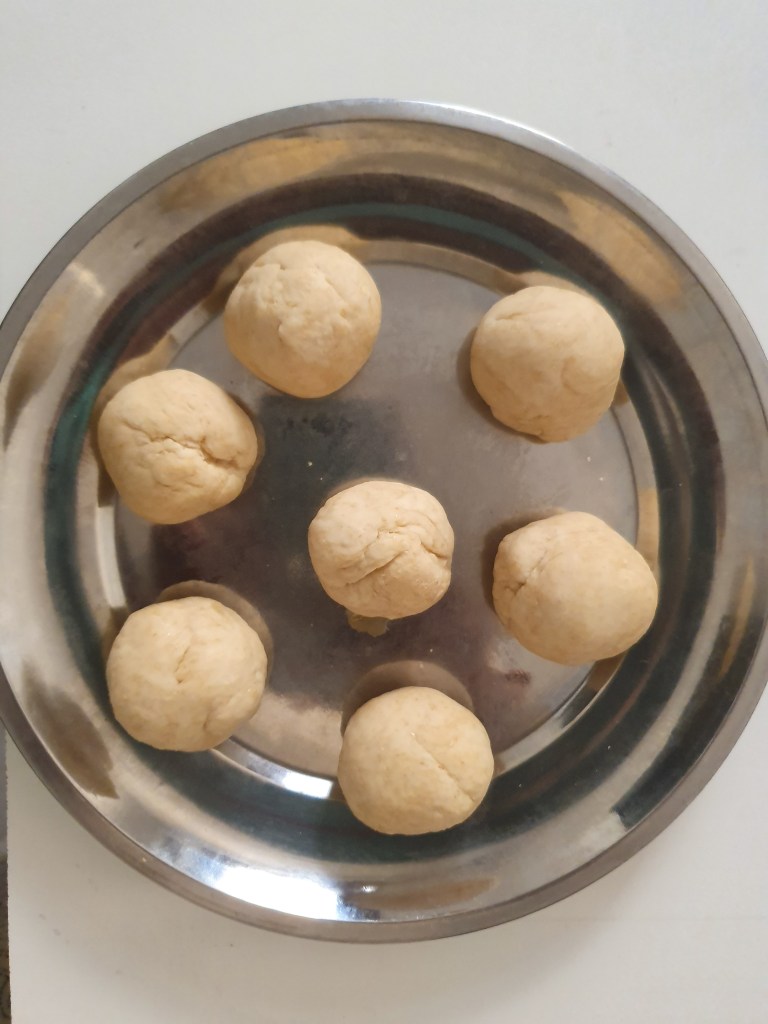
Divide it into 10 equal sized balls. Make smooth balls out of it. Roll out these balls into 2-3 inch diameter circles. It should not be too thin or thick as it will not puff up.

Roll out a few pooris and place them on a plate. Cover it with a kitchen napkin.

Heat oil in a pan. When it becomes hot, reduce the flame to medium and gently slide the rolled out poori into the hot oil, one at a time. Using a slotted spoon, slightly nudge the pooris while it is frying so that it will puff up well. Once it becomes golden, flip to the other side and fry it.

Remove using the slotted spoon and place it on a paper towel lined serving plate.

Notes/Tips for crispy and fluffy puris:

1. The semolina added to the flour makes the pooris crispy and stays puffed up for more time.

2. Hot oil is added to the dough to make it crispier.

3. The dough should not be soft but it should be knead firm and tight in order for it to puff up well.

Sev Dahi Puri

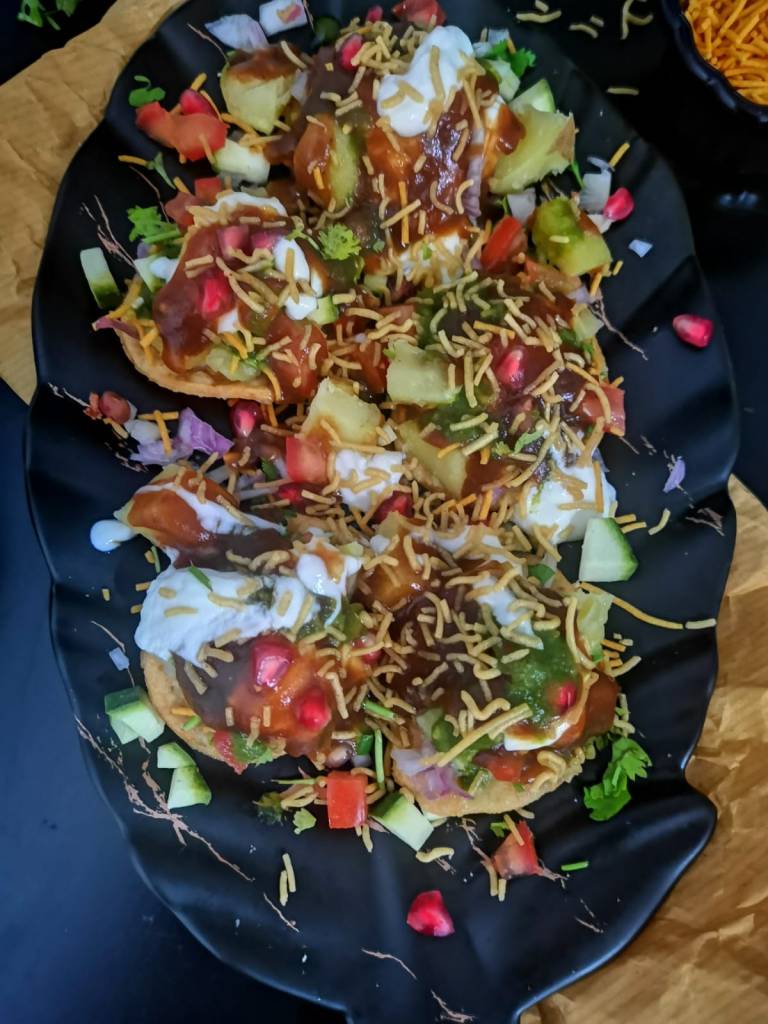
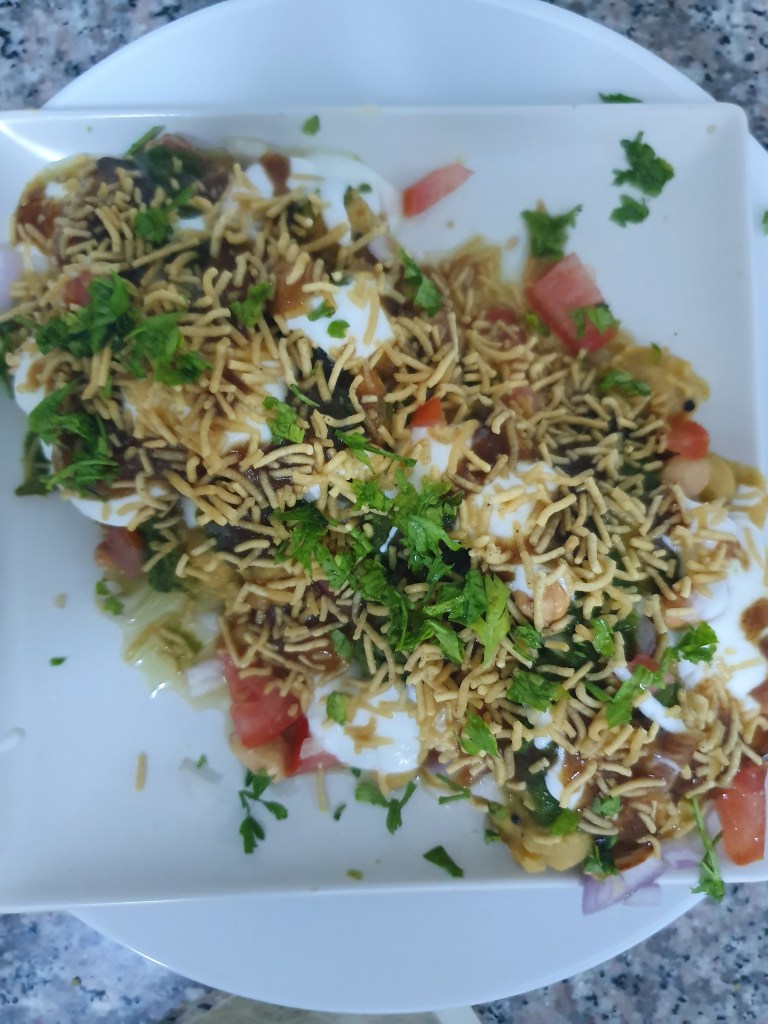
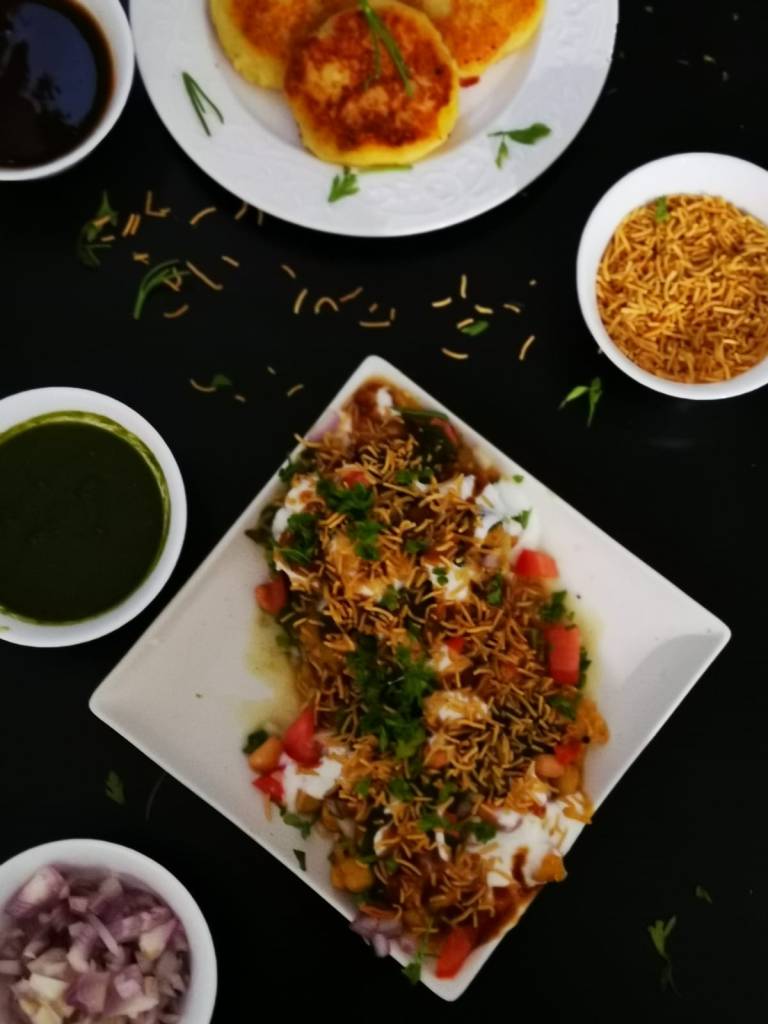
Another popular street food of Mumbai is the Sev Puri. In my previous posts, I had mentioned 2 other recipes of popular street food in Mumbai, Ragda pattice and Paani puri. Served with a sweet and tangy sauce with crispy puris (whole wheat crackers) topped with potatoes, tomatoes, onions, sweet and green chutneys and finished with sev (gram flour savoury), this one is my favourite, any day.

I have some fond memories of my childhood when mom used to make these at home while I was in school and college often, in addition to bhel puris. 30 – 35 years back, when dad was employed in Calicut, no restaurants or street hawkers would sell chats there and mom used to miss those Mumbai chats, being brought up there. So, she ended up making all these at home and we got a taste of the mumbai chaat culture.

I have mentioned the recipe for the sweet chutney, coriander-mint chutney and papdi (flat wheat/all purpose flour crackers) below. The papdis can be made and stored well ahead in an air tight container.

Ingredients: 

Puris flat and crisp (papdi) – 10

Potato medium, boiled, peeled and chopped – 1 big

Onion  – 1 medium, finely diced

Tomato  – 1 medium, finely chopped

Chat masala – 1/2 tsp

 Mint cilantro chutney – 2 tbsp

Yogurt – 8 – 10 tsps

Tamarind Dates chutney – 1/4 cup

Nylon sev thin – 1/2 cup

Cilantro leaves chopped – 2 tbsp

Pomegranate seeds – 2 tbsp (optional)

Preparation:

Assembling the puris

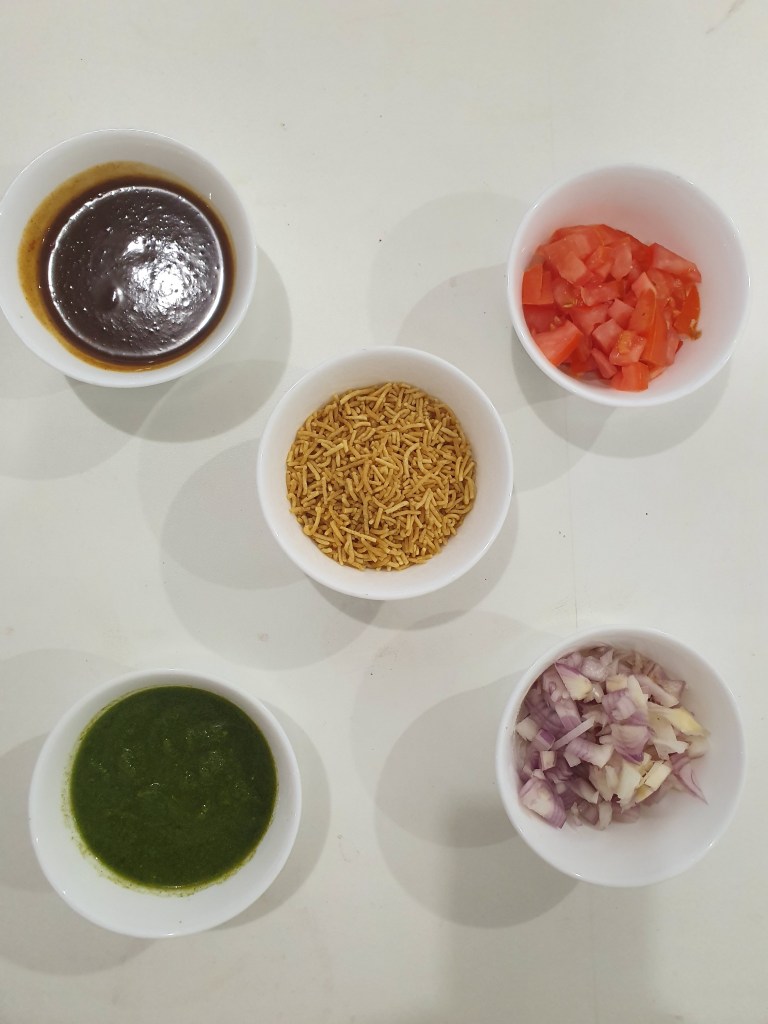
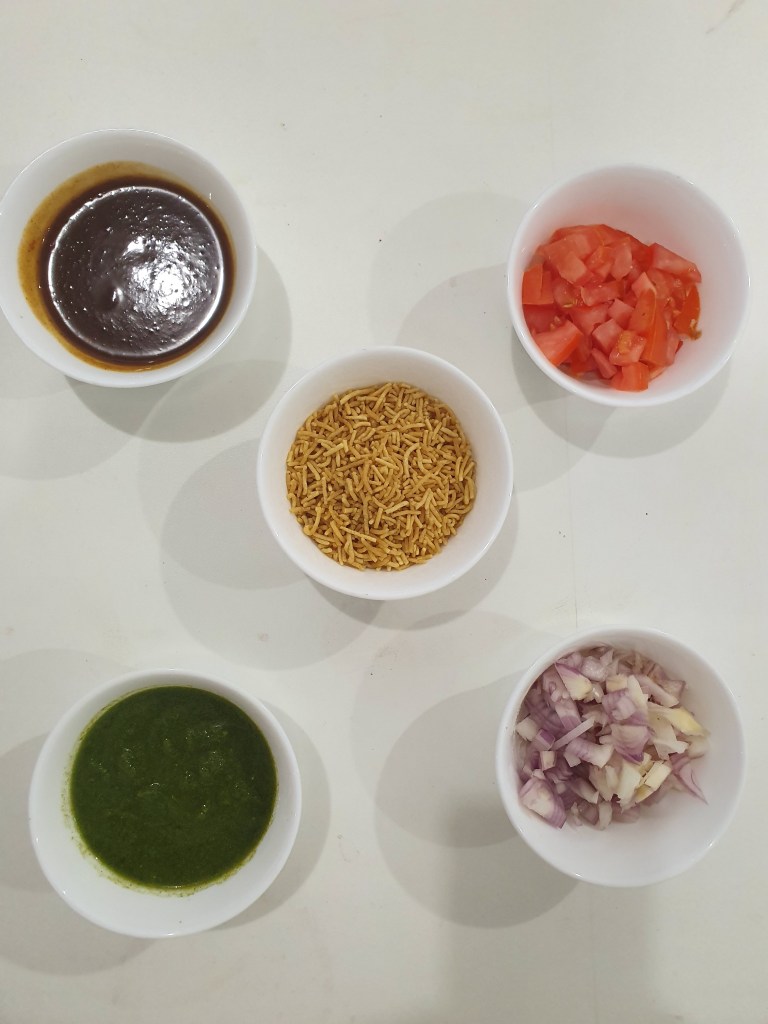
Keep all the ingredients ready before starting to make sev puri. Have boiled potatoes, onion and tomato. Also keep all three chutneys, sev and chaat masala on the counter.

Place 10 puri’s spread out on a plate.

Place 2 to 3 pieces of the chopped boiled potato on each of the puri.

Top with some chopped onions and then with chopped tomato.

Sprinkle a quarter teaspoon chaat masala on top.

Add a tsp of yogurt on each of the puris.

Top with green mint cilantro chutney and then with a teaspoon of tamarind chutney on each puri.

Next, top it with sev on each puri.

Garnish with cilantro leaves and pomegranate seeds.

Serve sev dahi puri immediately.

Green chutney: 

Mint leaves – 2 cups

Coriander leaves – 1 cup

Green chillies – 3 chopped

Salt to taste

Lime juice – 1 tbsp

Ginger – 1/2 inch piece

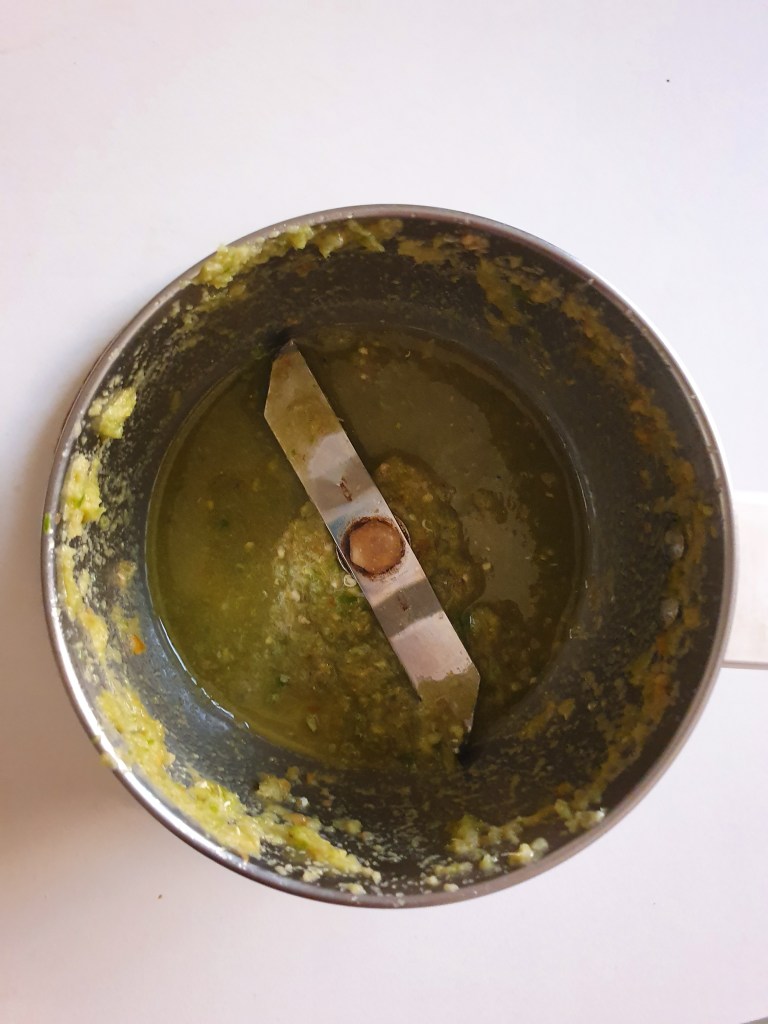
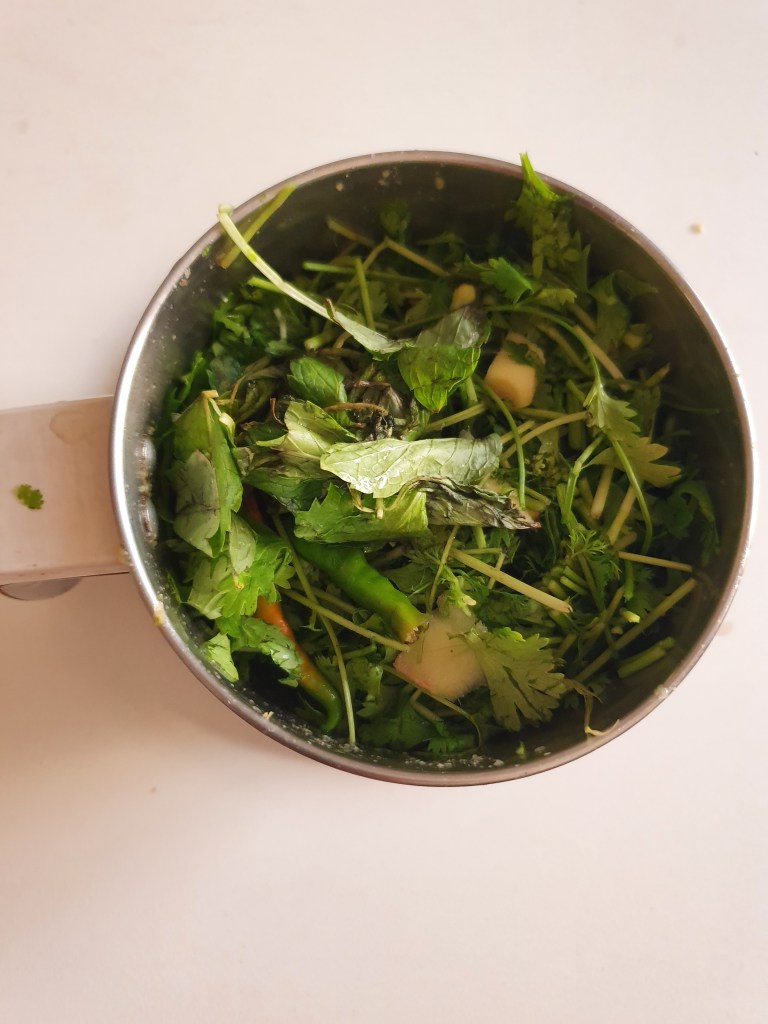
Combine everything in a blender with 1/2 cup of water. Grind it to a smooth paste.

Sweet chutney:

Deseeded dates – 1 cup

Deseeded Tamarind – 1/2 cup tamarind pulp

Roasted cumin seeds powder – 1/2 tsp

Red chillie powder – 1/2 tsp

Black Salt/Rock Salt – 1/4 tsp

Salt to taste

In a bowl, mix tamarind and dates with 2 cups of hot water and soak for for 1 hour. Blend them in a mixie alongwith the water, to a smooth paste. Sieve it and keep it aside.

Heat a pan. Transfer the tamarind-dates pulp to it. Add rock salt, red chillie powder, salt, cumin seeds powder and cook for 2 -3 minutes. Boil once stirring in between. Put off the flame and let it cool. You can store this chutney in the fridge in an air tight container for a month.

Papdis

Whole wheat flour or all purpose flour – 1 cup

Semolina/Rava – 2 tbsp

Hot Oil – 1tbsp

Salt to taste

Combine all the ingredients above and knead into a firm dough, using enough water.

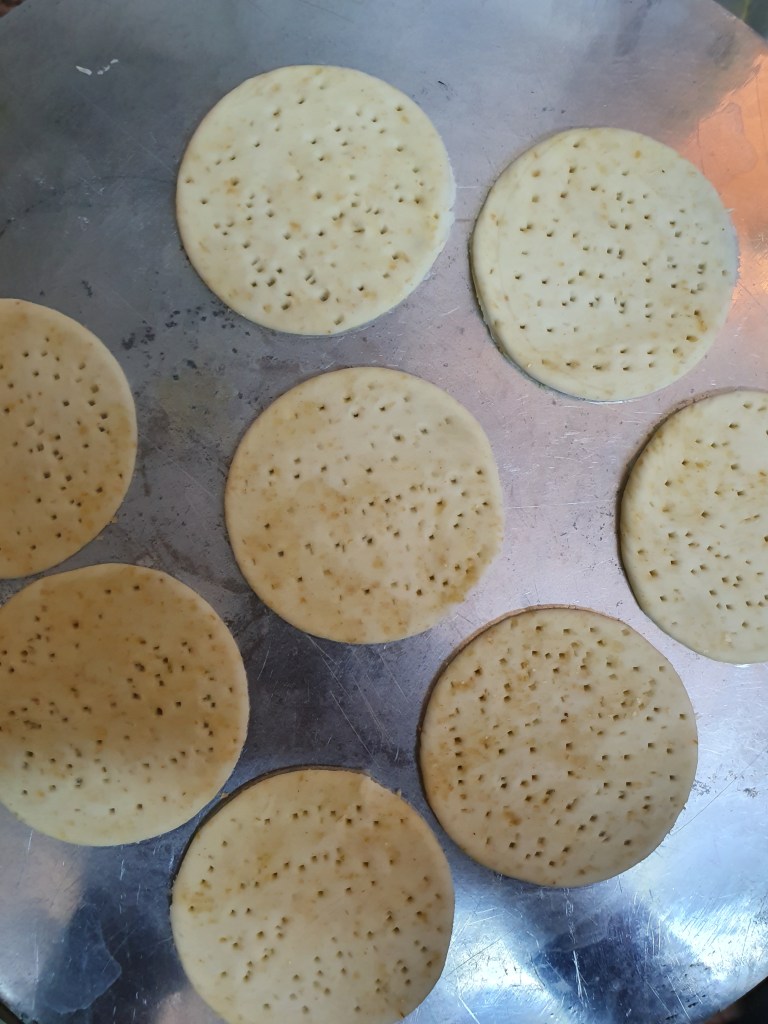
Divide the dough into 6 equal portions. Roll out the dough into 6 to 7 inch diameter circles with 1/2 inch thickness. Using a round shapped cutter, cut the rolled out dough into 6 to 7 (2 inch diameter) circles. Prick the puris using a fork all over so that it doesnt puff up. Keep it aside in a plate and cover it with a wet cloth.

Heat a pan or kadai and heat it. Add oil and when hot, slid in a few puris at a time. Fry them on a medium flame until they are crispy and golden on all sides. Drain on an absorbent paper and store it air tight in a container.

Ragda Pattice/Patties (Potato Patties with White Bean Gravy)

A popular street food of Mumbai loved by people of all ages with potato patties and boiled white lentils. This tongue tickling dish is made up of 2 components, shallow fried crispy potato patties perked with desi spices and spicy ragda. A unique combination of spicy, sweet, tangy, crunchy and crispy textures and flavours.

Makes 8 patties

Ingredients:

For Ragda:

White peas – 1 cup

Mustard Seeds – 1/2 tsp

Asafoetida – a pinch

Curry leaves – 6-7

Green chillie – Ginger paste

Turmeric powder – 1/4 tsp

Chillie powder – 1/2 tsp

Lemon juice – 1 1/2 tsp or Amchur powder – 1/4 tsp

Garam masala – 1/4 tsp

Salt – to taste

Water – 2 1/2 cups

Oil – 3 tsp

For Patties/Pattice:

Potatoes – 3 big boiled

Coriander leaves – 1 tbsp chopped

Corn flour – 2tbsp

Lemon juice

Ginger-Green chillie paste

Salt to taste

Oil for shallow frying – 2 tbsp

Other ingredients for assembling the patties:

Sev – 4 tbsp

Chopped onions – 4 tbsp

Chopped tomatoes – 2 tbsp

Coriander leaves – 2 tbsp

Yogurt – 2 tbsp (optional)

Sweet chutney – 4 tbsp (recipe given below)

Green chutney – 3 tbsp (recipe given below)

Chat masala – 1/2 tsp

Fried Groundnuts/Peanuts – 2 tbsp (optional)

Preparation:

Ragda:

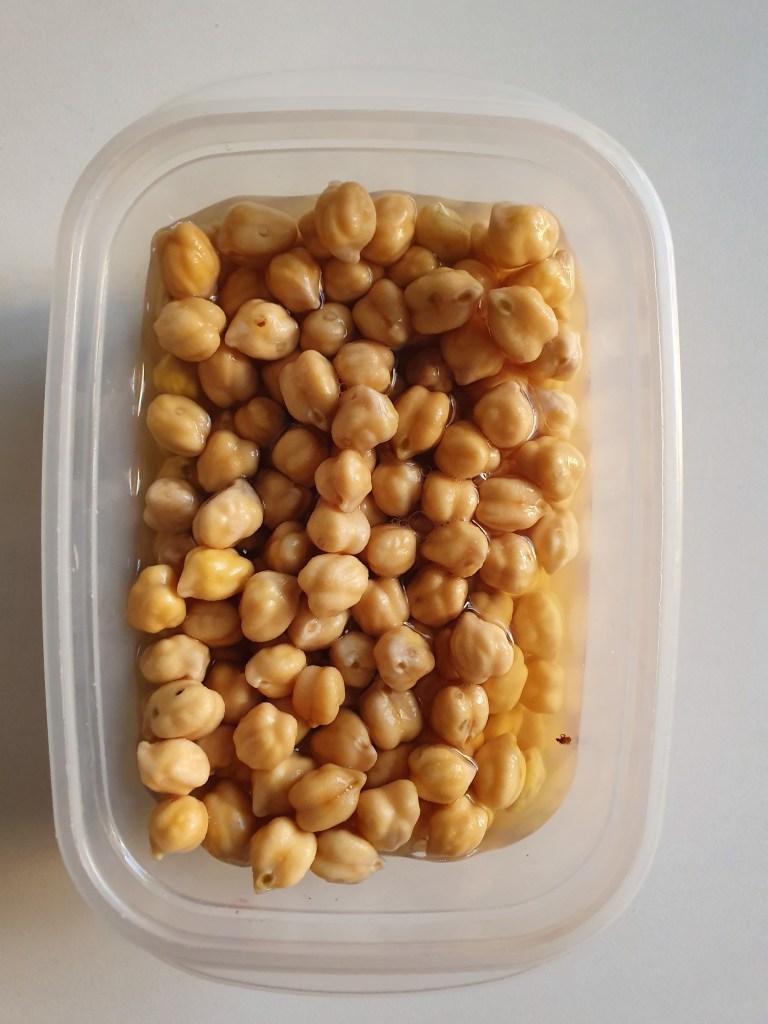
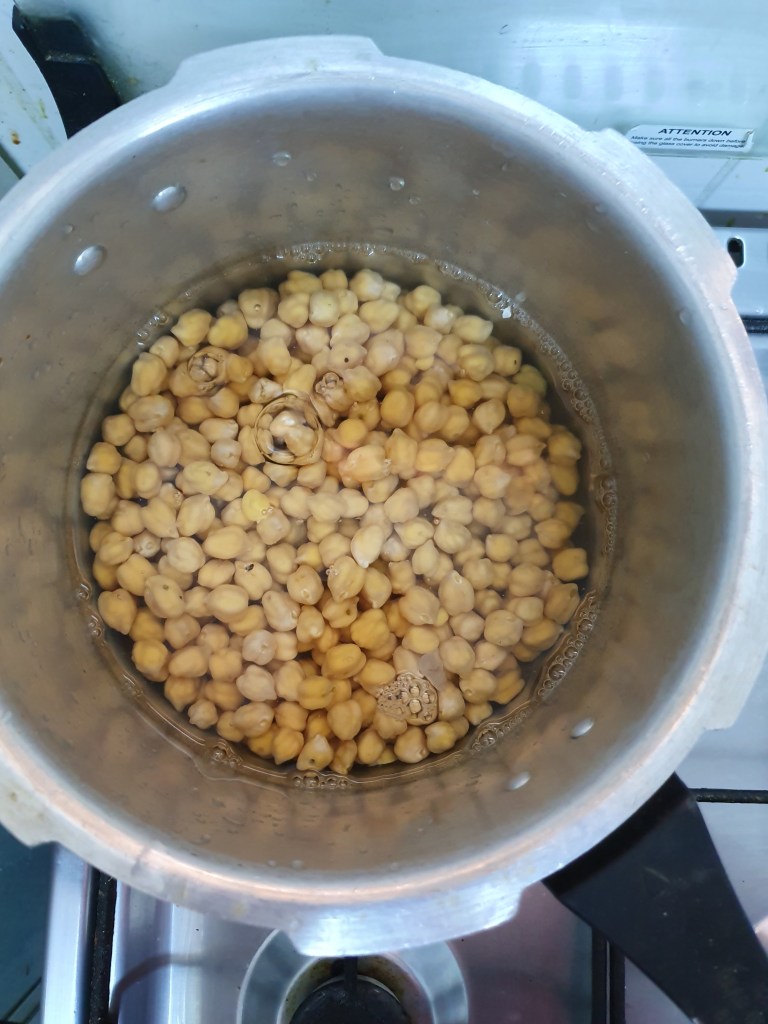
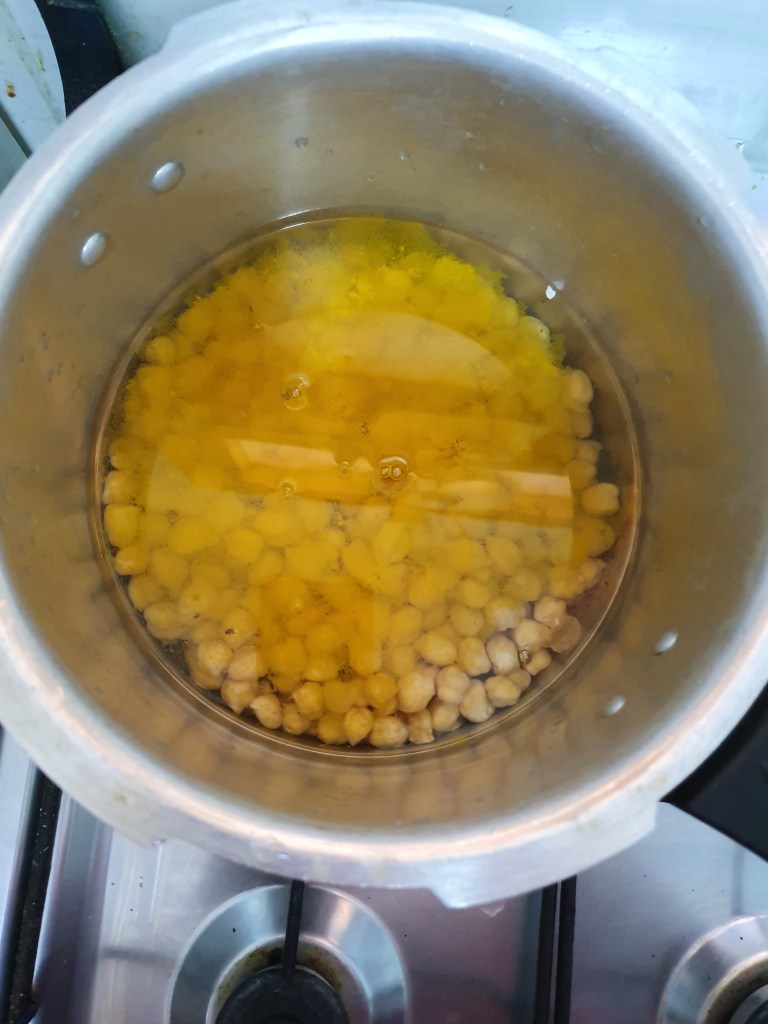
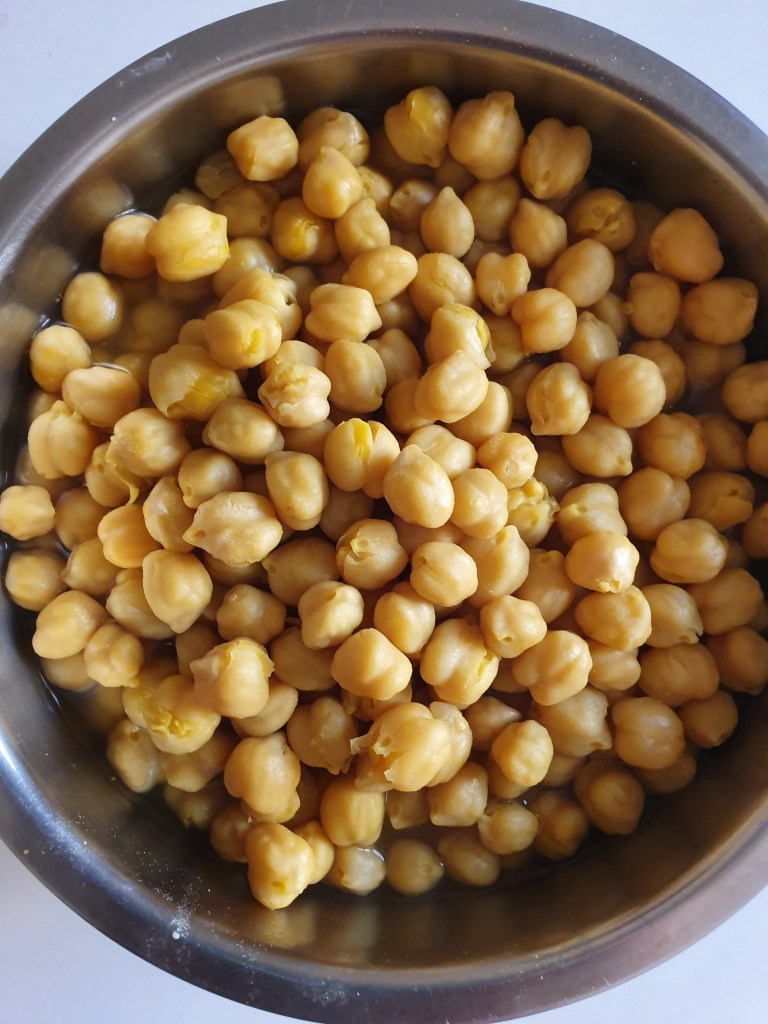
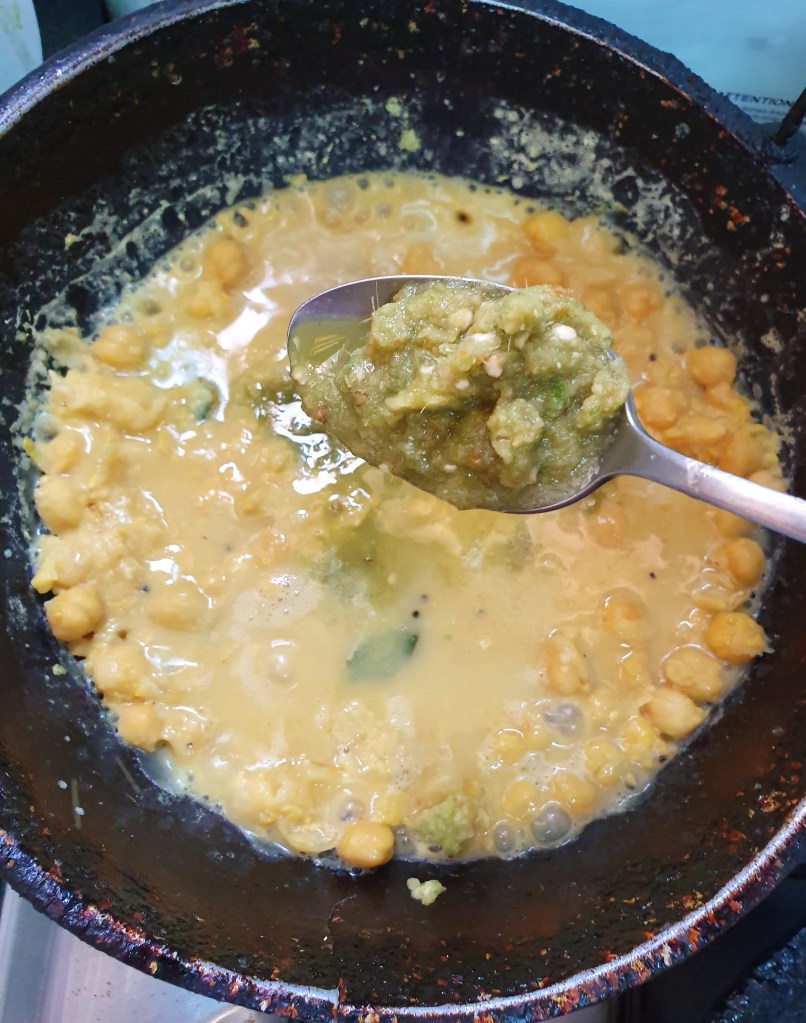
Soak the white peas in water overnight (pic 1). In the morning, drain the water and transfer it to a cooker (pic 2). Add 2 1/2 cups of water, turmeric powder and salt and cook it in the cooker for 20 minutes or 6 whistles (pic 3). Turn off the flame and when the pressure is released from the cooker, open and check if the peas are tender and cooked very well. Keep it aside. (pic 4)
Make a paste of ginger and green chillies (pic 9).

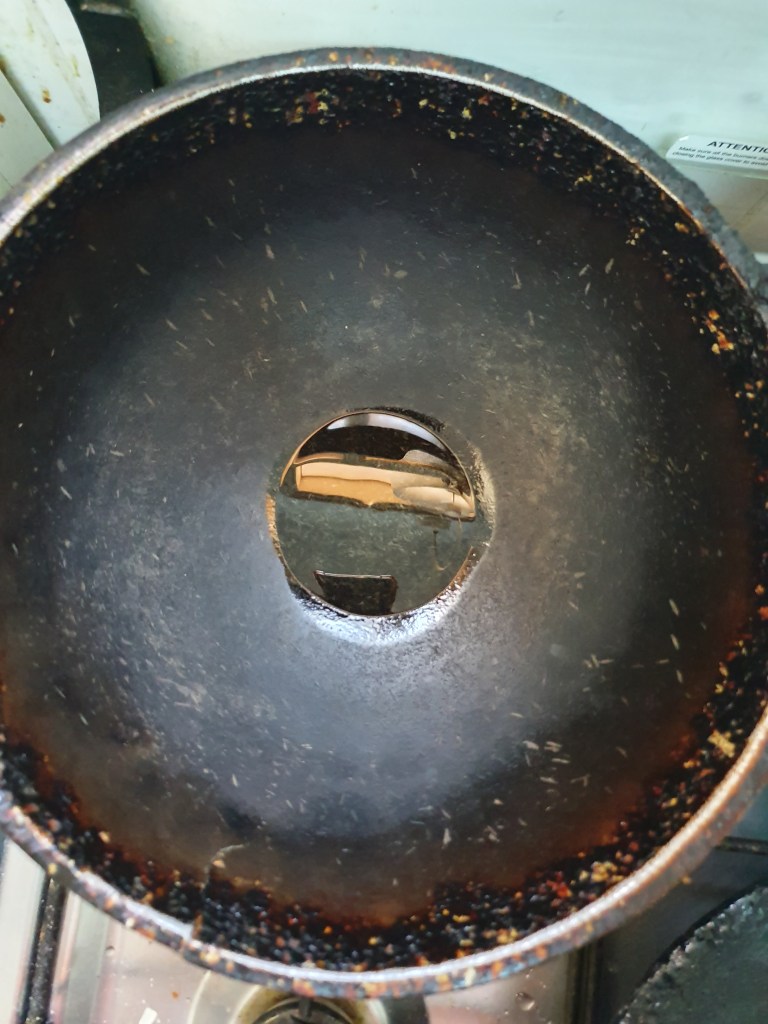
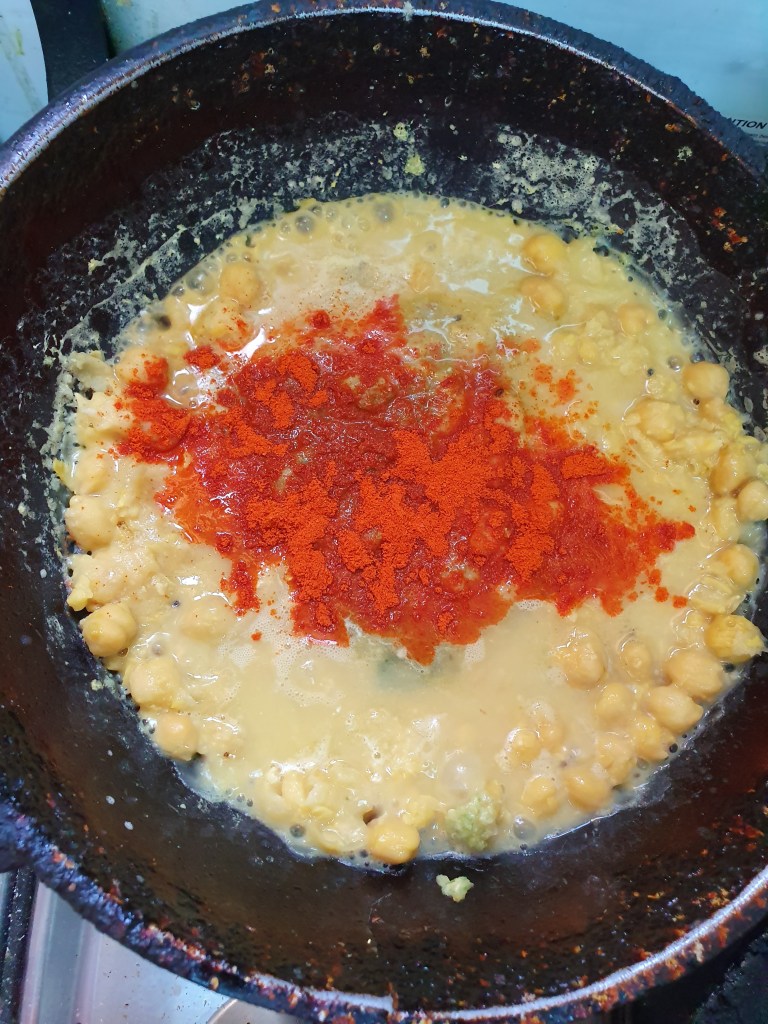
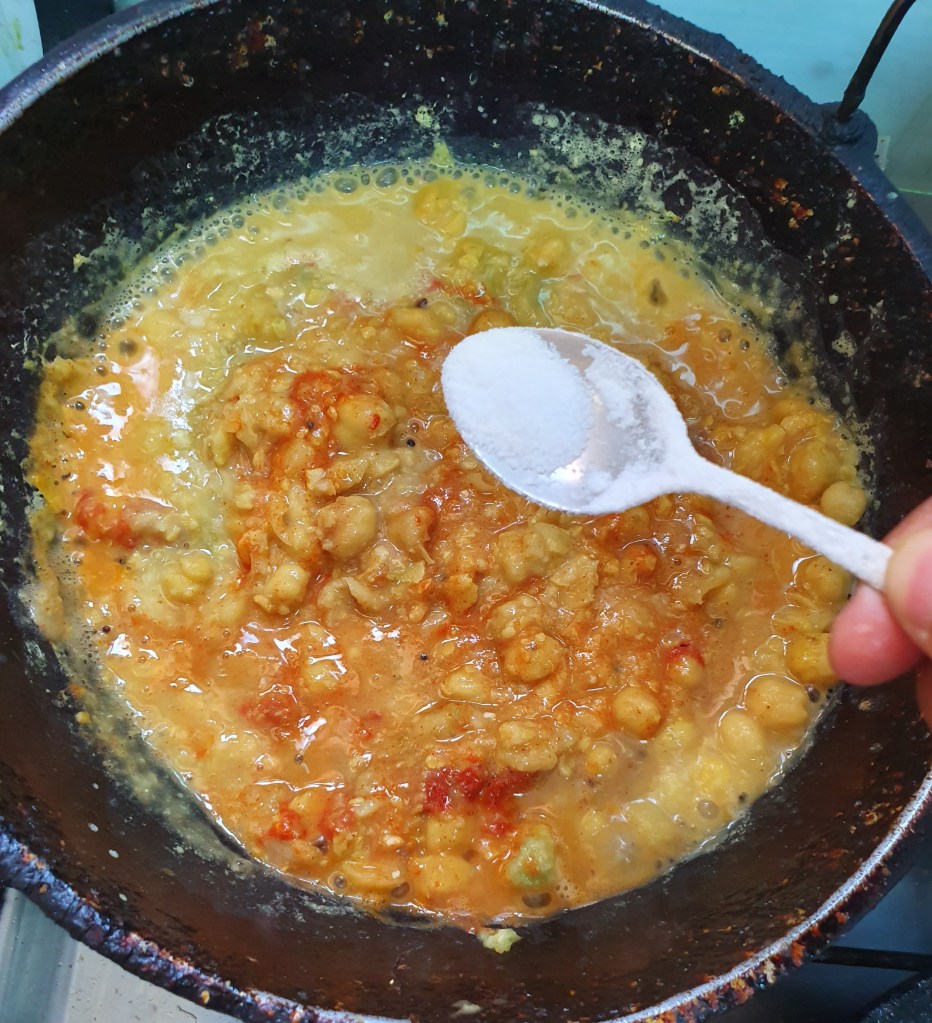
Heat a pan (pic 5). Add oil and when it is hot, add the mustard seeds, curry leaves and the asafoetida(pic 6 and 7). Mash the cooked white peas coarsely with a masher and add it to the pan (pic 8). Add the ginger-green chillie paste (pic 10), garam masala powder (pic 11) and red chillie powder (pic 12) and mix well. Add salt and lime juice or amchur powder and boil it once (pic 13). Once the raw smell disseappears, turn off the flame and keep it aside. The ragda should have a flowing consistency and should not be very thick.
Patties:

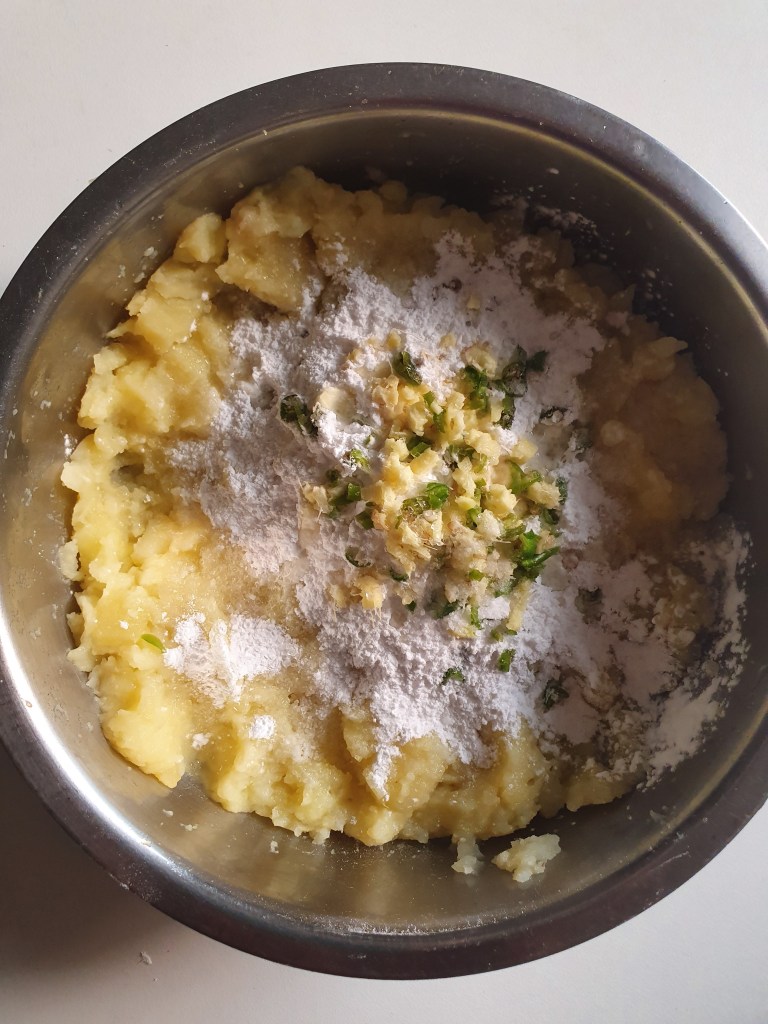
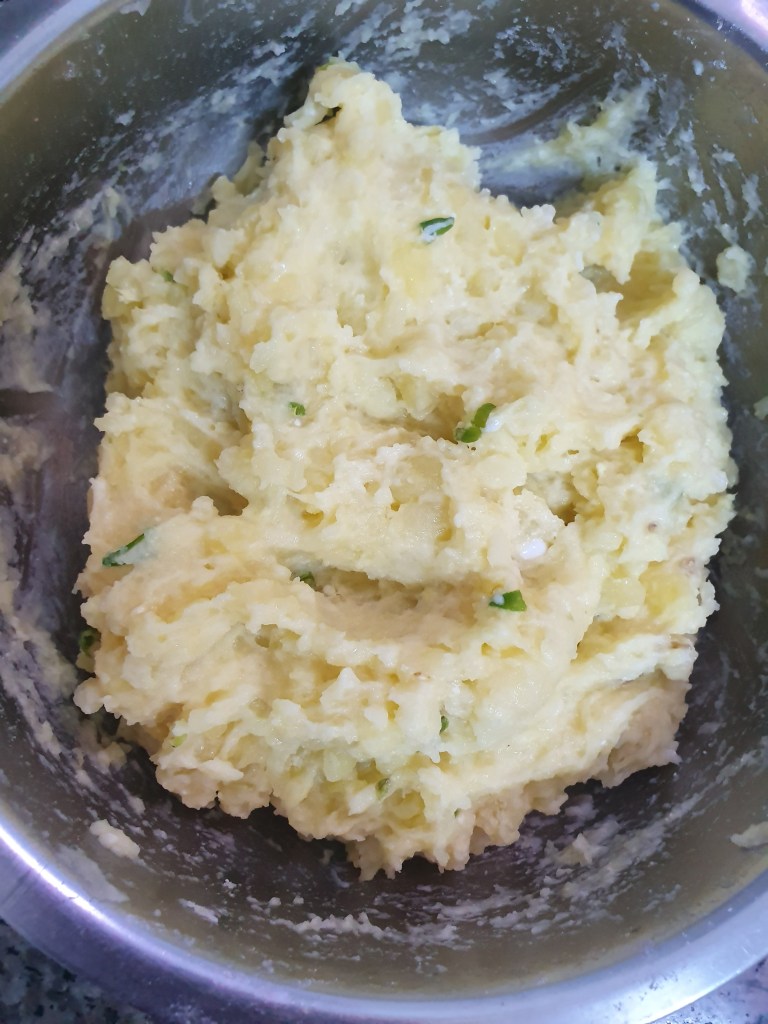
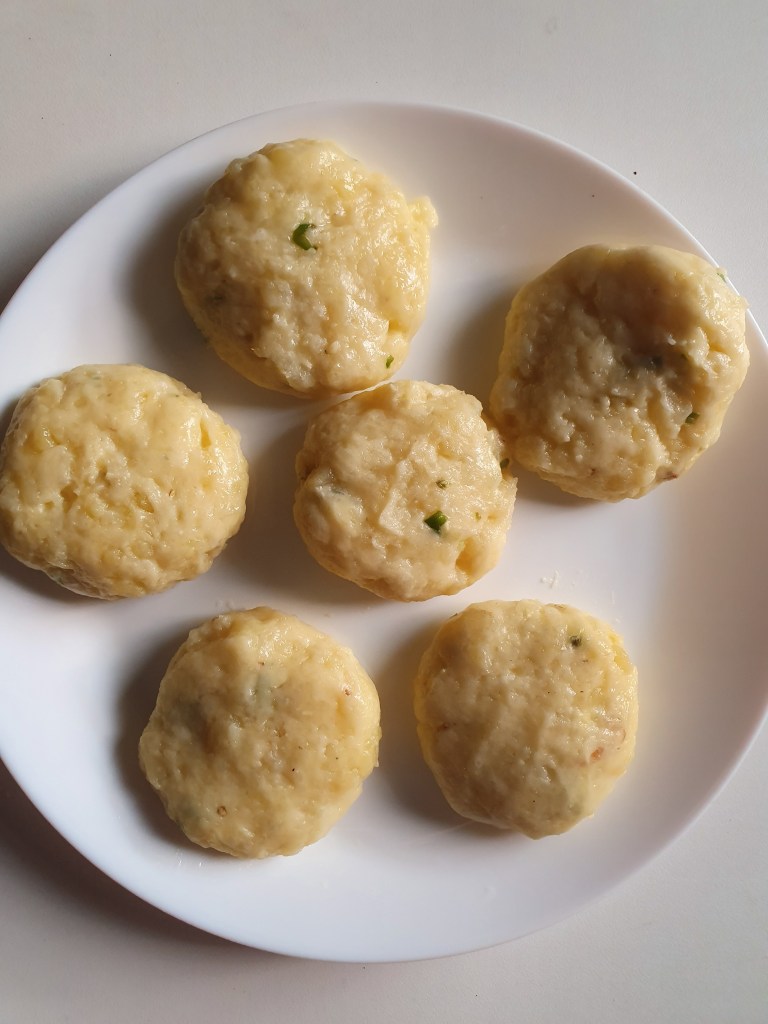
In a bowl, mash the boiled potatoes well (pic 14). Add the green chillie-ginger paste, coriander leaves, corn flour, lime juice, salt and mix well (pic 15). Knead it well into a dough mixture (pic 16). Divide them into 8 equal balls and flatten it between the palms of your hands, taking care not to break them. Arrange the patties on a plate (pic 17).

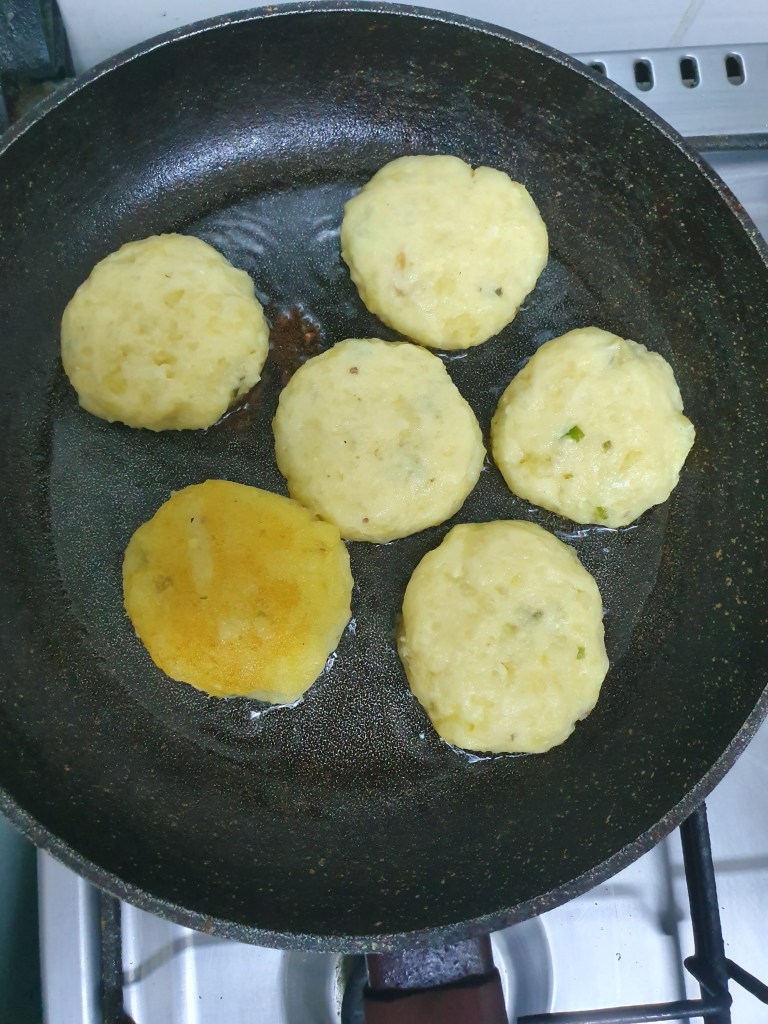
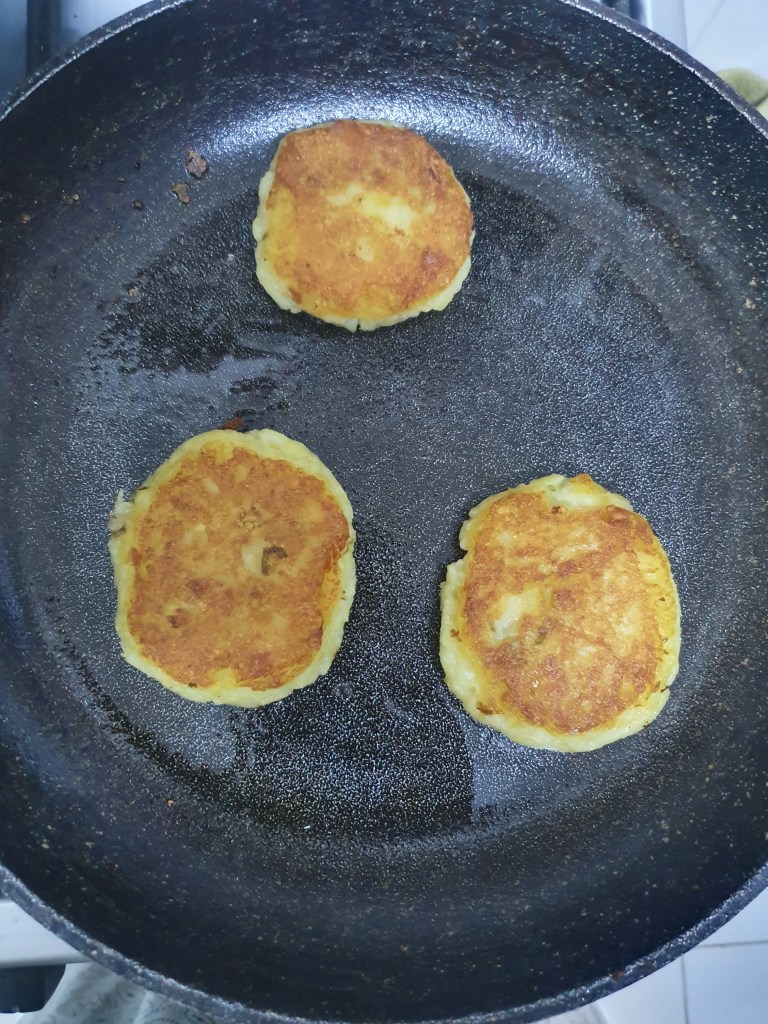
Heat oil in a tava or griddle. When it is hot, place the patties on it and cook them on medium flame for 3 minutes until they are golden (pic 18. Flip to the other side and cook until they are golden (pic 19).

Assembling the patties:

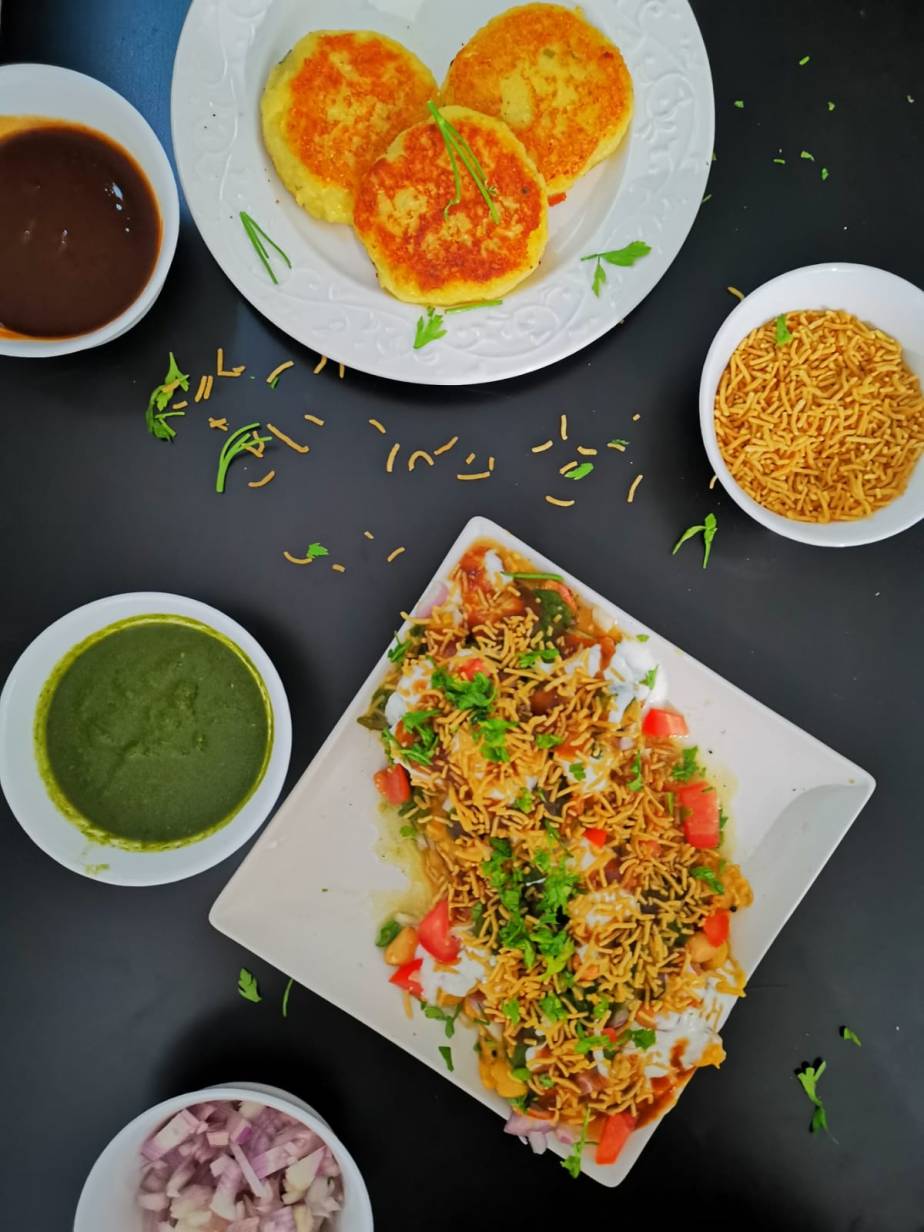
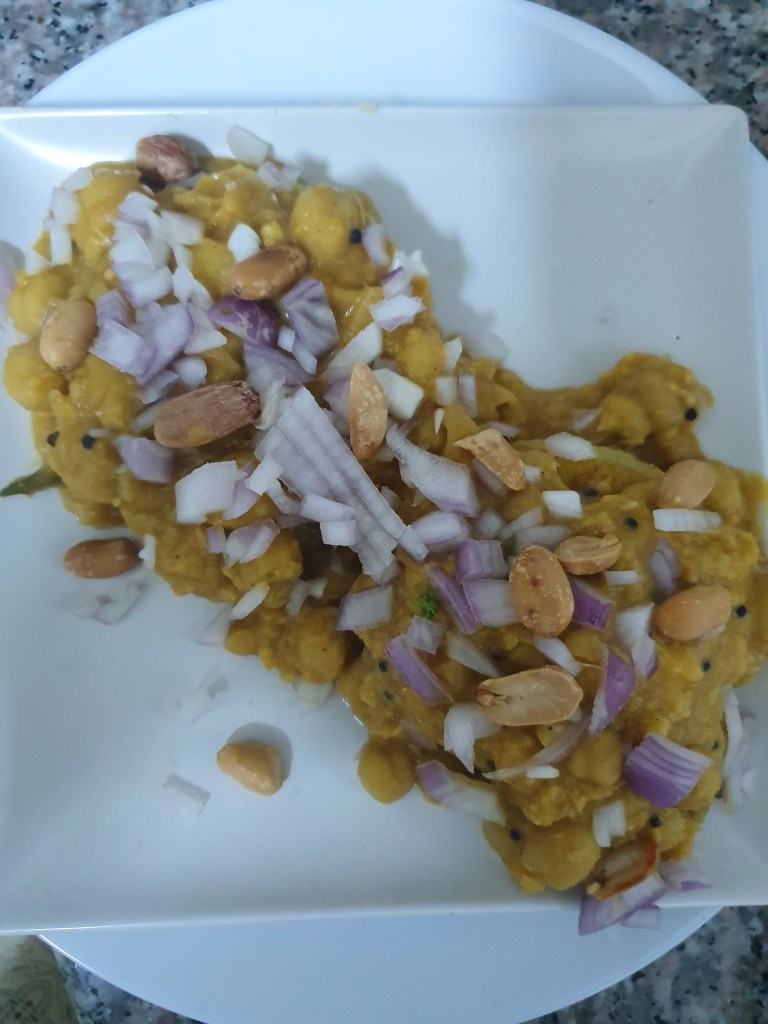
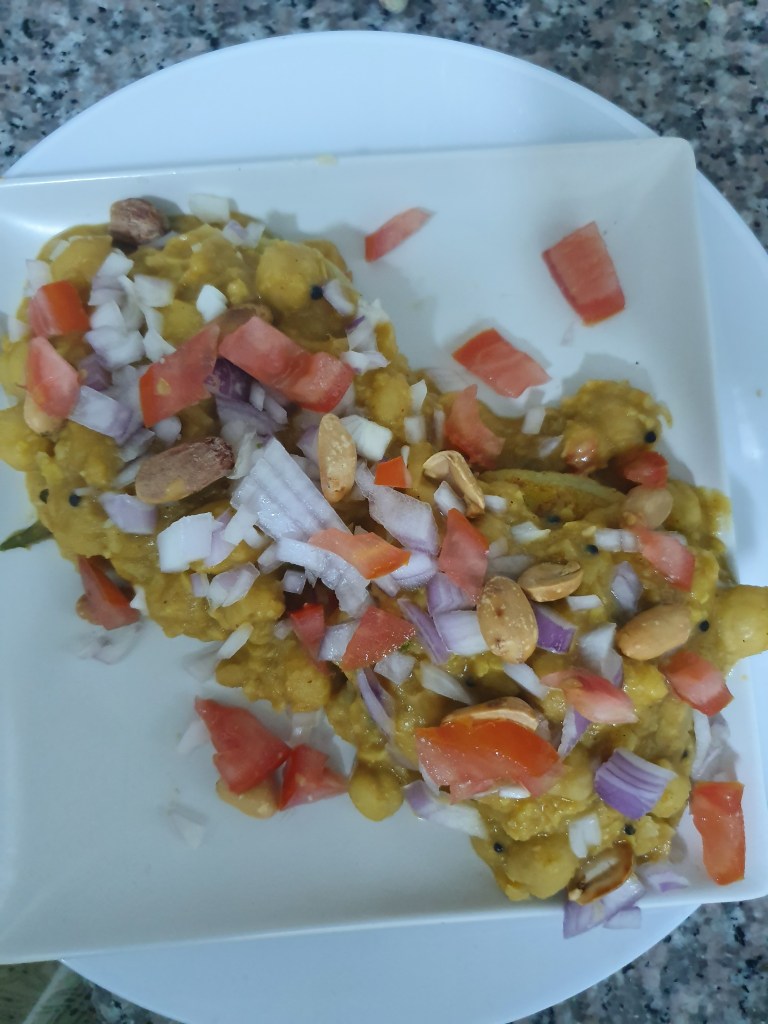
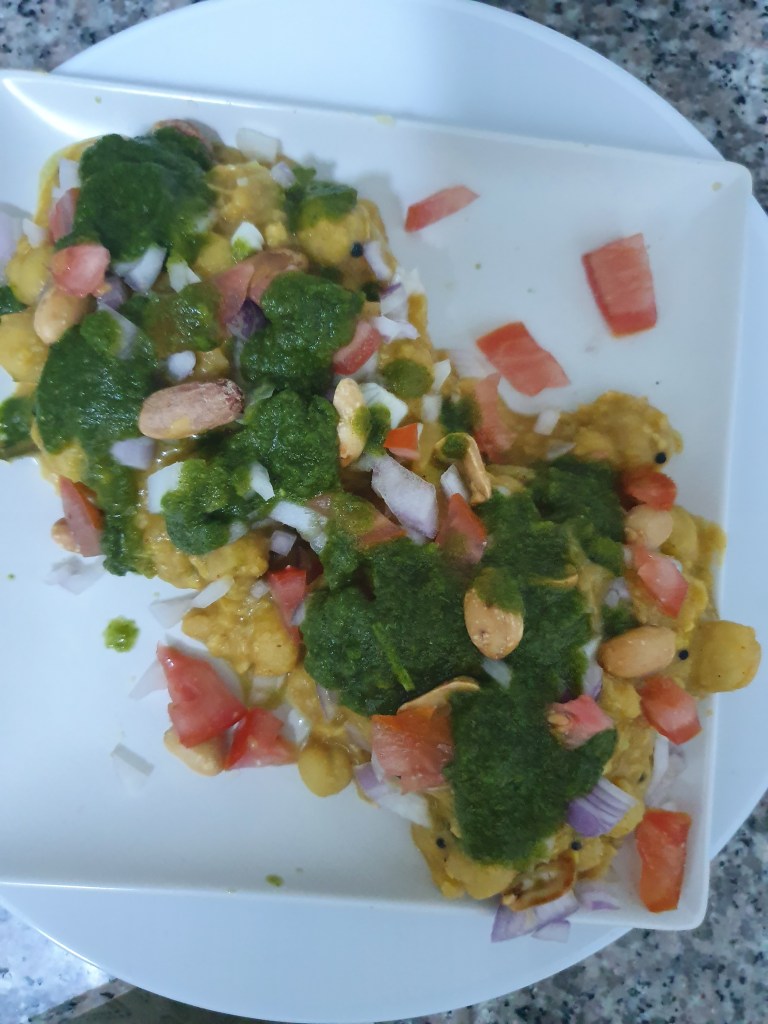
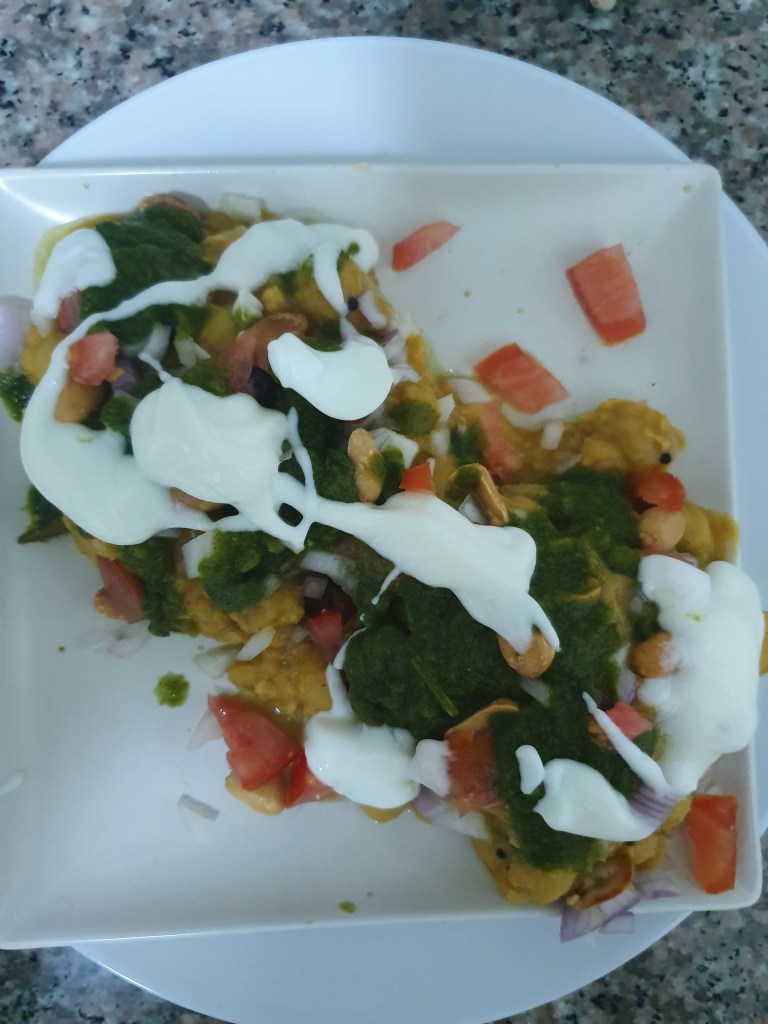
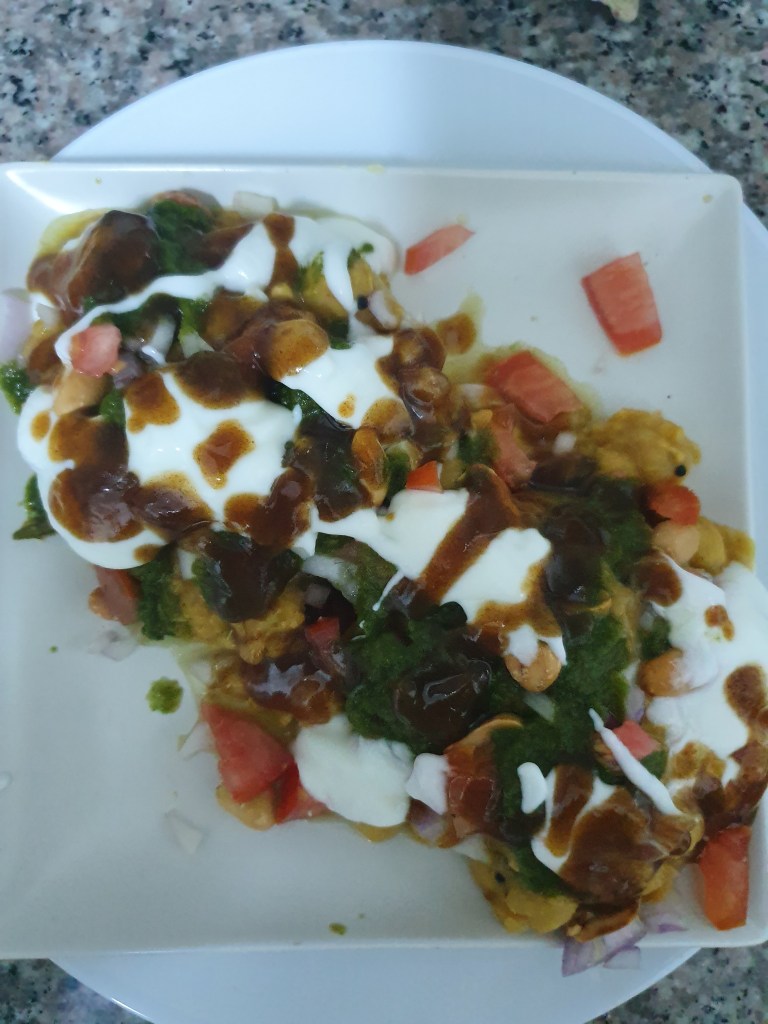
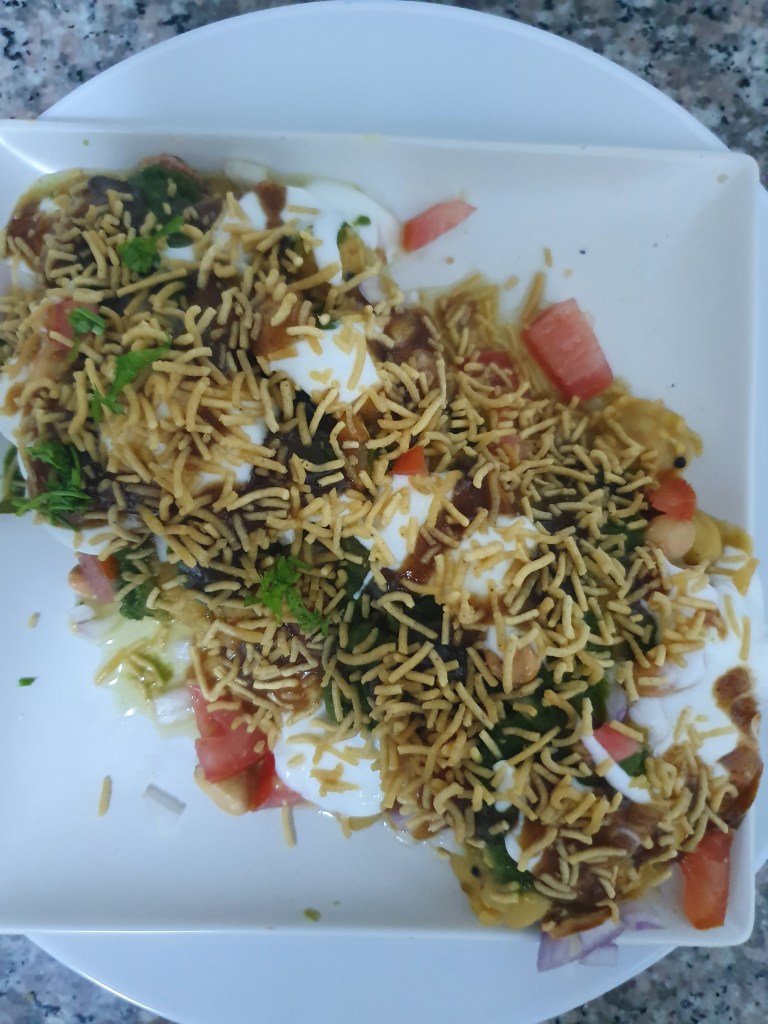
In a plate, pour 2 tbsps of radga on it (pic 21). Place 2 patties on the ragda (pic 22). Pour 2 tbsp again on the patties (pic 23). Sprinkle some chopped onions and fried peanuts on it (pic 24 and 25), followed by chopped tomatoes (pic 26), drizzle of green chutney (pic 27), yogurt (pic 28) and sweet chutney (pic 29). Top it with some sev and coriander leaves (pic 30 and 31) and serve (pic 33).

Green chutney: (pic 20)

Mint leaves – 2 cups

Coriander leaves – 1 cup

Green chillies – 3 chopped

Salt to taste

Lime juice – 1 tbsp

Ginger – 1/2 inch piece

Combine everything in a blender with 1/2 cup of water. Grind it to a smooth paste.

Sweet chutney:

Deseeded dates – 1 cup

Deseeded Tamarind – 1/2 cup tamarind pulp

Roasted cumin seeds powder – 1/2 tsp

Red chillie powder – 1/2 tsp

Black Salt/Rock Salt – 1/4 tsp

Salt to taste

In a bowl, mix tamarind and dates with 2 cups of hot water and soak for for 1 hour. Blend them in a mixie alongwith the water, to a smooth paste. Sieve it and keep it aside.

Heat a pan. Transfer the tamarind-dates pulp to it. Add rock salt, red chillie powder, salt, cumin seeds powder and cook for 2 -3 minutes. Boil once stirring in between. Put off the flame and let it cool. You can store this chutney in the fridge in an air tight container for a month.

Kaara Baath/Chow Chow baath

A popular authentic dish of Karnataka, this is often made for breakfast at my home. A little different from the usual upma, this one is made with vegetables, semolina and unique spice powders which adds to its taste. If you are not an upma fan, give this one a try and I am sure you will love it.

I have mentioned the recipe for the spice powder in the note below the recipe. You could also use store bought sambar powder or the readymade bisibela baath powder, if you run short of time to make the spice powder.

Serves 4 -5 persons

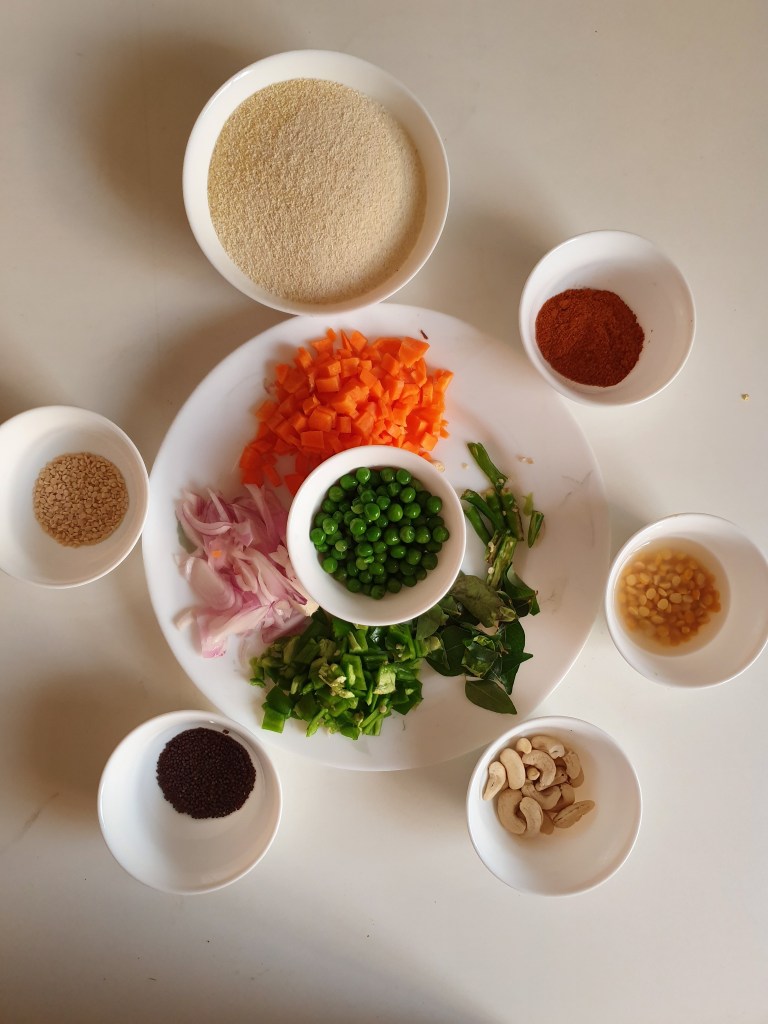
Ingredients:

Rava/Semolina – 1 1/2 cups

Water – 4 1/2 cups

Carrot – 1/2 diced into small pieces

Curry leaves – 7-8

Green peas – 1/4 cup

Capsicum/Green peppers – 1 small

Tomato – 1 small

Onion – 1 medium sliced

Green chillies – 3

Vangi baath Masala powder/Bisi bela baath powder/Sambar powder – 2 tbsp

Ghee – 1 tsp

For seasoning:

Mustard – 1 tsp

Udad dal – 1/2 tsp

Bengal gram dal/chana dal (pref soaked in water for 10 minutes) – 1/2 tsp

Cashewnuts – 6-7

Oil – 1 tsp

Preparation:

Heat a pan and add semolina to it. Saute it for 3 – 4 minutes and transfer to a plate and keep it aside.

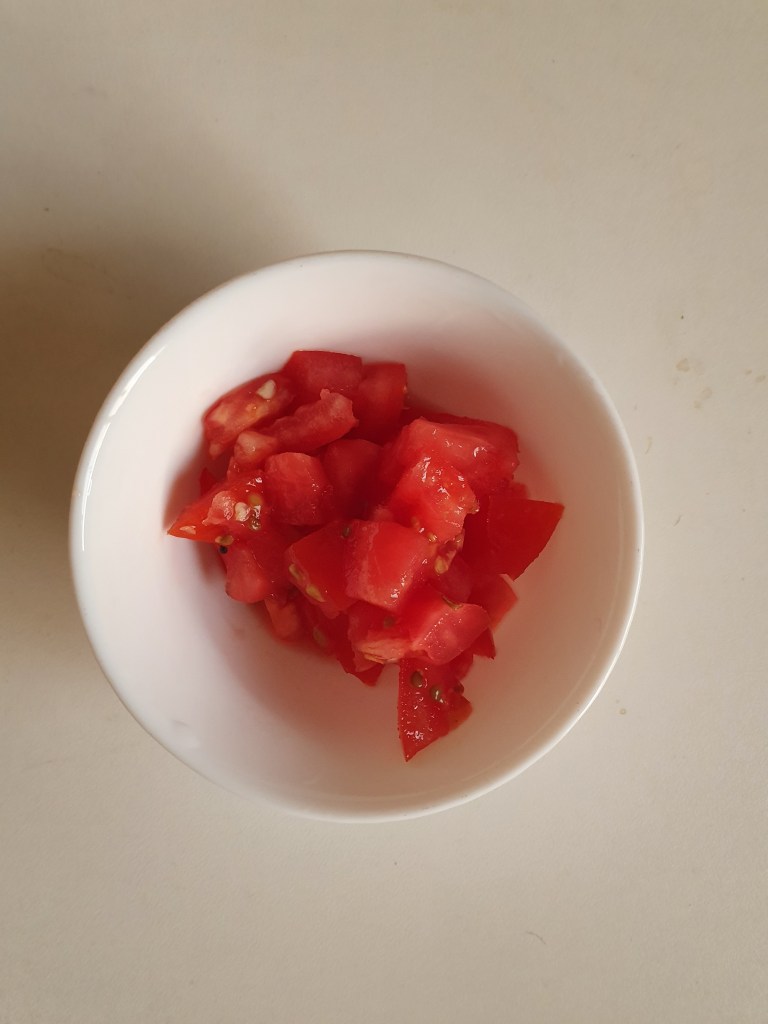
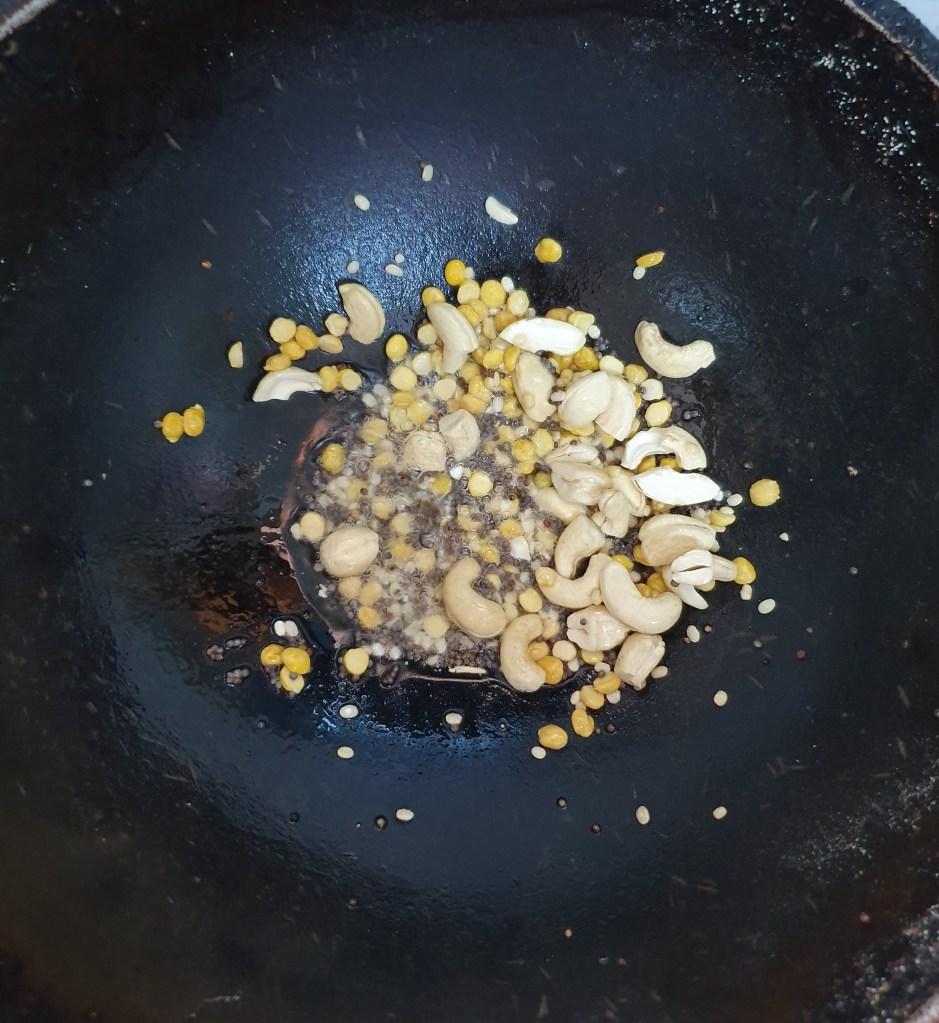
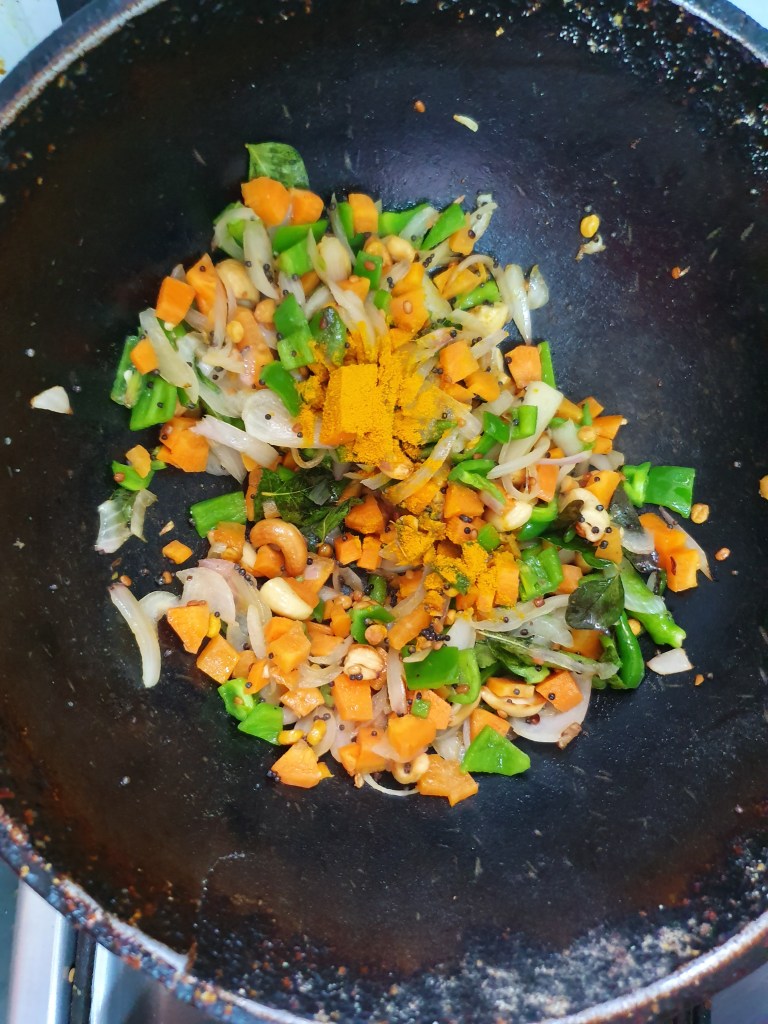
In the same pan, add oil and when it turns hot, add mustard. When it starts to sizzle, add bengal gram dal and udad dal to it. Reduce the flame to medium low. When it starts to slightly turn golden in colour, add cashewnuts, curry leaves and green chillies. Saute it for a minute and add sliced onions. Saute well and when it turns translucent, add the tomatoes. When it turns mushy, add the carrots, capsicum and peas and stir fry it on a medium flame.

Next, add the spice powder (vaangi baath powder or bisi bela baath powder) to it and saute well for 3 minutes. Add water and salt and let it come to a boil. When the water starts to boil, reduce the heat and add the semolina slowly, little by little. Continue stirring the pan so that there are no lumps. Keep stirring to ensure no lumps are formed. Stir it well, close with a lid and cook for 3 – 4 minutes until the semolina is cooked.

Serve it hot with any chutney of your choice.

Note:

Bisi Bela Baath powder:

Oil – 1 tsp

Coriander seeds – 3 tsp

Urad dal – 2 tsp

Bengal gram/Channa Dal – 1 tsp

Cinnamon – 2 inch stick

Cloves – 2

Dry red chillies – 7 or 8

Khus khus – 1/2 tsp

Jeera – 1/4 tsp

Pepper – 1/4 tsp

Dry coconut (Copra) – 1 or coconut – 1/2

Instructions:

Heat 1 tsp of oil and saute jeera, pepper, coriander seeds, bengal gram dal, urad dal, fenugreek seeds, cardamom, cinnamon, cloves and red chillies. Saute until dal starts to change color.

Add khus khus and saute for few seconds on low heat. Add the dry coconut and saute for few minutes on low heat, stirring continuously. Or if coconut is used, it is to be roasted slightly and then powdered alongwith the other ingredients.

Turn off the heat and leave it to cool and powder it coarsely.

Vazhakkai Varuval/Roast (Raw Banana Stir Fry)

A quick stir fry using raw bananas which can be served with rice and curries.

Ingredients:

Raw Banana – 3

Oil – 1 1/2 tbsp

Gram flour – 1 tsp

To grind:

Aniseed/Saunf – 1 tsp

Pepper – 1 tsp

Ginger – 1/4 inch piece

Garlic – 3 cloves

Onion – 1 small

Tomato – 1 small

Red chillie powder – 1 1/2 tsp

Coriander powder – 1 1/2 tsp

Salt – to taste

For seasoning:

Mustard – 1/2 tsp

Udad dal – 1/4 tsp

Curry leaves – 7-8

Preparation:

Wash and peel the raw bananas and chop it into thin rounds as shown in picture.

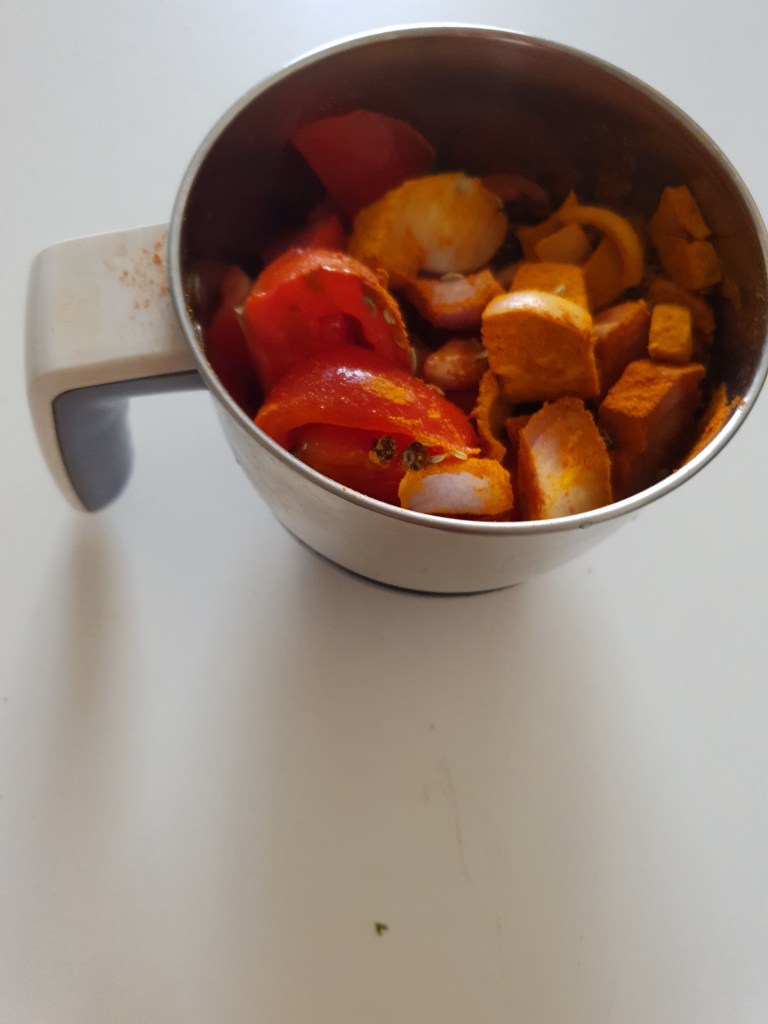
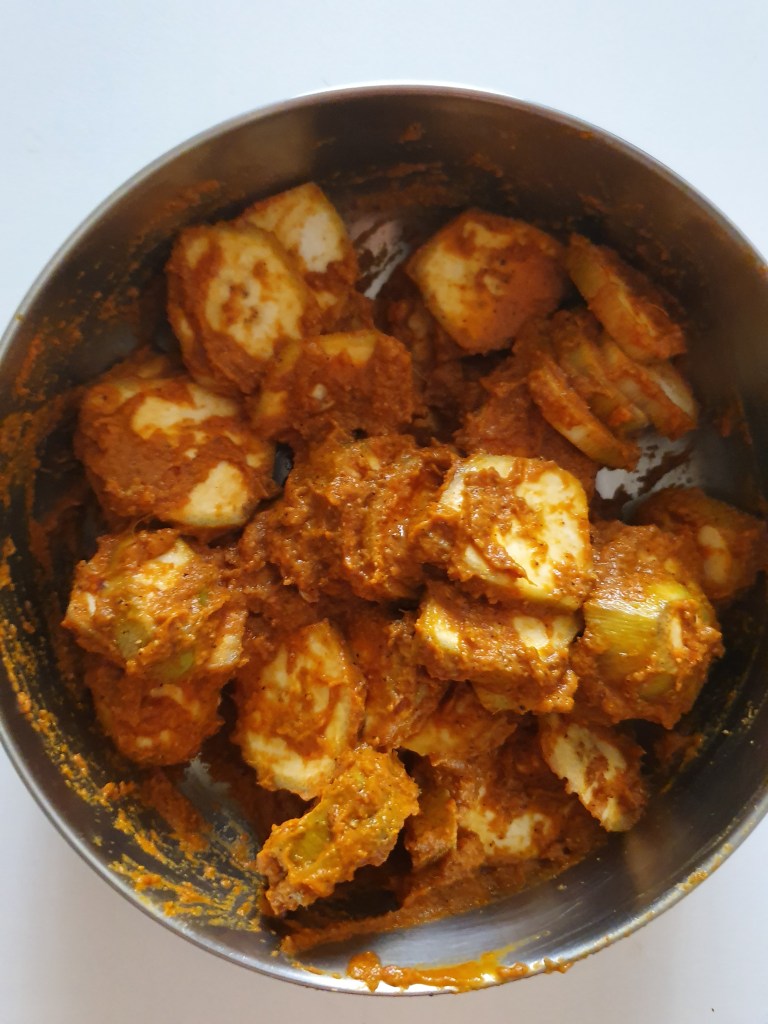
Grind the items under ‘to grind’ and apply this masala on the sliced bananas.

Heat oil in a pan. Add mustard seeds and udad dal. When it starts to sizzle and turns golden in colour, add the curry leaves. Add the coated bananas to the pan.

On a low flame, toss the bananas for 2 minutes. Sprinkle little water in between and cover and cook them. Keep sauteeing them often as the masalas may stick to the pan. Add 1 tsp of oil if required. When they are cooked, you may sprinkle a tsp of gram flour to it and fry them again for another 2 minutes.

The stir fry is ready to be served with rice.

Ragi Dosa (Finger Millet Dosa)

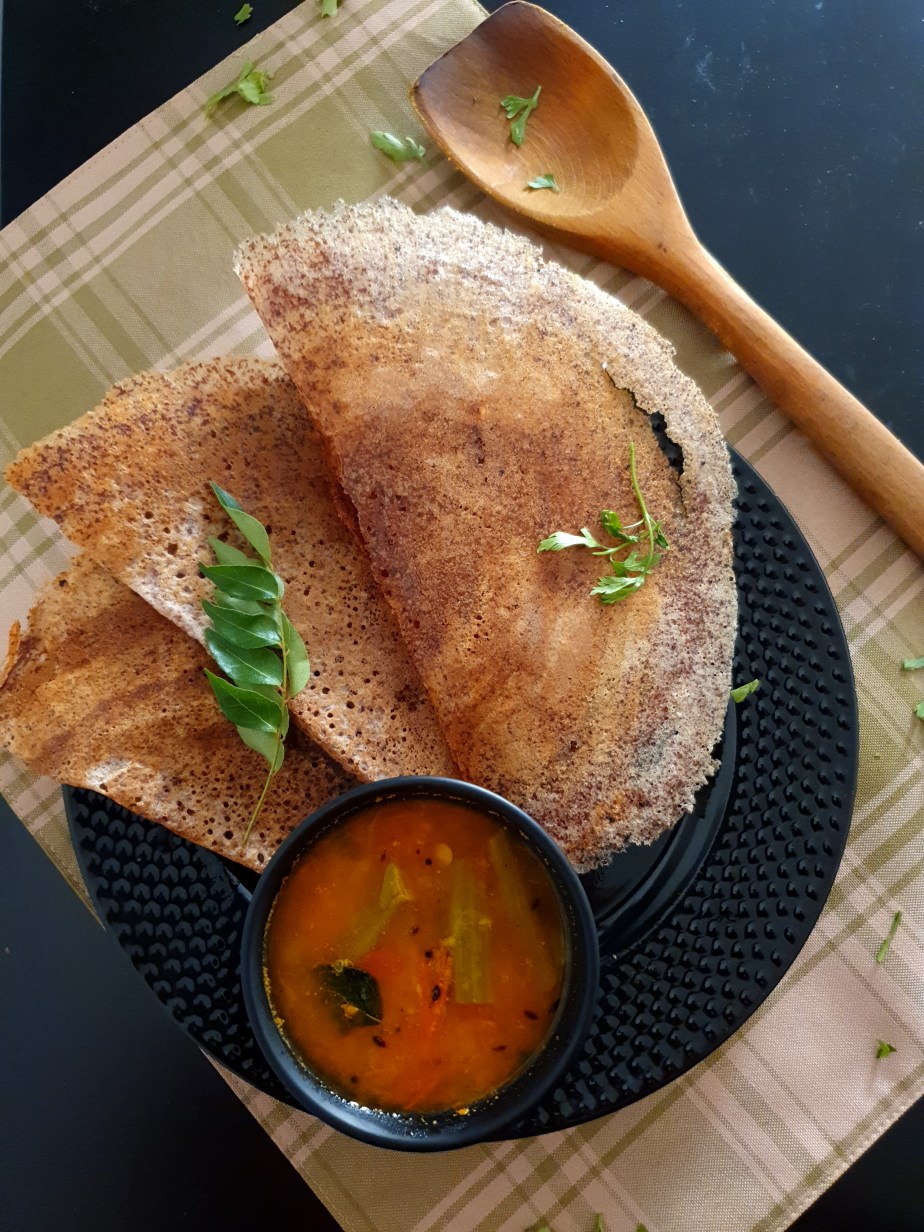
Finger millet or Ragi is very nutritious. This ragi dosa with ground batter turns out very crispy and tasty and is good for people with diabetes too.

Ingredients:

Urad Dal – 1/2 cup

Idli Rice – 1 cup

Whole Grain Ragi – 1 cup

Fenugreek seeds – 1 tsp

Salt – to taste

Water – 1 1/2 cups for grinding

Preparation:

Wash and rinse the the whole ragi seeds and rice. Soak it together with 4 cups of water for 4-5 hours. Also, wash the udad dal and soak it with 1 1/2 cups of water for 4 -5 hours.

Drain the water and in a mixie or wet grinder, grind the ragi and rice together to a fine paste, adding 1 cup of water, little at a time. Next , add the udad dal and grind it to a smooth paste. Add enough water (around 1/2 cup) to the batter while grinding. As udad dal grinds, it will turn fluffy and soft. Remove from the grinder/mixer and transfer to a vessel.

In a wide tall vessel, combine both the rice and the udad dal batter and mix it together with clean hands. The vessel should be tall and slightly wide as the batter will rise while fermenting. I always add salt to the batter before fermenting it.

Cover it with a lid and ferment overnight or for 8 hours.

Once fermented and risen, mix very gently to combine.

To make the dosas, heat a pan or iron tava. When it is hot, turn the flame to medium and grease the pan with oil. Pour a ladleful of batter on it and using a circular motion, spread into a thin dosa. Drizzle oil on all sides.Cover it and cook for 2 minuts. When it turns golden, flip and slightly cook on the other side also.

Serve with any chutney of your choice

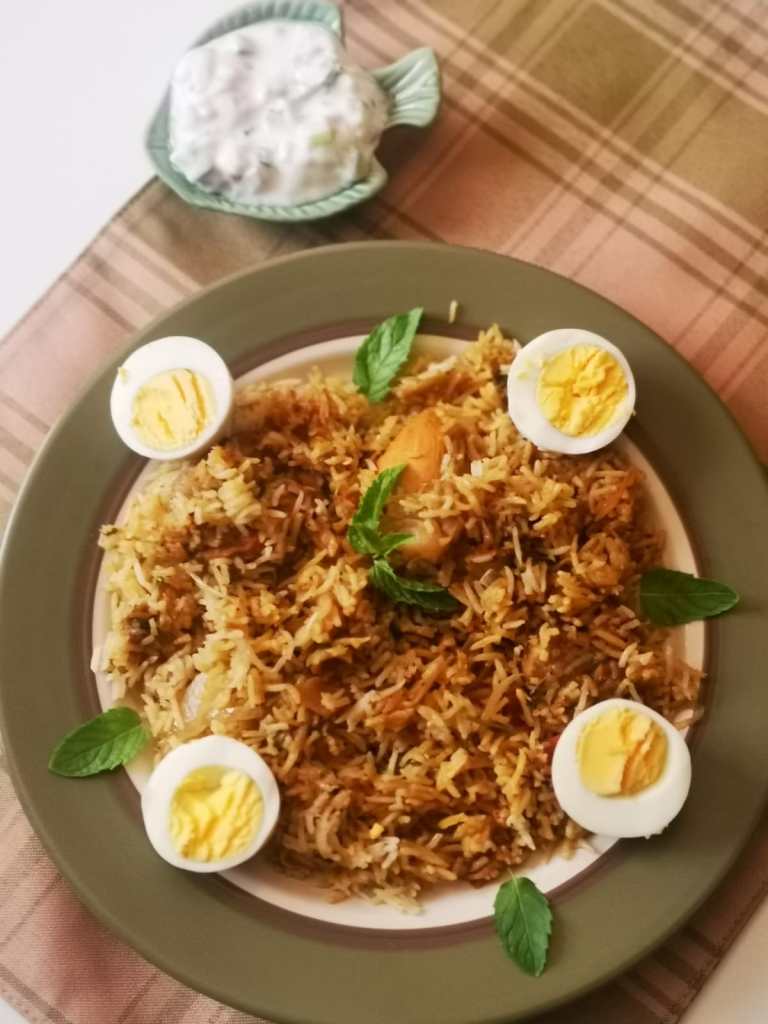
Amma’s Chicken Biriyani

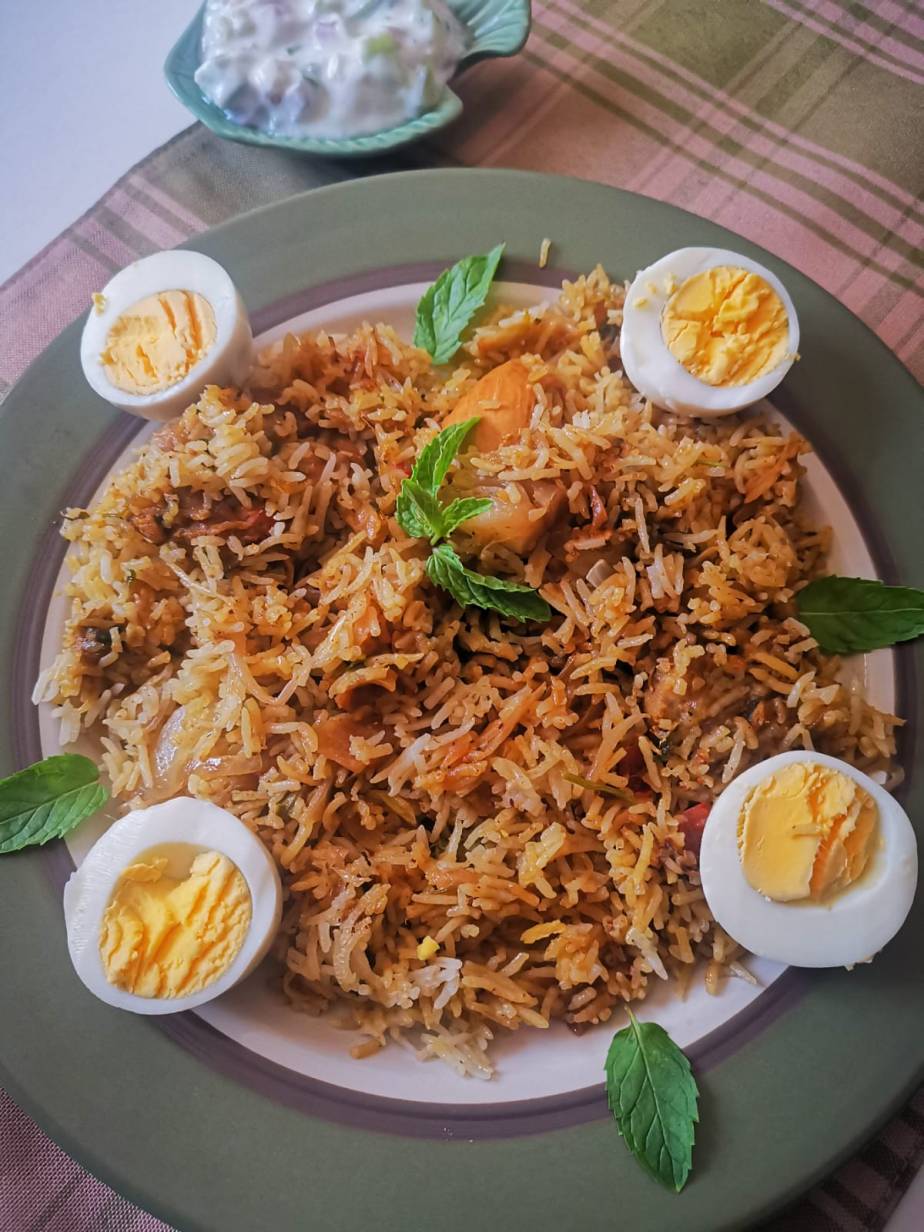
Biriyani is one of my favourite food and this recipe in particular which has been passed on from my grandmother to my mom and then onto me, is one of my favourites. Getting the right consistency of rice in the biriyani is the challenging part. This one is slightly different from all other biriyani recipes as the green chillies are roasted in oil with whole garam masalas and ground to a fine paste which makes it flavourful. Also, yogurt and lime juice are the key ingredients as compared to tomatoes in other biriyanis.

Ingredients:

Basmati Rice – 3 cups

Water – 4 1/2 cups

Lime juice – 1 tsp

Coconut milk powder – 1 tbsp or thick coconut milk – 1/4 cup

To grind (for chicken masala and rice)

Whole Green chillies – 10

Cloves- 4

Cardamom – 4

Cinnamon – 6 (1/2 inch pieces)

Aniseed/Saunf – 2 1/2 tsp

Oil – 1/2 tsp

For the chicken masala:

Onions – 4 big sliced

Yogurt – 4 tbsp

Chicken – 750 gmps

Turmeric powder – 1 tsp

Lime Juice – 1 1/2 tsp

Ginger garlic paste – 2 tbsp

Coriander leaves – half a handful

Mint leaves – half a handful

Tomato – 1 small

Red chillie powder – 1 tsp

Salt- to taste

Oil – 1 tbsp

Green chillie paste ground – 1/2 of the amount mentioned

Garam masala powder – 1/4 tsp

Water – 1/2 cup

For Rice:

Onions – 2 big (sliced)

Ginger garlic paste – 1/2 tsp

Green chillie paste ground – 1/2 of the amount mentioned

Cinnamon – 2 (1/2 inch piece)

Cloves – 2

Bay leaves – 2

Coriander Leaves – half a handful

Mint leaves – half a handful

Oil – 1 tbsp

Ghee – 1 tbsp

Preparation:

Clean the chicken, wash it well and marinate it with the yogurt, turmeric powder and 1/2 tsp salt and keep it aside for 30 minutes.

Wash the basmati rice well and soak it for 30 minutes in 6-7 cups of water.

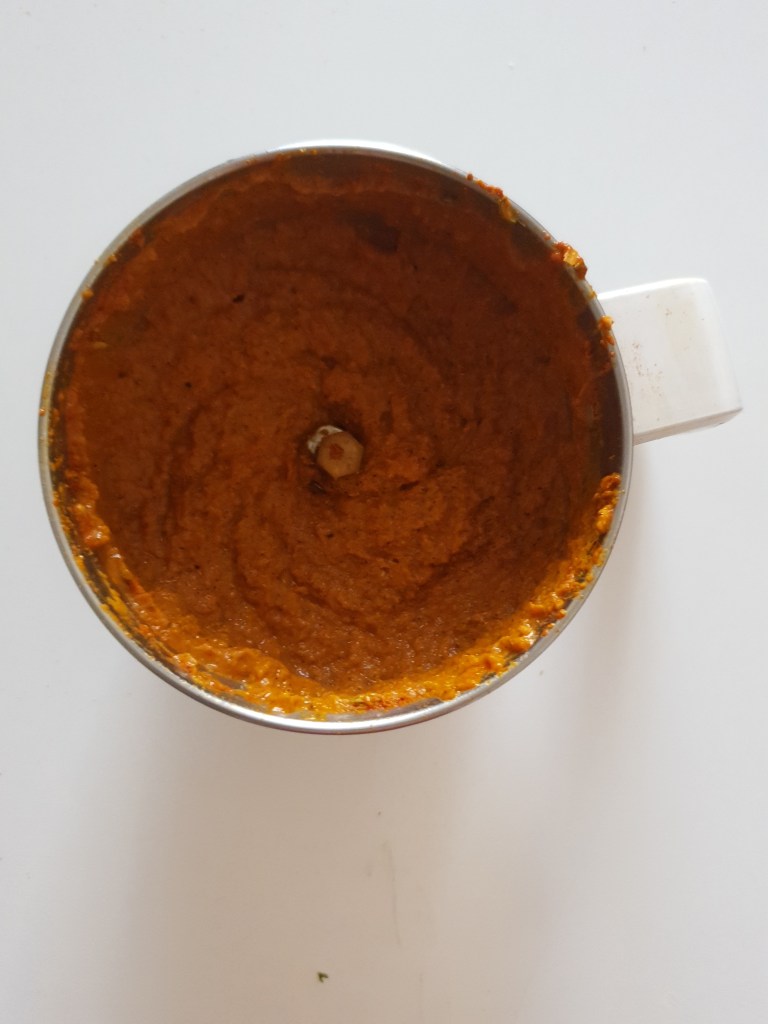
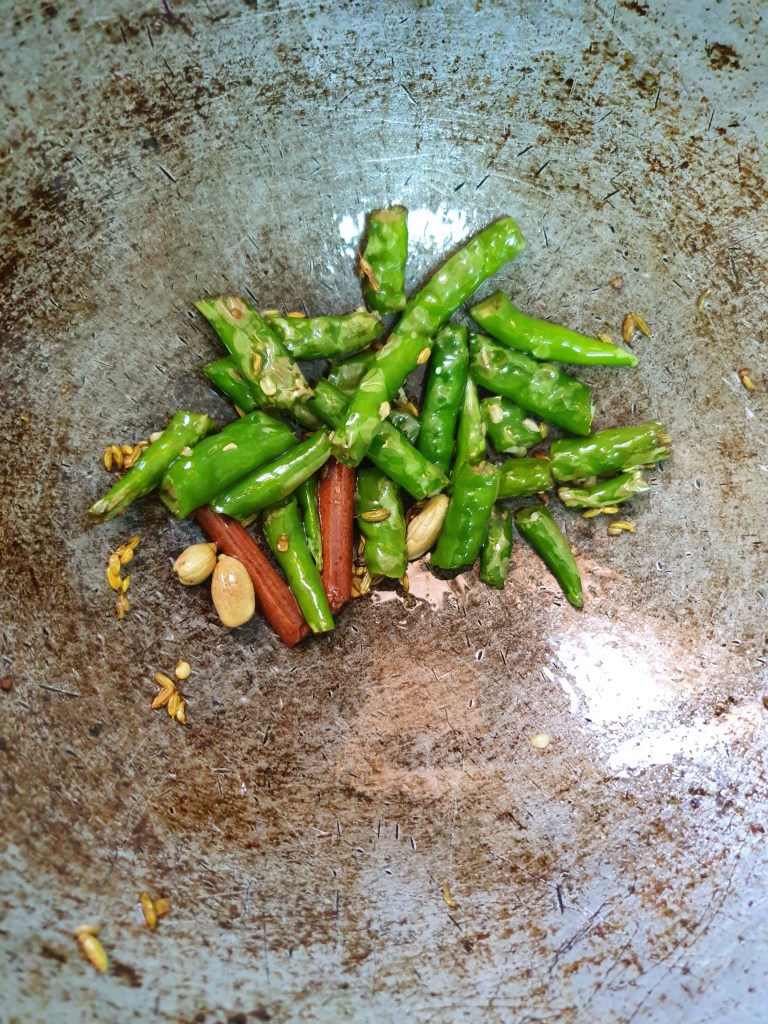
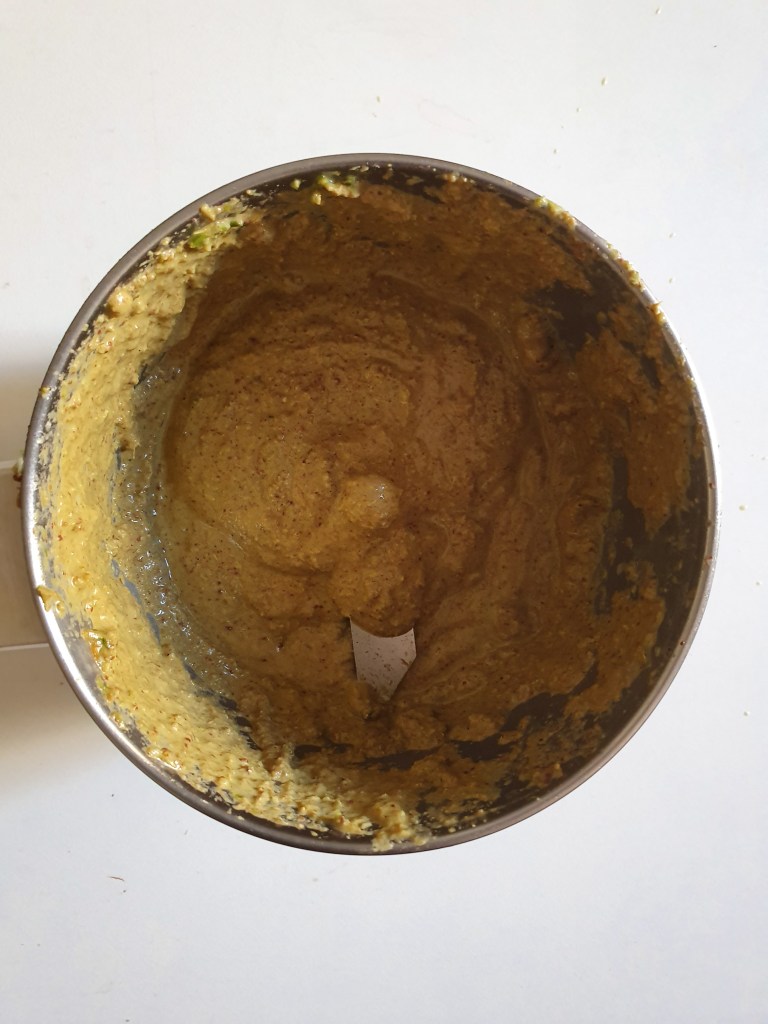
In a flat bottomed pan, add oil and heat it. Add the chopped green chillies and saute it for a minute (pic 2). Then add the aniseed, cinnamon, cloves and cardamom and saute it well for another 2 minutes (pic 3). Put off the flame, transfer it to a mixer (pic 4). Let it cool for 10-15 minutes. Grind it to a smooth paste (pic 5). Keep it aside.

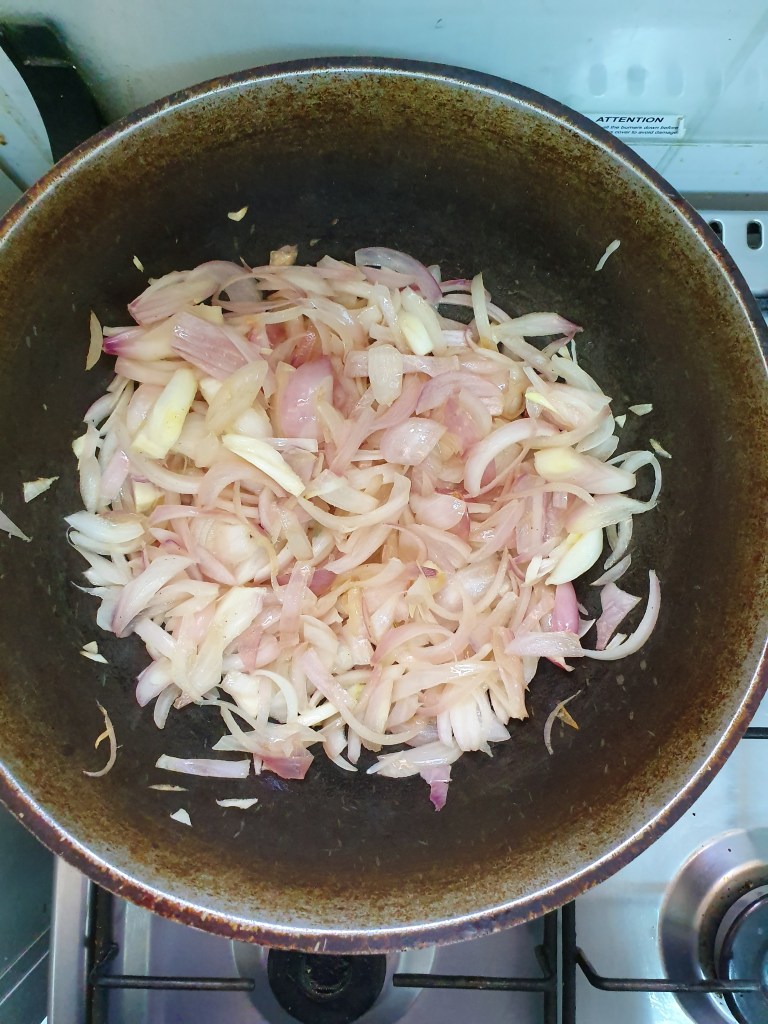
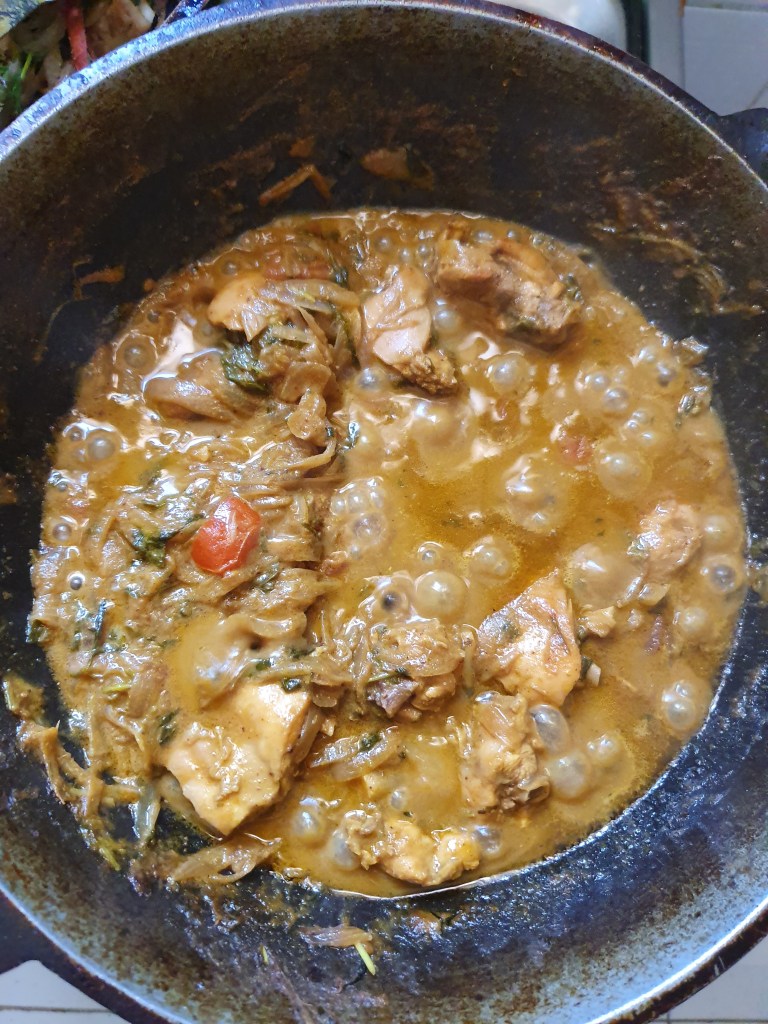
In the same pan, add oil and proceed to make the chicken masala. When the oil is hot, add the onions (4 sliced) and saute till it becomes translucent (pic 7). Add the garam masala powder and then add the ginger garlic paste and saute well until the raw smell goes off (pic 8). Next, in goes the half of the ground chillie paste (pic 10) and the coriander and mint leaves (pic 11). Saute it well for 3 minutes and add the chopped tomato, lime juice and the red chillie powder (pic 12). Saute until it becomes mushy. Now, it is time to add the marinated chicken (pic 13). Stir it well, lower the flame to low and close and cook adding 1/2 a cup of water (pic 14). Adjust the salt seasoning . After 7 minutes, open and saute again until it has a masala consistency and is not watery (pic 15). Put off the fire and keep it aside.

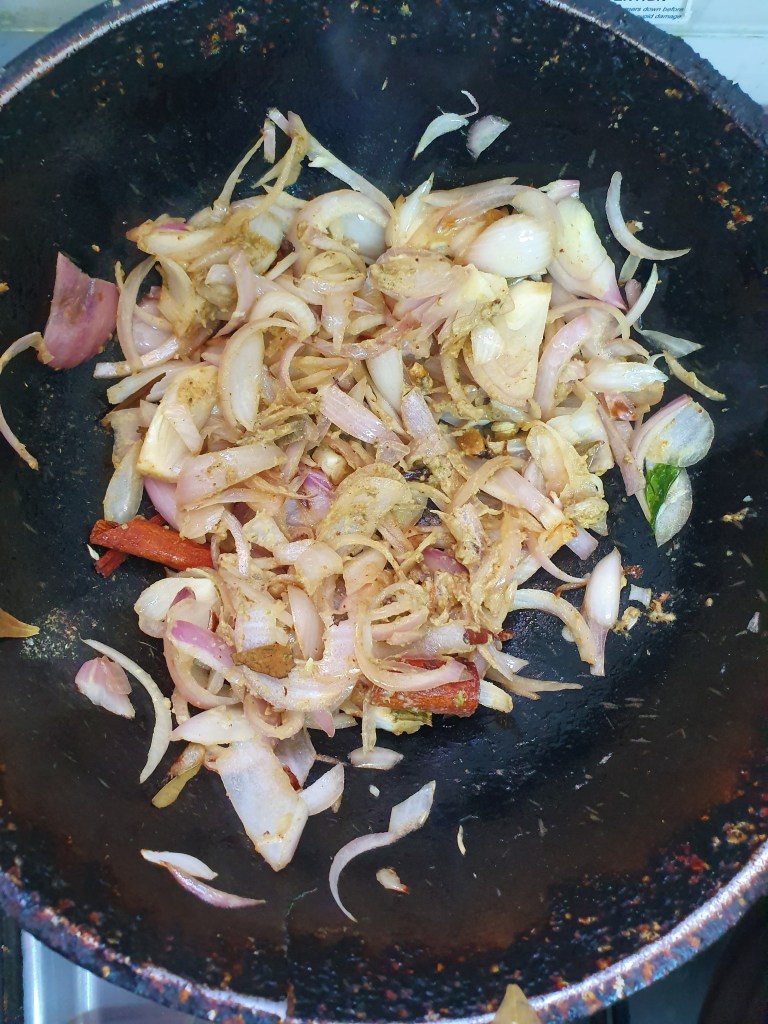
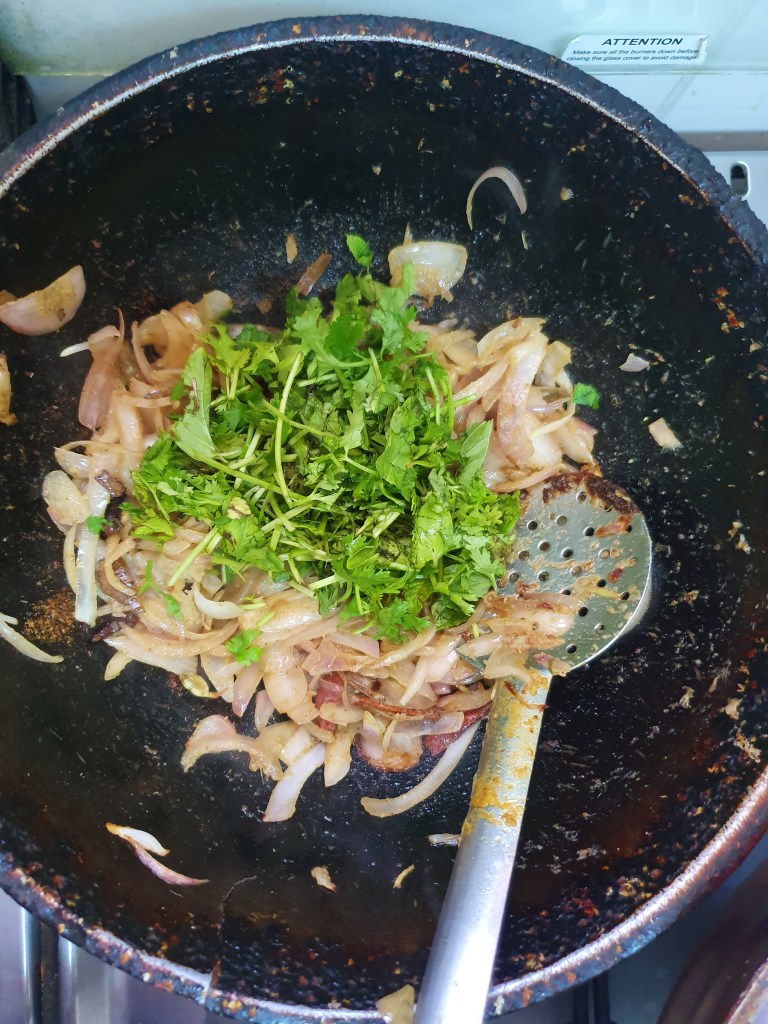
Now, proceed to cook the rice. In another flat bottomed wide pan, heat oil and ghee. Add the whole garam masala (cardamom, cloves, cinnamon and bay leaves) and when it starts to become brown, add the sliced onions (2) and saute well (pic 17). Then, add the ginger garlic paste and half of the green chillie paste and saute again until the raw smell disappears. Add the mint leaves and coriander leaves and saute again (pic 18). Drain the basmati rice and add it to the pan (pic 19) and gently saute it once or twice very gently making sure that the grains do not break (pic 20).

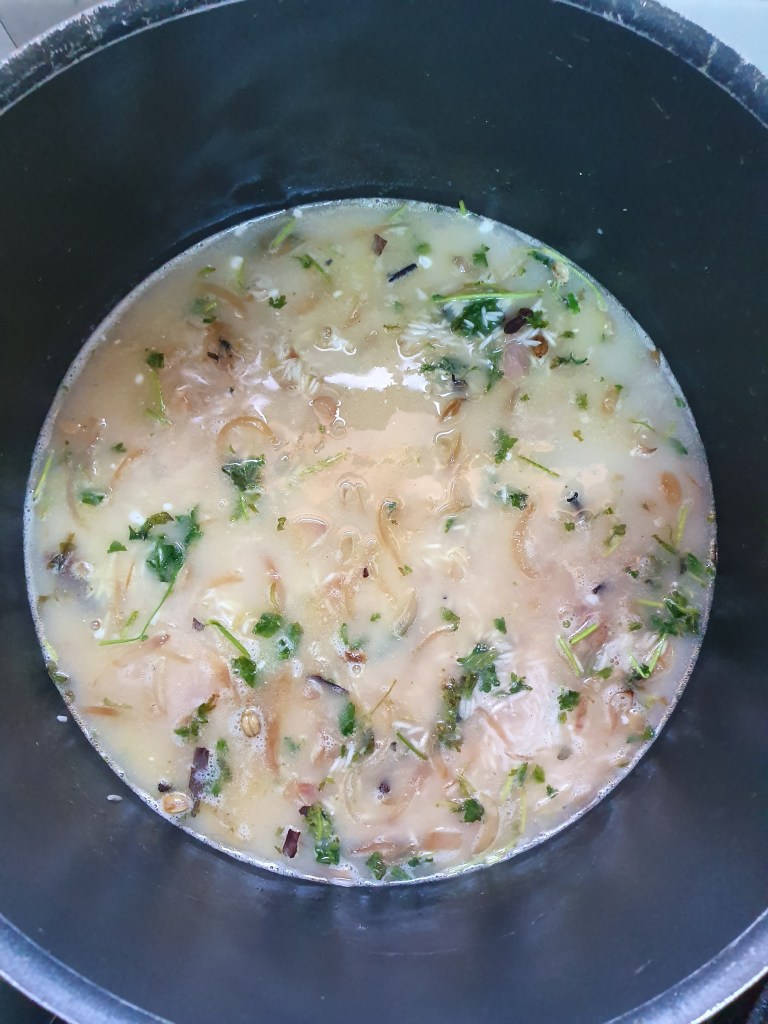
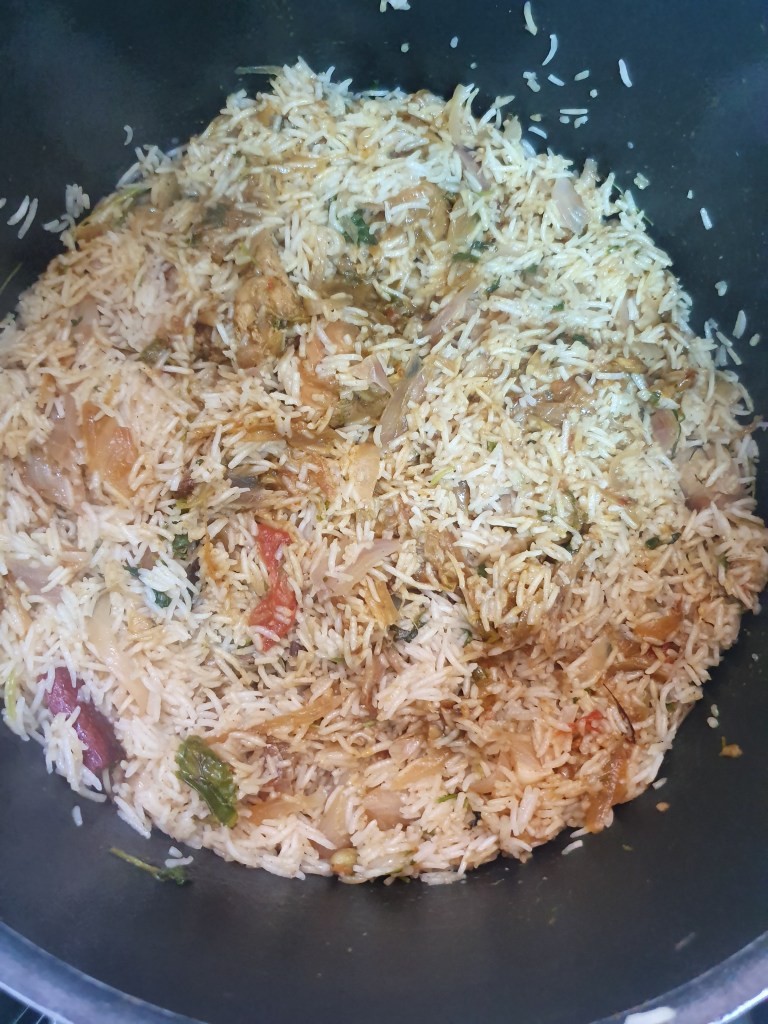
Add 4 1/2 cups of boiiling water and coconut milk powder (or thick coconut milk) to the rice (pic 21). Adjust the salt, add lime juice and close the lid (pic 22) and let it cook on high for 5 minutes (pic 23). When the grains are 3/4 cooked (pic 24), add the chicken masala to the rice (pic 25) and gently mix well to combine. At this point, heat a cast iron tava and place the pan on top of it (pic 26). Close tightly and reduce the flame to slow and cook for 20 minutes. Do not be tempted to open it but make sure the flame is kept low.

After 20 minutes, open and check if the rice is cooked. If not, close and keep it for some more time.

Serve the biriyani onto a serving dish and garnish it with coriander leaves.

Snow Pudding

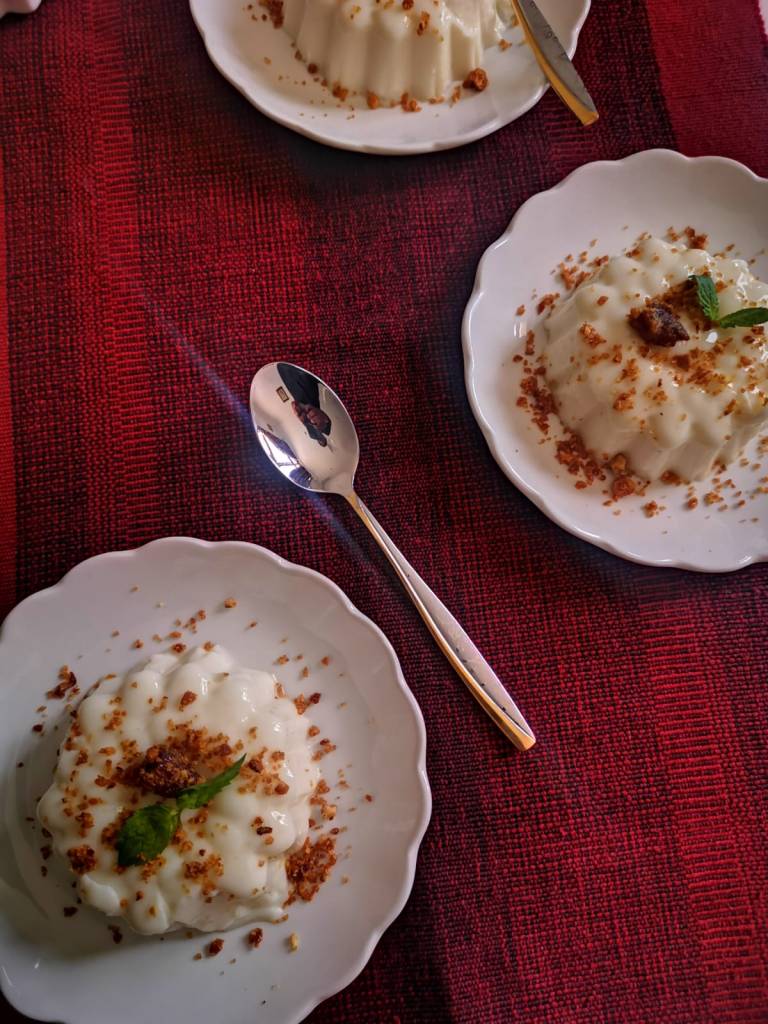
I had a taste of this creamy velvet-rich pudding with caramelized nuts and butter at my neighbour and collegemate Saira Kurian’s home around 15 years back in Qatar and from then on, it has stayed in my recipe book. Easy to make and a crowd stealer, this one is sure to impress.

Makes 10 individual servings

Ingredients:

Condensed Milk – 1 tin

Water – 1 cup

Milk – 2 1/2 cups

Vanilla essence – 1/4 tsp

Sugar – 6 dessert spoons

Thick cream – 1/2 cup

China grass/Agar Agar – 10 gms

Water to melt china grass – 1 1/2 cups

For caramelizing the nuts:

Cashewnuts/Almonds/Walnuts chopped – 3 dessert spoon

Butter – 1 dessert spoon

Sugar – 2 dessert spoons

Baking powder – a pinch

Preparation:

Mix condensed milk, water, milk and sugar in a pan and heat it. Stir until the sugar is dissolved and take it off just before it starts to boil.

Wash china grass, cut it into small pieces and soak it in a bowl of water (1 1/2 cups). Next, take a small pan and on a low flame, melt the china grass until it is completely dissolved. Strain it and add it to the milk mixture. Add vanilla essence to it.

Place the 1/2 cup of thick cream in another bowl and add a ladle or 1/2 cup of the (milk and china grass) mixture to the thick cream and stir it well. When it is combined well with the thick cream, pour it into the remaining (milk and china grass mixture) and stir it well. Do not boil or place it on fire.
It is ready to be poured into individual ramekins or pudding moulds/bowl. Keep it in the refrigerator for 1 -2 hr and it will set. Top it with caramelised nuts and serve it chilled.
To serve, pass a butter knife around the moulds to loosen the pudding from around the sides. Invert the pudding onto a serving plate. Top it with coarsely powdered nut brittles/caramelised nuts.

To make the caramelized nuts:

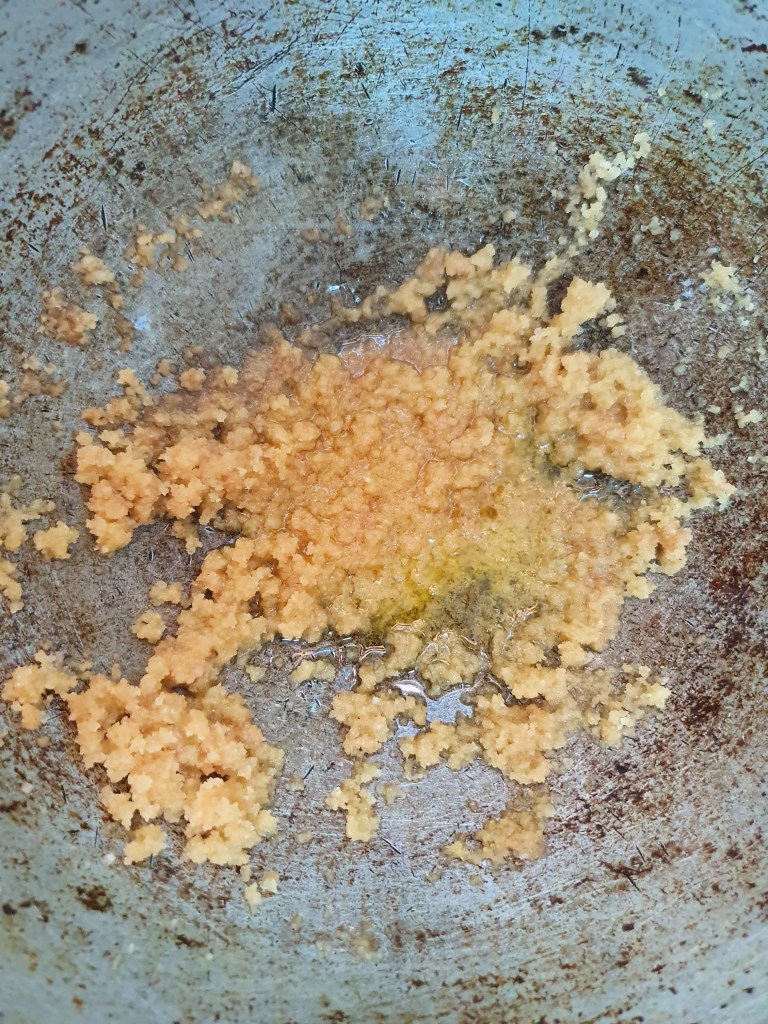
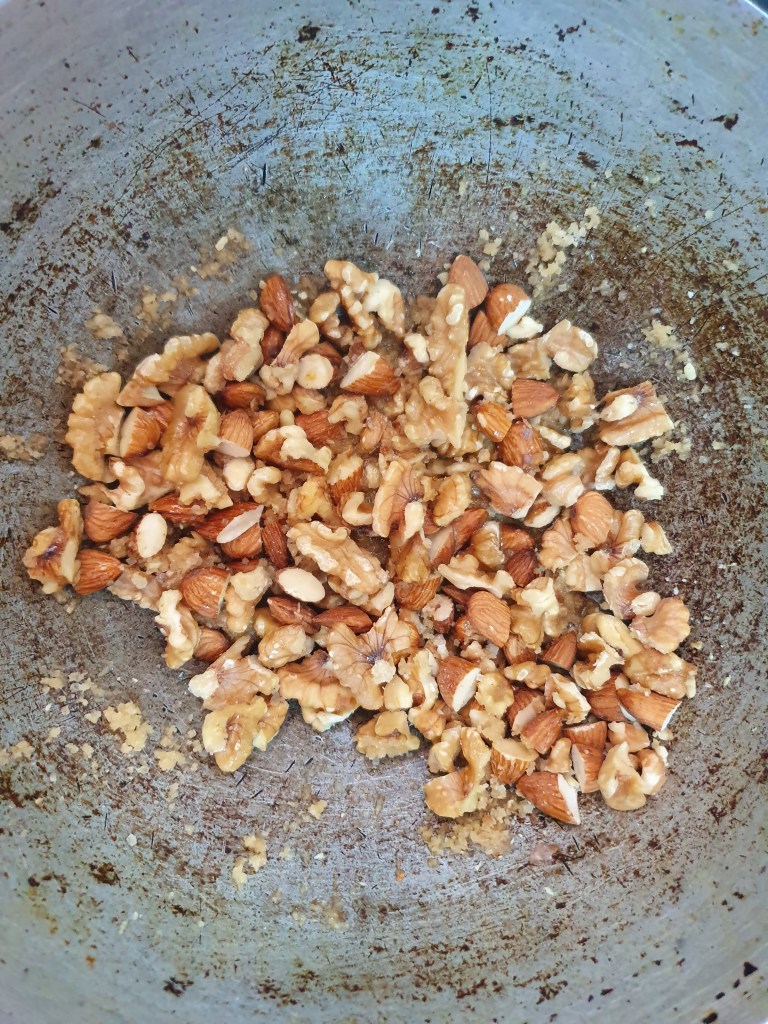
Heat a pan. Reduce the flame and add butter. When it melts, add the sugar and baking powder and keep stirring until it becomes slightly brown in colour. Now, add in the chopped nuts and stir it again for another 3 -4 minutes. When the sugar and butter start to coat the nuts, switch off the flame and spread it on a plate and let it cool for 30 mnutes. The nutty brittle will be ready. Coarsely powder it when it becomes cool.

Note: If you are running short of time, you may chose to skip caramelizing the nuts and use store bought chikkis. You can also use powdered panakalkandu (Powdered palm sugar) which is equally awesome and sprinkle over the pudding.

Tamilnadu Style Fish Curry

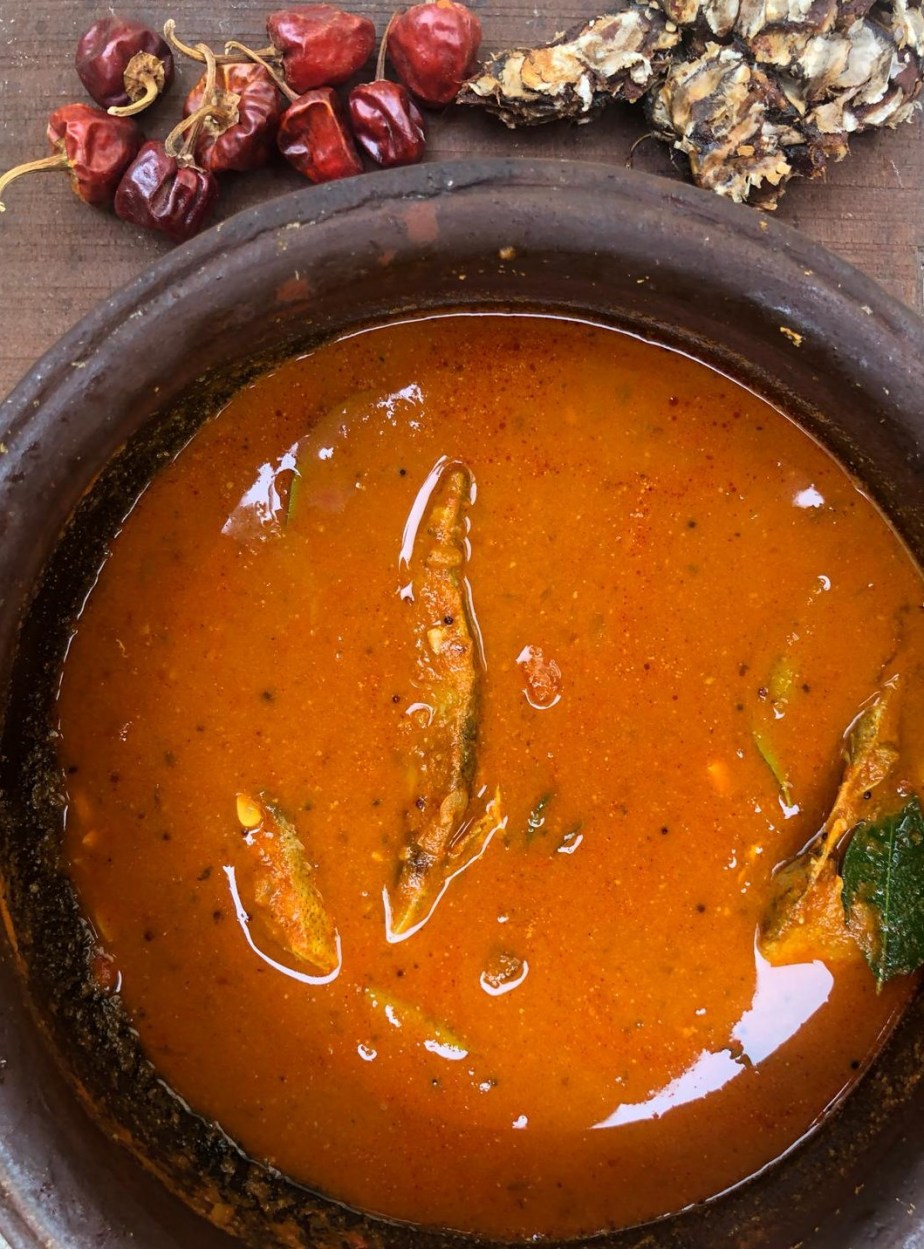
A medium spicy blend of chillies and tamarind, this fish curry can be served with rice or dosas or idlis. There are many different ways of making fish curry in Tamilnadu. This style of the recipe was followed by my mother in law and I have always loved it.

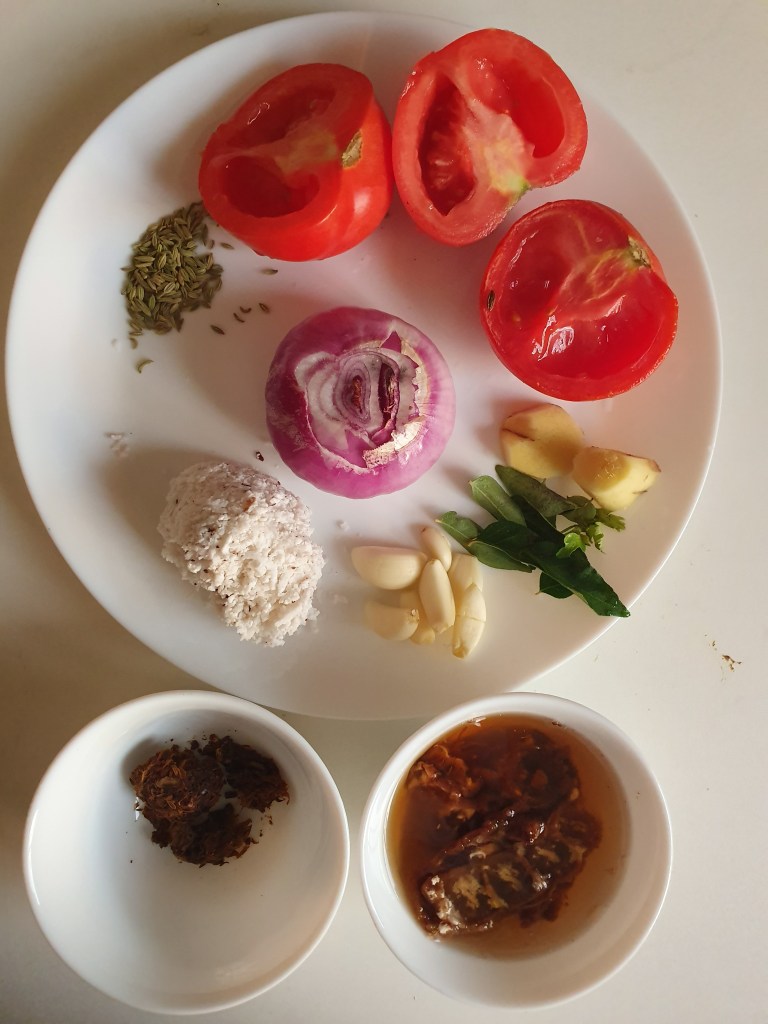
I have seasoned the curry using vadavam (vadouvan), french derivative for this masala. The spice blend is thought to have originated from the colonial influence of the French in the Pondicherry region of India. (Pictured below). The spice blend contains pounded onion, garlic, cumin seeds, mustard seeds and fenugreek seeds which are sun dried, then crushed and mixed with castor oil, rolled into balls and dried for several more days.

If you do not have vadavam, you could use the items mentioned “under seasoning” which would be readily available in your pantry.

To Grind:

Onion – 1 big

Tomato – 2 1/2 medium

Green chillies – 2

Garlic – 5 cloves

Ginger – 3/4 inch piece

Saunf – 1/4 tsp

Curry leaves – 4 or 5

Grated coconut – 2 tbsp

Other ingredients:

Fish – 1/2 kg

Oil – 1 1/2 tbsp

Tamarind – a small ball (to make 1/4 cup of thick extract)

Water – 2 1/4 cups

Chillie powder – 2 tsps

Coriander powder – 2 tsp

Cumin seed powder – 1 tsp

Pepper powder – 1 tsp

For seasoning:

Mustard seeds – 1 tsp

Jeera seeds – 3/4 tsp

Curry leaves – 1 1/2 sprigs

Garlic cut into small pieces – 1/2 tsp

OR

Vadagam – 1 tsp crushed

Oil – 1 tsp

Preparation:

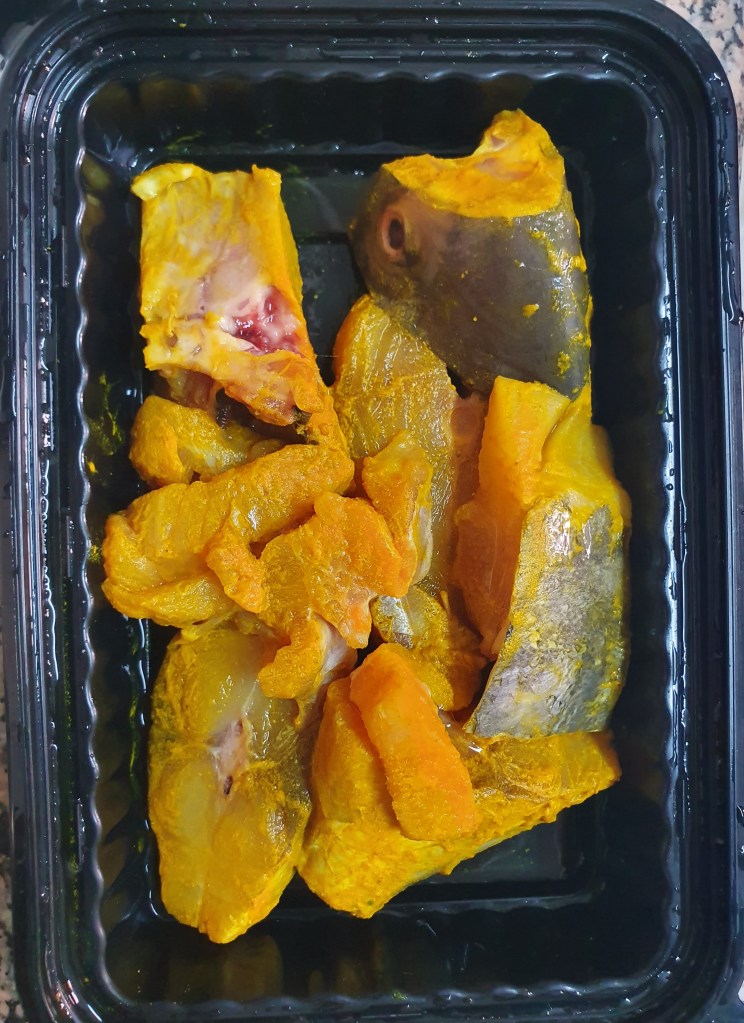
Wash and clean the fish well. Add 1/4 tsp turmeric powder and 1/4 tsp of salt to the fish and keep it aside.
Soak tamarind in 1/2 cup of warm water. After 10 minutes, extract 1/4 cup of thick extract and keep it aside.

In a mixer, grind the items under ‘to grind’ to a smooth paste.

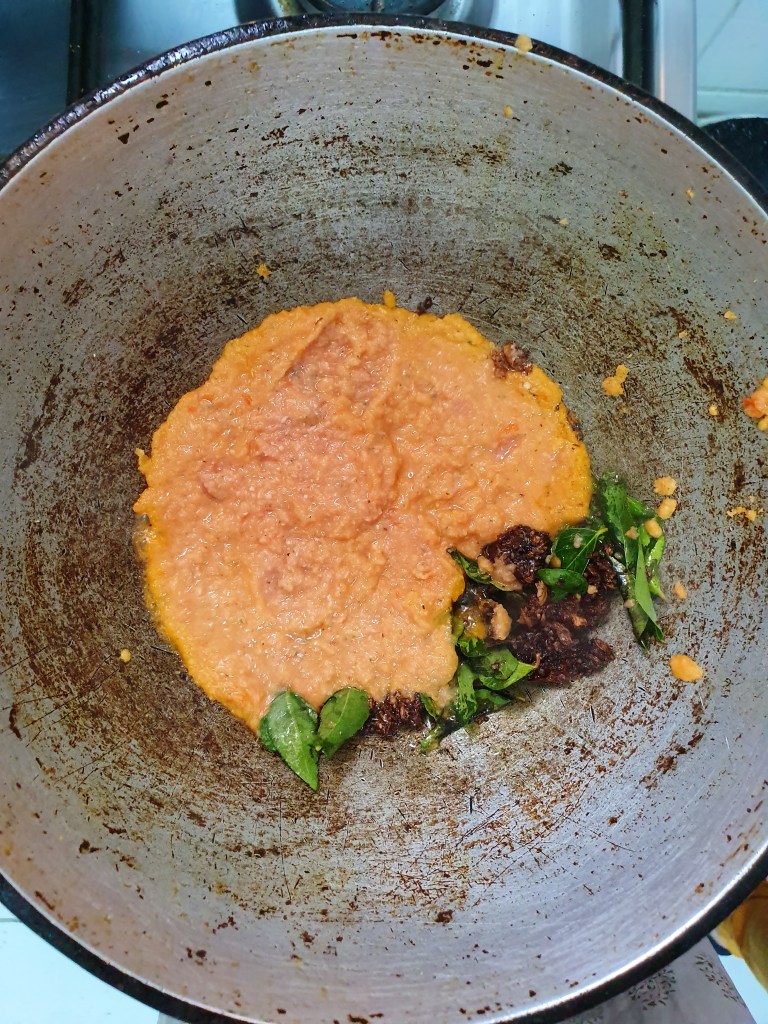
Heat a kadai or clay plot. Add oil and when it becomes hot, add the seasonings/vadagam and curry leaves. When it starts sizzling, add the ground paste to it and saute it well for 5 minutes until the raw smell disappears. Add 1/4 cup of the tamarind extract to this paste and saute again.

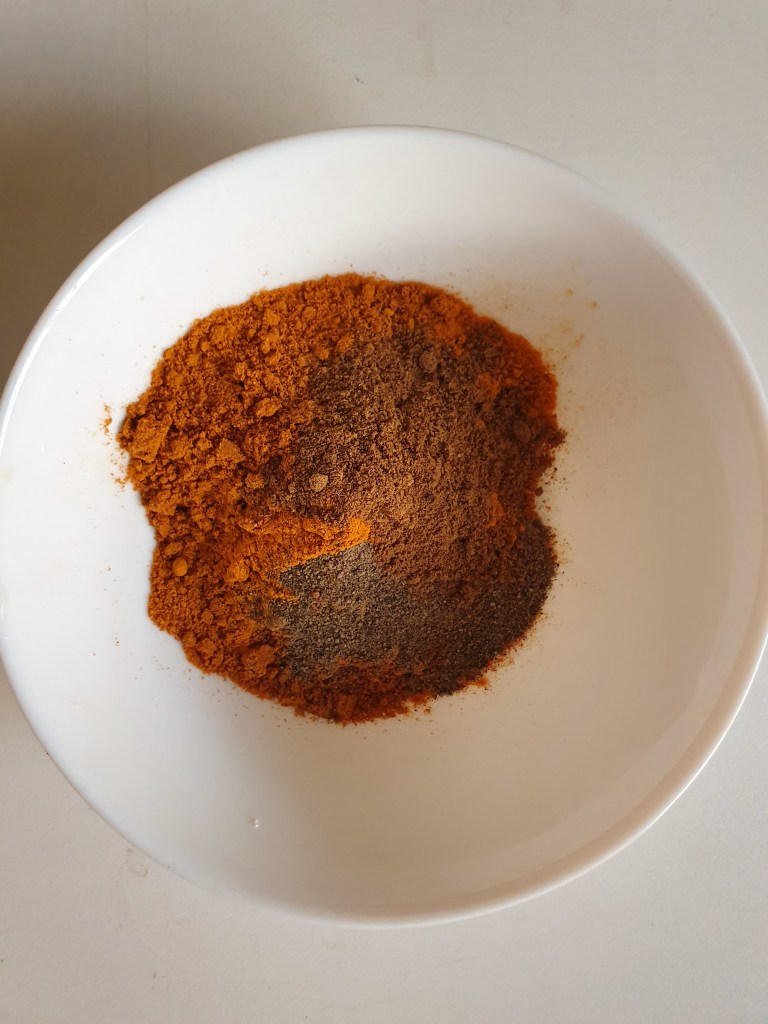
In a separate bowl, add the red chillie powder, coriander powder, cumin seed powder, turmeric powder, pepper powder and salt. Add 2 1/4 cups of water to it and mix well.

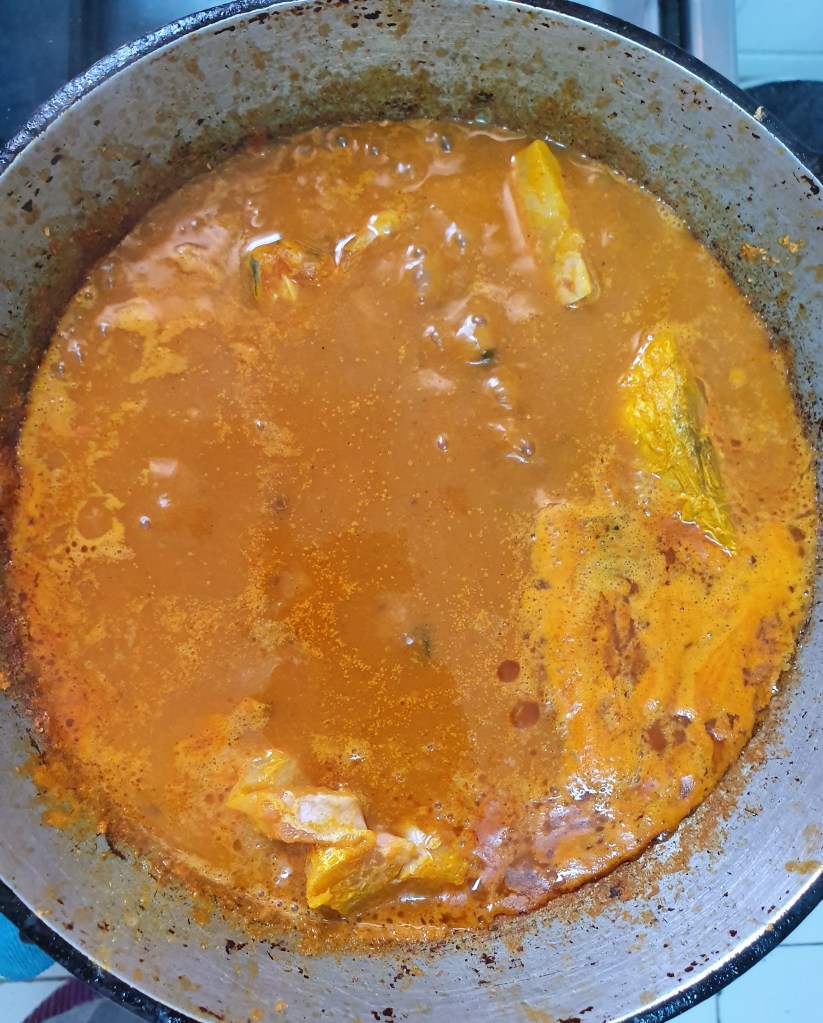
Add the liquid to the pan/clay pot and let it boil for a full 8-10 minutes on low flame. Then, add the cleaned fish to it and cover and cook for 4-5 minutes. Put off the flame and serve with rice.

Garnish it with some coriander leaves.

Semiya(Vermicelli) Upma

An Indian breakfast dish made with vermicelli/semiya and vegetables which you can make for your everyday breakfast. A perfect dish to pack your lunch box too.

Ingredients:

Fine Semiya/Vermicelli – 2 cups

Oil – 2 tbsp

Mustard seeds – 1 tsp

Udad dal – 1 tsp

Chana dal/bengal gram dal – 3/4 tsp

Cashew nuts – 8-9 (optional)

Curry leaves – 15 leaves

Onion – 1 big finely chopped

Green chillies – 3 slit

Carrot – 1 finely chopped

Capsicum – 1 finely chopped

Fresh or Frozen Green Peas – 1/2 cup finely chopped

Lime juice – 3/4 tsp

Fresh coriander leaves – 2 tbsp

Salt – to taste

Water for boiling vermicelli/semiya – 5 cups

Preparation:

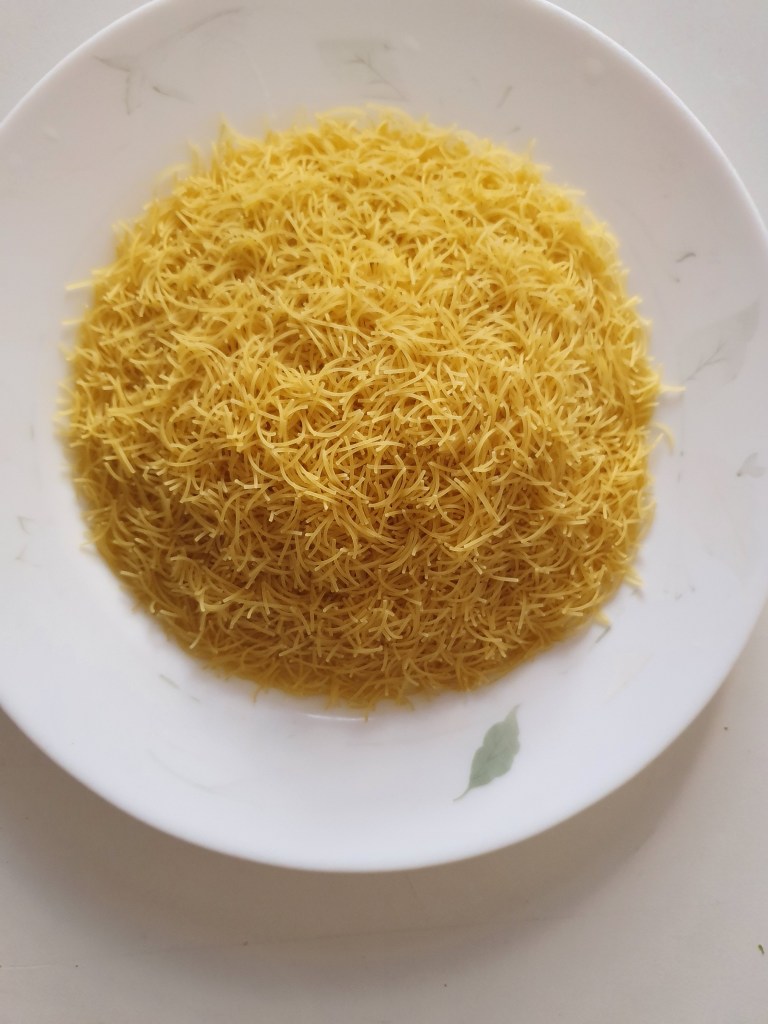
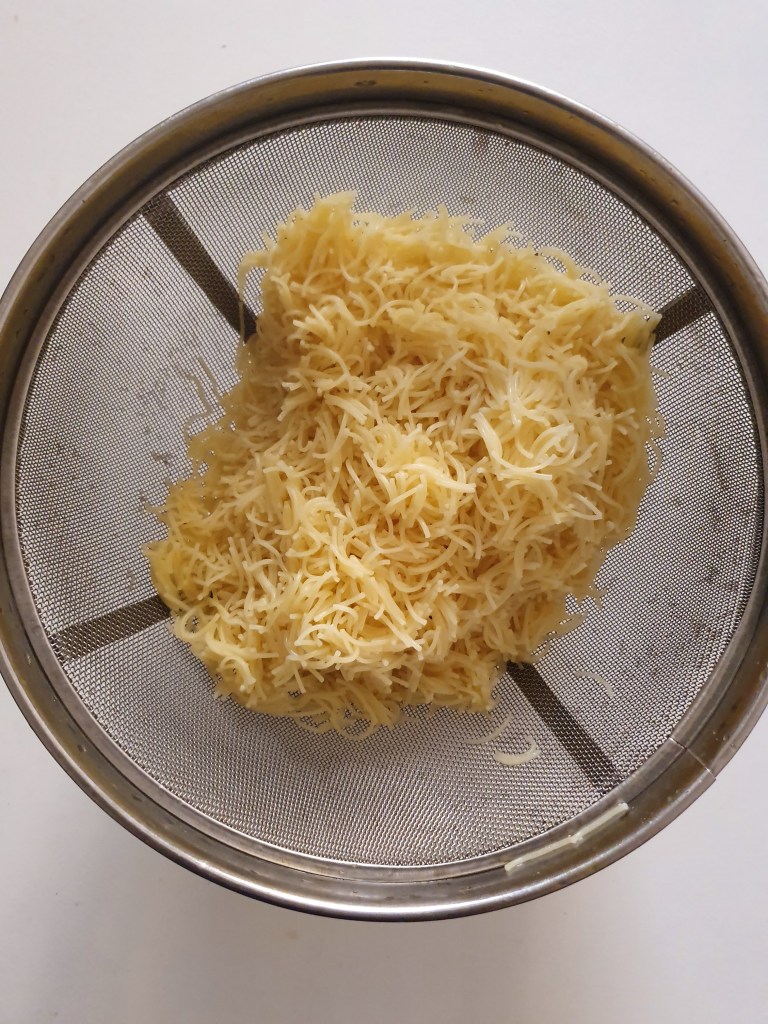
Heat a pan with a broad base and add 5 cups of water to it. When it starts boiling, add the semiya and cook it for just 2 minutes. Take it off the pan immediately and rinse it with cold water in a sieve. It cooks very fast, so cooking it any longer may make it mushy.

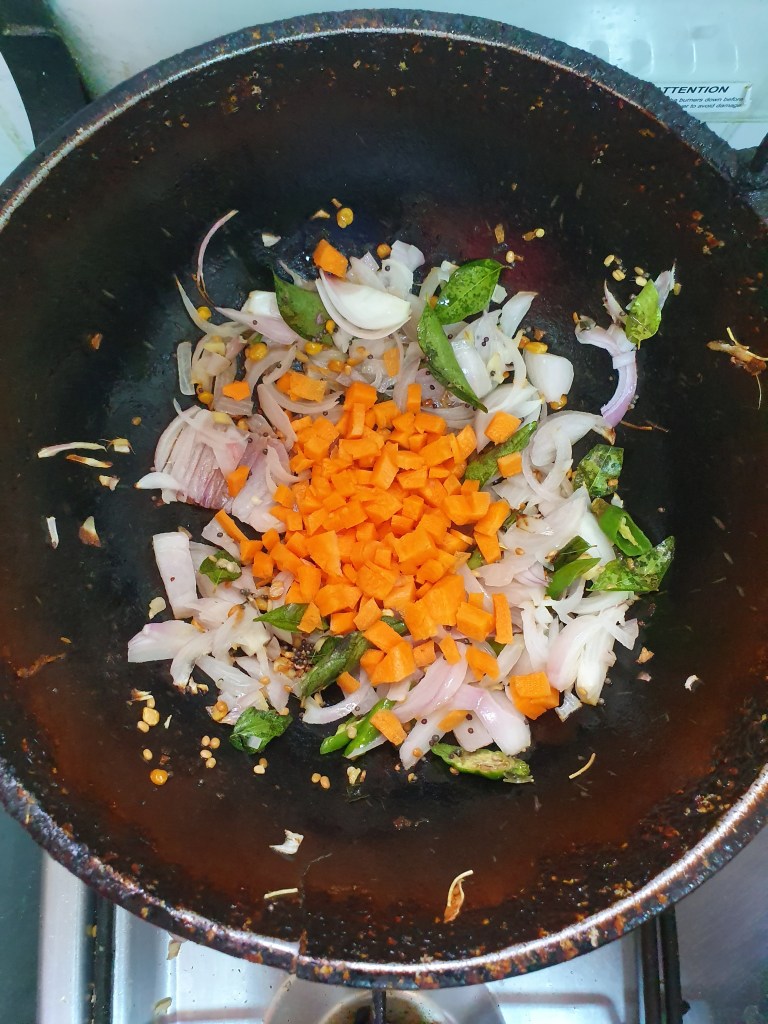
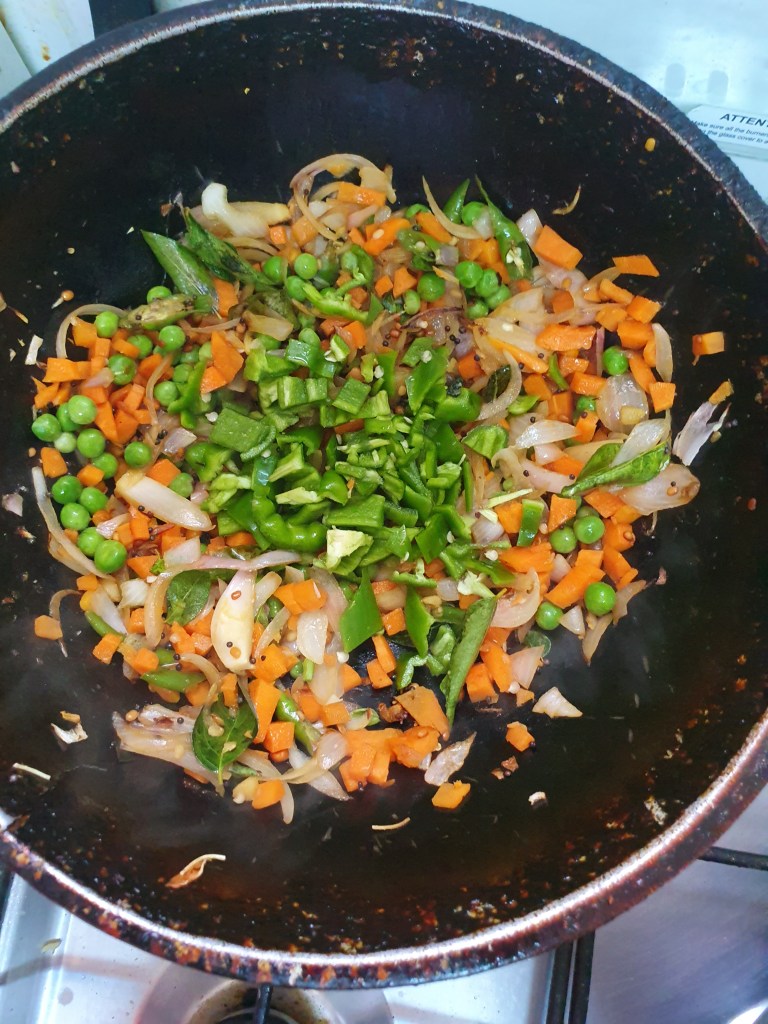
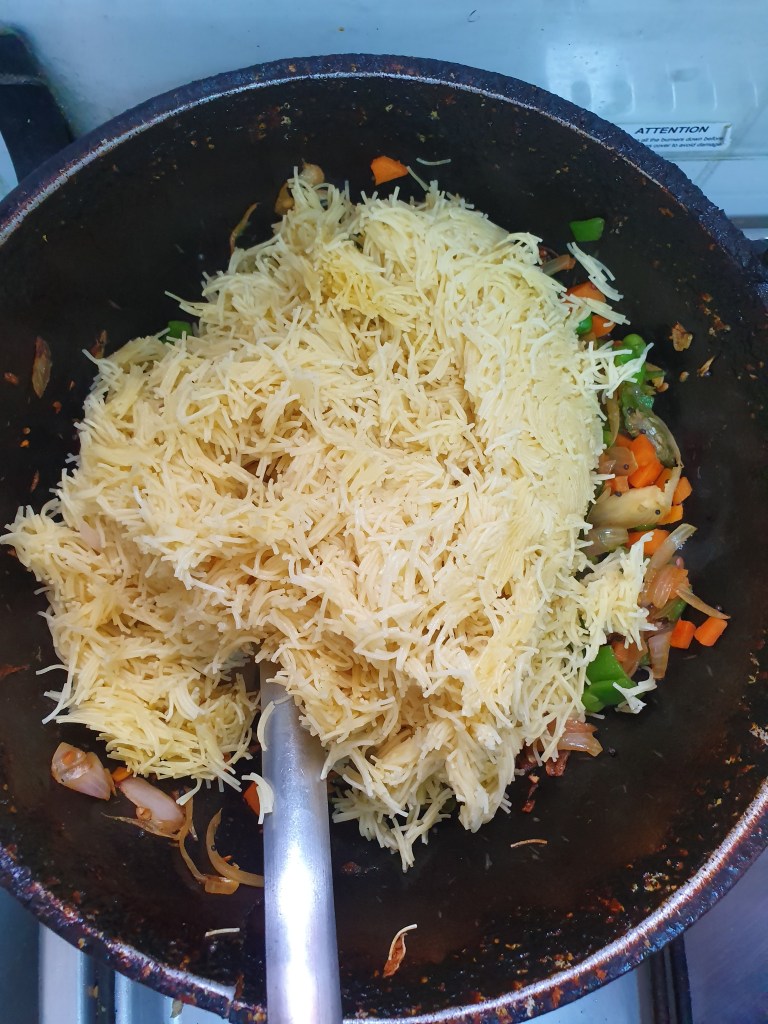
Heat another pan/kadai. Add oil. When it is hot, add the mustard seeds, udad dal and chana dal and saute them well till they turn golden in colour. (If you are using cashewnuts, add it and saute). Then, add the curry leaves, green chillies and the chopped onions. Saute till it turns translucent. Next, add the chopped carrots and saute for 2 minutes. Then in goes the green peas and the chopped capsicum. Saute it well for another 2 minutes. Sprinkle little water, add 1/4 tsp salt and then cover and cook the vegetables for 2- 3 minutes on a low flame. Open the lid and saute again. Now, add the semiya/vermicelli to it and mix it well. Keep in low flame for 3 – 4 minutes. Adjust the salt.

Add coriander leaves and lime juice to it before serving. Mix it well and serve hot.

Note: Some recipes call for roasting the semiya in ghee/oil and then adding water to it alongwith the veggies for cooking. I prefer my method of boiling the semiya in hot water, taking it off immediately and rinsing it in cold water and then adding it to veggies in the pan. This way it does not stick to each other and the oil used is also less.