A healthy South Indian breakfast recipe which is popular in Tamilnadu. A one pot recipe and easy to make, pongal can be served with chutney and sambar.
Ingredients:
Oats – 1 cup
Yellow moong dal – 1/2 cup
Water – 3 cups
Salt to taste
Seasonings:
Ginger – 1 inch piece grated
Black pepper corn – 1/2 tbsp whole
Cumin seeds – 2 tsp
Cashew nuts –2 tbsp broken
Asafoetida – 1/2 tsp
Curry leaves – 1 1/2 sprigs
Ghee or clarified butter – 2 tbsp
Oil – 1 tbsp
Preparation:
Roast the oast in a pan for 2 – 3 minutes and keep it aside.
Wash moong dal well and add it to the pressure cooker. Add salt and water. Mix well and pressure cook for 3 whistles (After the 1st whistle, reduce the flame and keep it on a slow flame for 7-8 minutes. When it cools down, open and check if the dal has cooked fully well. It should be soft and mashable. Heat the cooker again and when the dal starts to boil, add the roasted oats and keep stirring for 2 – 3 minutes. Add 1/4 cup of hot water if required as it should be of a semi-solid consistency. Once the oats is cooked, put off the flame.
Heat a pan with ghee and oil. Add jeera and pepper corns followed by other seasonings.
Pour the seasoning to the pressure cooker and using a spatula mix vigorously distributing the seasoning evenly.
Serve this ven pongal very hot along with coconut chutney, sambar and filter coffee for a sumptuous breakfast.
You can drizzle more ghee on top of ven pongal before serving, in case you like it.
A Popular Indian deep fried and puffed bread made from whole wheat flour or all purpose flour. Pooris is a very versatile dish as it can be paired with savoury curries like potato curry or chicken curry or with sweet dishes like Maharshtrian aamras or Gujarati suji halwa.
Makes 8-10 medium sized puris. (Check the notes below to make crispy puris).
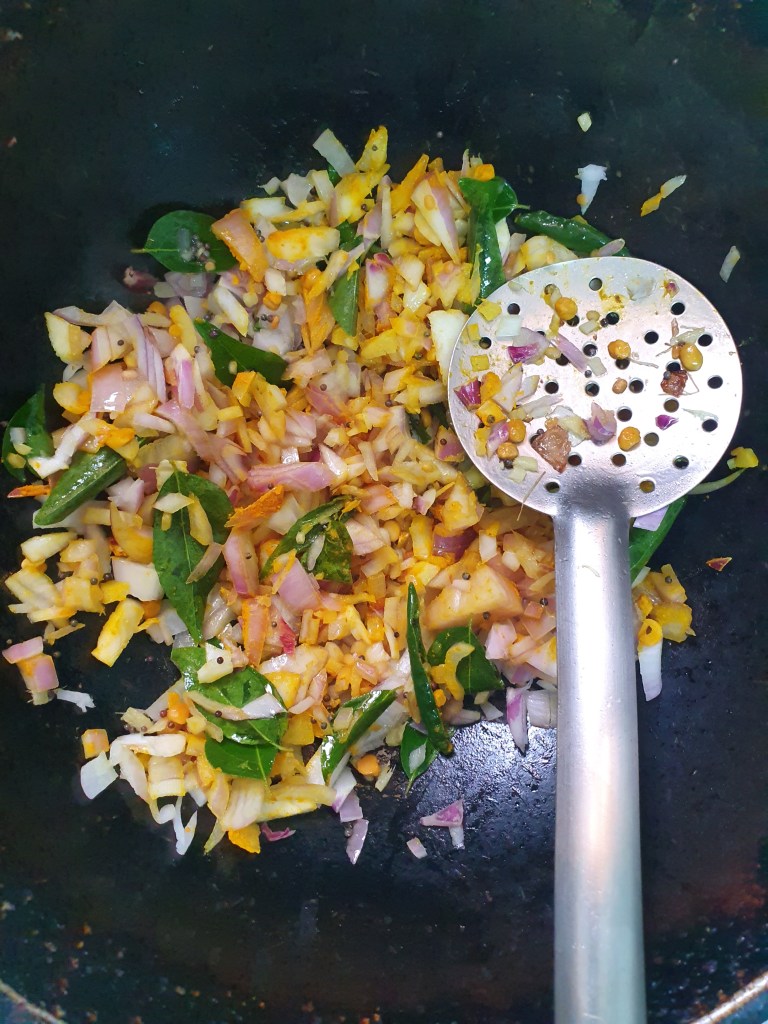
In oil, add dals, onions, green chillies, ginger, curry leaves, tomato and saute
Boiled potatoes
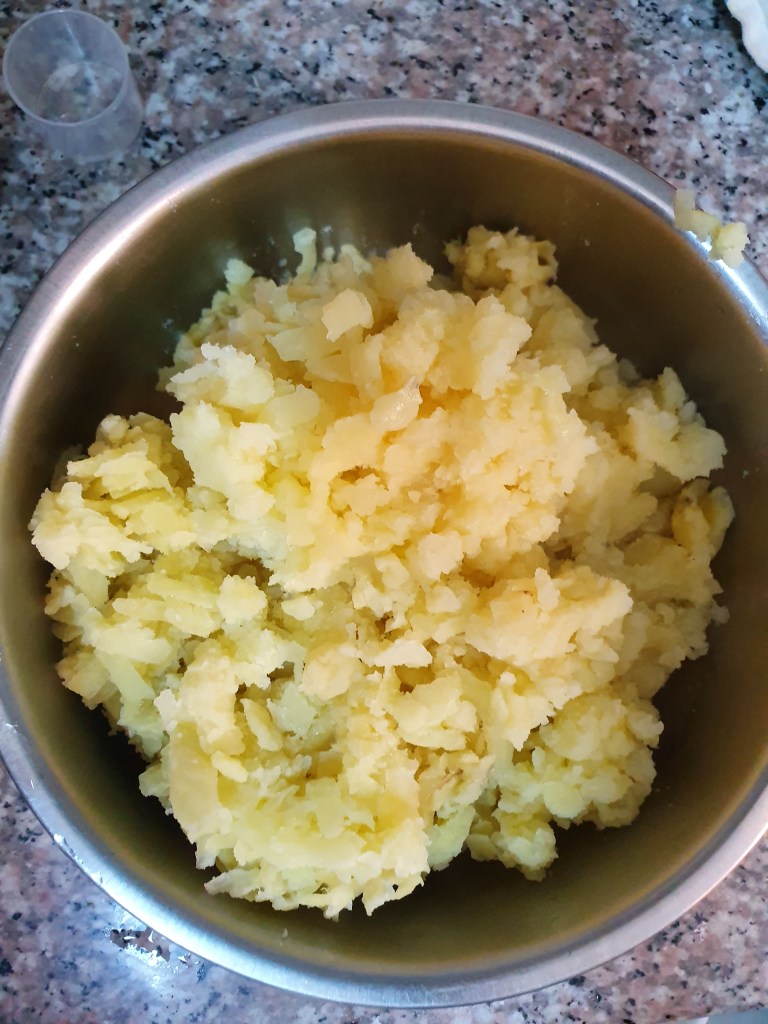
Mash the potatoes
Add the mashed potato to the pan and mix well
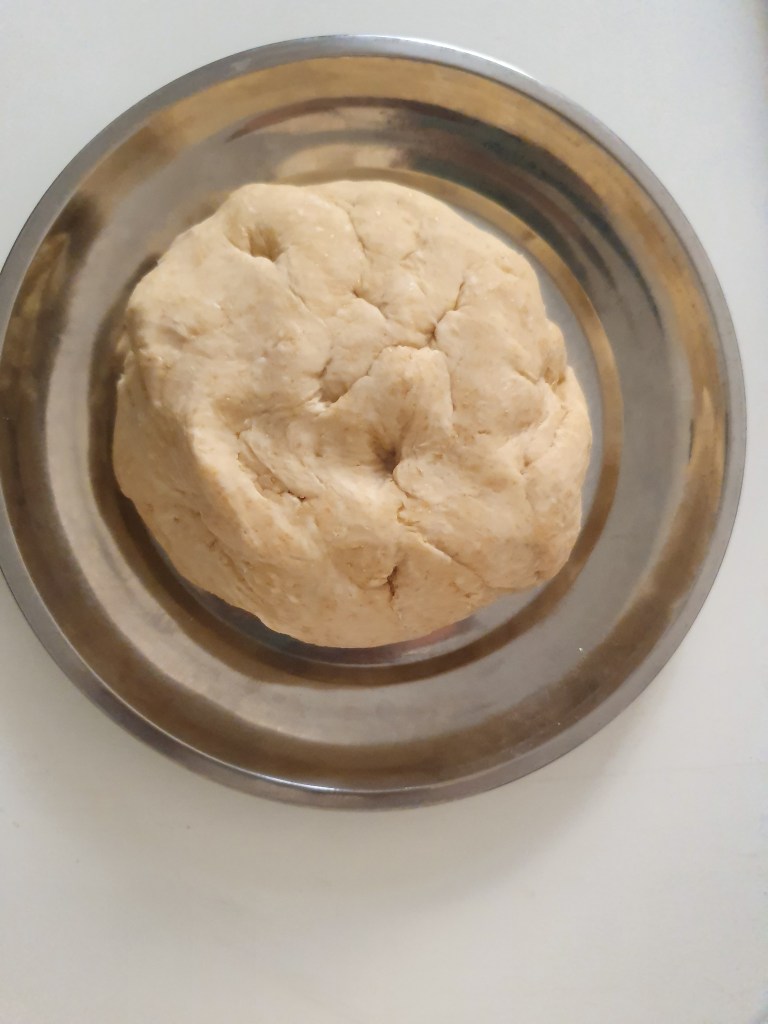
Knead into a firm dough
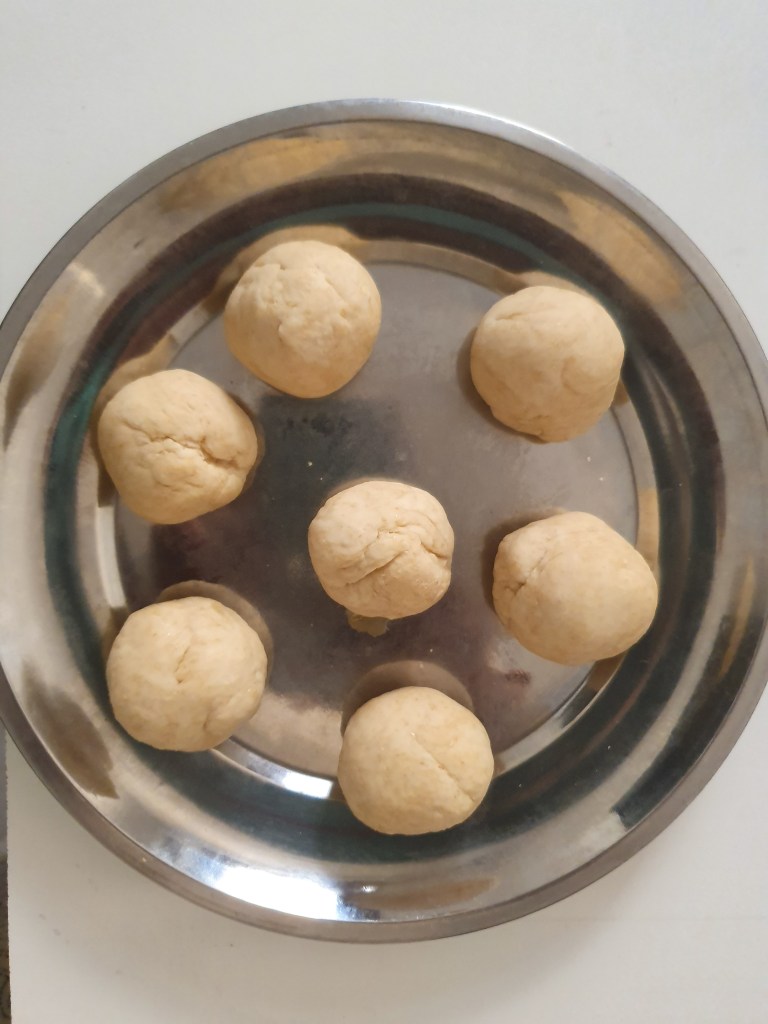
Divide into 7-8 equal balls
Roll it out into 2-3 inch circles
Ingredients:
For Pooris
Whole wheat flour or all purpose flour – 2 cups
Hot oil – 2 tsp
Water – 1/2 cup
Semolina/Rava – 3 tbsp
Salt – to taste
Oil for deep frying
For Potato baaji or curry:
Potatoes – 5 medium
Garlic – 4- 5 sliced (optional)
Onion – 1 large (sliced or chopped)
Tomato – 1 medium
Ginger chopped – 3/4 tsp
Curry leaves – 1 1/2 sprigs
Chana dal/Bengal gram dal – 3/4 tbsp
Urad dal – 3/4 tbsp
Green chillie – 3 or 4 slit
Coriander leaves – 2 tbsp chopped
Water – 1 cup
Oil – 1 1/2 tbsp
Mustard – 1/2 tsp
Turmeric powder – 1/2 tsp
Preparation of Potato masala
Wash potatoes and cut them into 4 pieces. Pressure cook them in a cooker for 2 whistles or cook them in a pot until they are soft.
Heat oil in a pan. Add mustard and when it starts to sizzle, add the chana dal and udad dal. Then add the curry leaves, green chillies and ginger and saute them for a minute. Next, add the chopped or sliced onions and turmeric powder and saute until it becomes translucent. Add the tomatoes and fry until it becomes mushy. Now, mash the potatoes well and add it to the pan. Check salt and add water. Cover and let it simmer for 3-4 minutes on medium flame.
Mix well and when it beome slightly thick, sprinkle coriander leaves. Serve it with hot puris.
Preparation of Pooris:
Take the flour in a bowl and add salt. Add a tsp of very hot oil to it and semolina. Mix well with your fingertips and adding little water at a time, knead it into a smooth and tight dough. It should not be soft like chapathi or roti dough).
Cover and rest the dough for 10 minutes. After the resting time, knead the dough once again.
Divide it into 10 equal sized balls. Make smooth balls out of it. Roll out these balls into 2-3 inch diameter circles. It should not be too thin or thick as it will not puff up.
Roll out a few pooris and place them on a plate. Cover it with a kitchen napkin.
Heat oil in a pan. When it becomes hot, reduce the flame to medium and gently slide the rolled out poori into the hot oil, one at a time. Using a slotted spoon, slightly nudge the pooris while it is frying so that it will puff up well. Once it becomes golden, flip to the other side and fry it.
Remove using the slotted spoon and place it on a paper towel lined serving plate.
Notes/Tips for crispy and fluffy puris:
1. The semolina added to the flour makes the pooris crispy and stays puffed up for more time.
2. Hot oil is added to the dough to make it crispier.
3. The dough should not be soft but it should be knead firm and tight in order for it to puff up well.
A popular authentic dish of Karnataka, this is often made for breakfast at my home. A little different from the usual upma, this one is made with vegetables, semolina and unique spice powders which adds to its taste. If you are not an upma fan, give this one a try and I am sure you will love it.
I have mentioned the recipe for the spice powder in the note below the recipe. You could also use store bought sambar powder or the readymade bisibela baath powder, if you run short of time to make the spice powder.
Serves 4 -5 persons
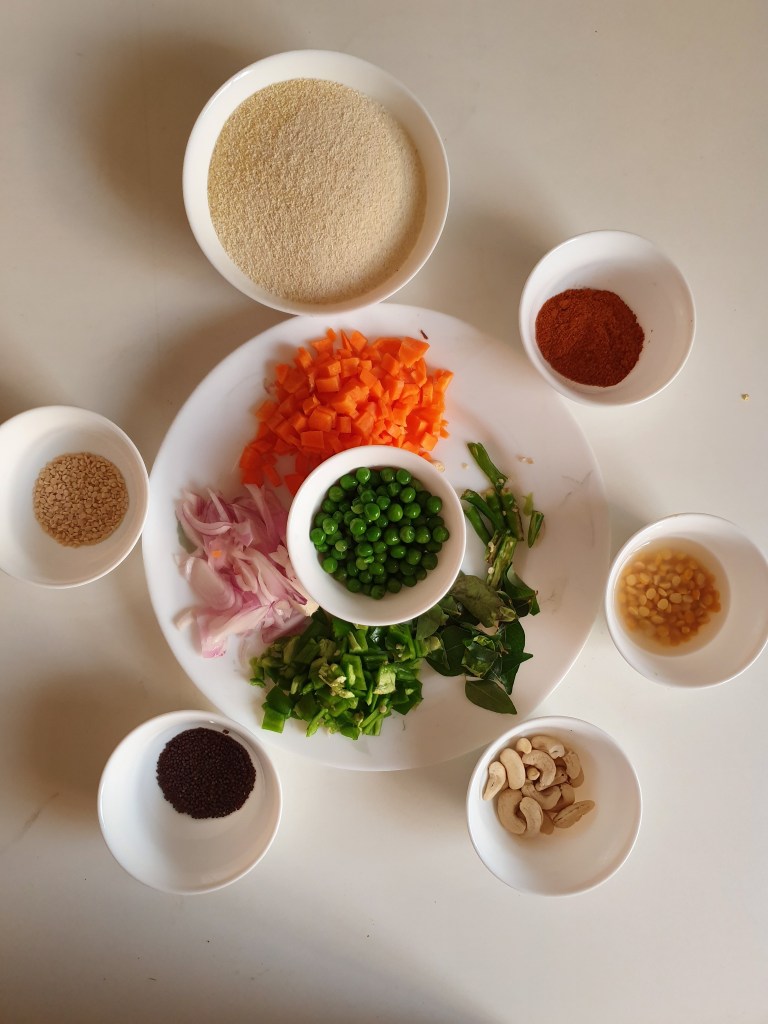
Ingredients:
Rava/Semolina – 1 1/2 cups
Water – 4 1/2 cups
Carrot – 1/2 diced into small pieces
Curry leaves – 7-8
Green peas – 1/4 cup
Capsicum/Green peppers – 1 small
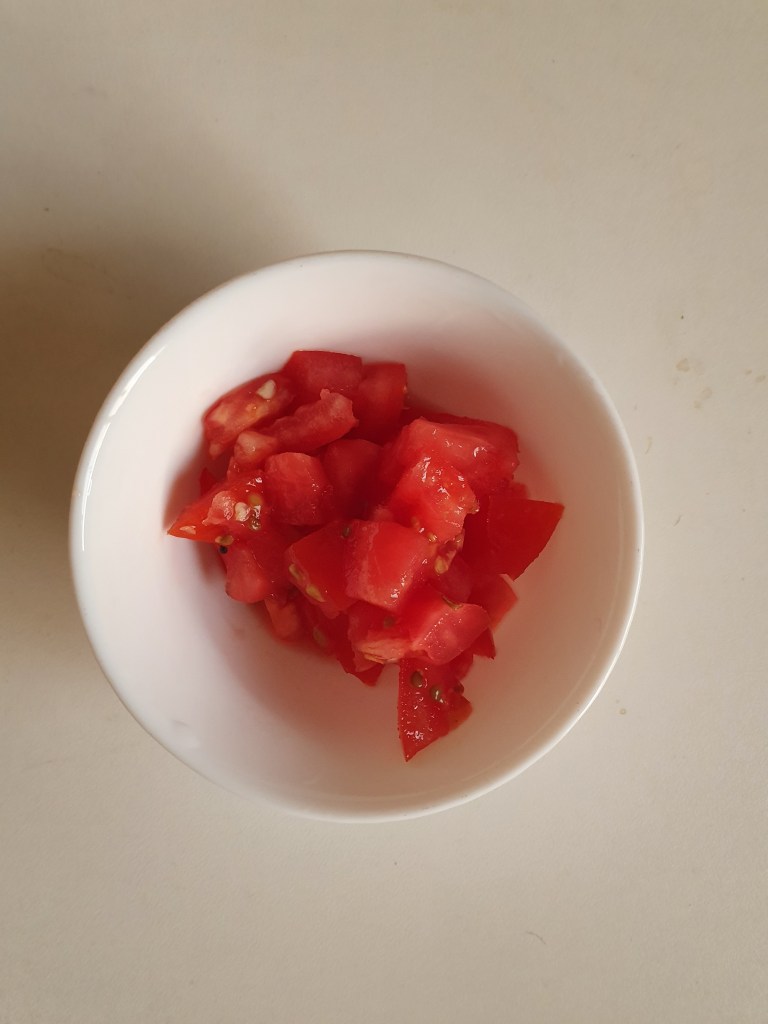
Tomato – 1 small
Onion – 1 medium sliced
Green chillies – 3
Vangi baath Masala powder/Bisi bela baath powder/Sambar powder – 2 tbsp
Ghee – 1 tsp
For seasoning:
Mustard – 1 tsp
Udad dal – 1/2 tsp
Bengal gram dal/chana dal (pref soaked in water for 10 minutes) – 1/2 tsp
Cashewnuts – 6-7
Oil – 1 tsp
Preparation:
Heat a pan and add semolina to it. Saute it for 3 – 4 minutes and transfer to a plate and keep it aside.
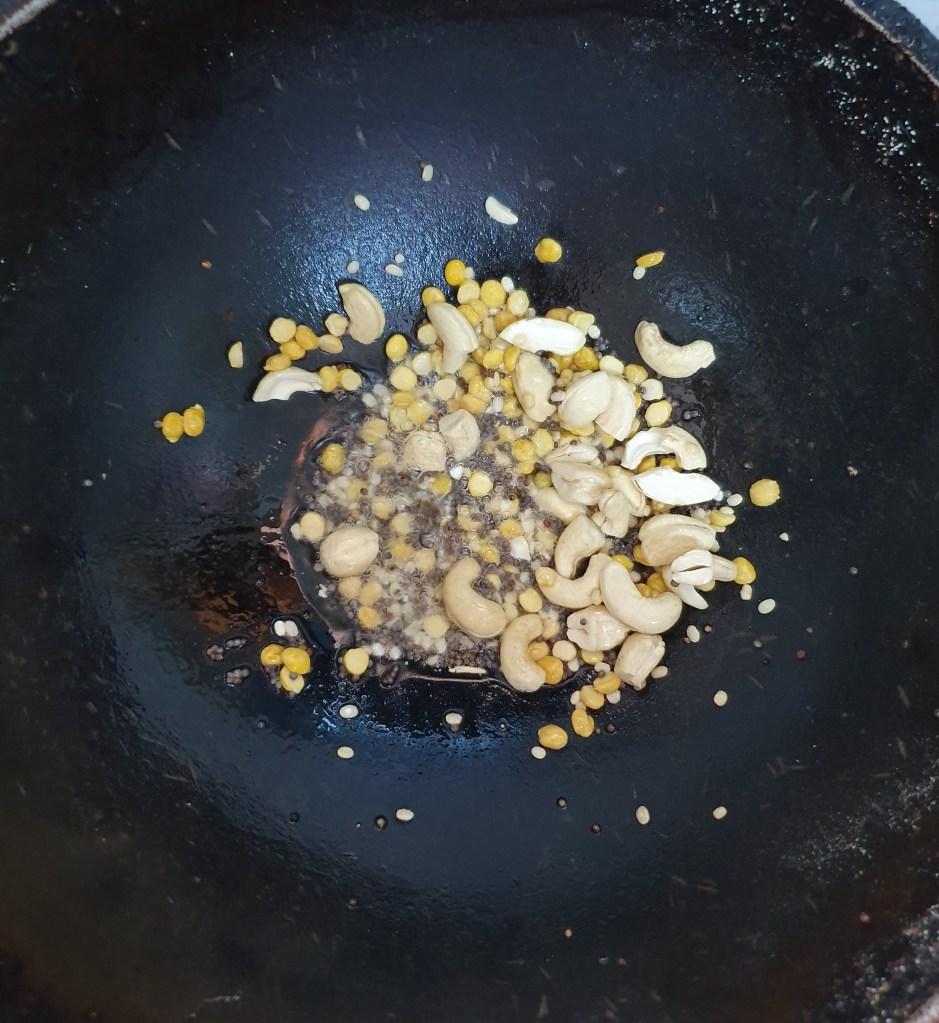
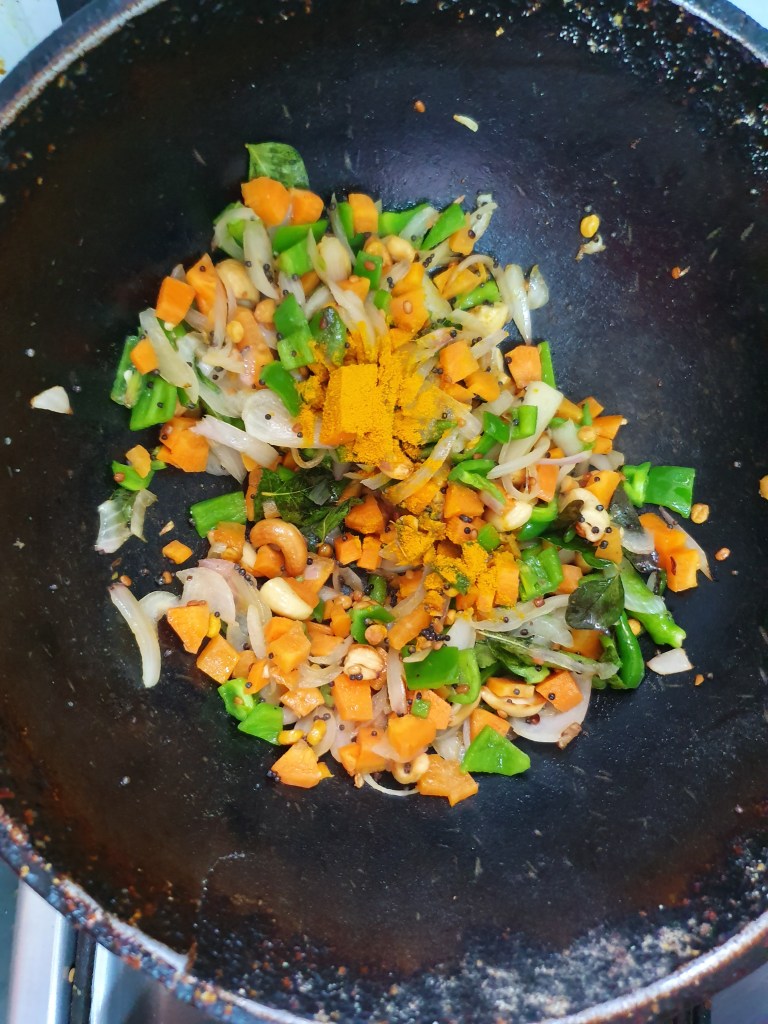
In the same pan, add oil and when it turns hot, add mustard. When it starts to sizzle, add bengal gram dal and udad dal to it. Reduce the flame to medium low. When it starts to slightly turn golden in colour, add cashewnuts, curry leaves and green chillies. Saute it for a minute and add sliced onions. Saute well and when it turns translucent, add the tomatoes. When it turns mushy, add the carrots, capsicum and peas and stir fry it on a medium flame.
Next, add the spice powder (vaangi baath powder or bisi bela baath powder) to it and saute well for 3 minutes. Add water and salt and let it come to a boil. When the water starts to boil, reduce the heat and add the semolina slowly, little by little. Continue stirring the pan so that there are no lumps. Keep stirring to ensure no lumps are formed. Stir it well, close with a lid and cook for 3 – 4 minutes until the semolina is cooked.
Serve it hot with any chutney of your choice.
Note:
Bisi Bela Baath powder:
Oil – 1 tsp
Coriander seeds – 3 tsp
Urad dal – 2 tsp
Bengal gram/Channa Dal – 1 tsp
Cinnamon – 2 inch stick
Cloves – 2
Dry red chillies – 7 or 8
Khus khus – 1/2 tsp
Jeera – 1/4 tsp
Pepper – 1/4 tsp
Dry coconut (Copra) – 1 or coconut – 1/2
Instructions:
Heat 1 tsp of oil and saute jeera, pepper, coriander seeds, bengal gram dal, urad dal, fenugreek seeds, cardamom, cinnamon, cloves and red chillies. Saute until dal starts to change color.
Add khus khus and saute for few seconds on low heat. Add the dry coconut and saute for few minutes on low heat, stirring continuously. Or if coconut is used, it is to be roasted slightly and then powdered alongwith the other ingredients.
Turn off the heat and leave it to cool and powder it coarsely.
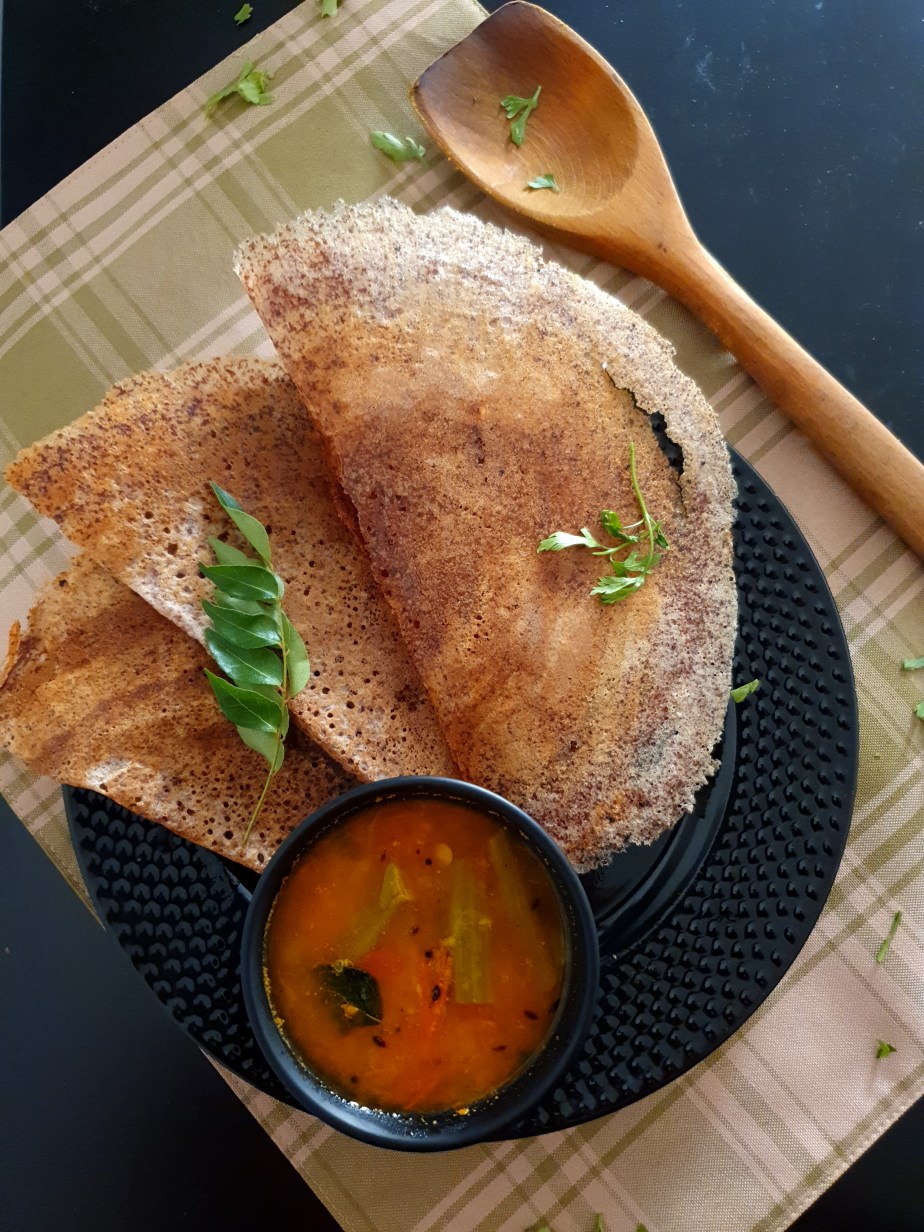
Finger millet or Ragi is very nutritious. This ragi dosa with ground batter turns out very crispy and tasty and is good for people with diabetes too.
Ingredients:
Urad Dal – 1/2 cup
Idli Rice – 1 cup
Whole Grain Ragi – 1 cup
Fenugreek seeds – 1 tsp
Salt – to taste
Water – 1 1/2 cups for grinding
Preparation:
Wash and rinse the the whole ragi seeds and rice. Soak it together with 4 cups of water for 4-5 hours. Also, wash the udad dal and soak it with 1 1/2 cups of water for 4 -5 hours.
Drain the water and in a mixie or wet grinder, grind the ragi and rice together to a fine paste, adding 1 cup of water, little at a time. Next , add the udad dal and grind it to a smooth paste. Add enough water (around 1/2 cup) to the batter while grinding. As udad dal grinds, it will turn fluffy and soft. Remove from the grinder/mixer and transfer to a vessel.
In a wide tall vessel, combine both the rice and the udad dal batter and mix it together with clean hands. The vessel should be tall and slightly wide as the batter will rise while fermenting. I always add salt to the batter before fermenting it.
Cover it with a lid and ferment overnight or for 8 hours.
Once fermented and risen, mix very gently to combine.
To make the dosas, heat a pan or iron tava. When it is hot, turn the flame to medium and grease the pan with oil. Pour a ladleful of batter on it and using a circular motion, spread into a thin dosa. Drizzle oil on all sides.Cover it and cook for 2 minuts. When it turns golden, flip and slightly cook on the other side also.
An Indian breakfast dish made with vermicelli/semiya and vegetables which you can make for your everyday breakfast. A perfect dish to pack your lunch box too.
Ingredients:
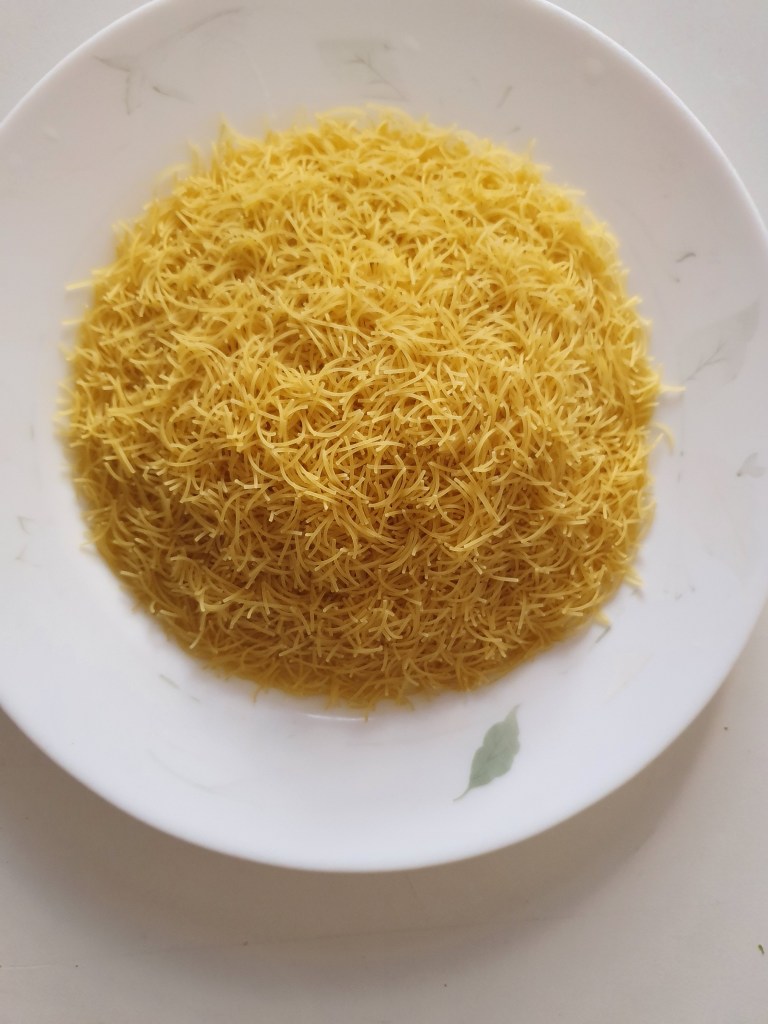
Fine Semiya/Vermicelli – 2 cups
Oil – 2 tbsp
Mustard seeds – 1 tsp
Udad dal – 1 tsp
Chana dal/bengal gram dal – 3/4 tsp
Cashew nuts – 8-9 (optional)
Curry leaves – 15 leaves
Onion – 1 big finely chopped
Green chillies – 3 slit
Carrot – 1 finely chopped
Capsicum – 1 finely chopped
Fresh or Frozen Green Peas – 1/2 cup finely chopped
Lime juice – 3/4 tsp
Fresh coriander leaves – 2 tbsp
Salt – to taste
Water for boiling vermicelli/semiya – 5 cups
Preparation:
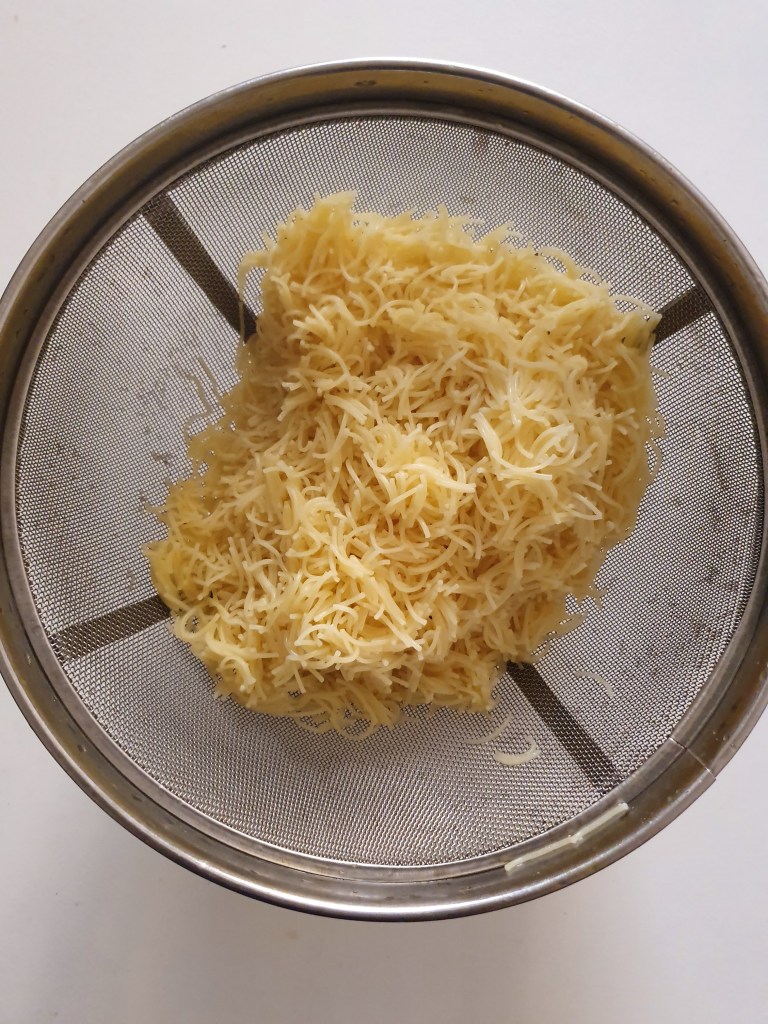
Heat a pan with a broad base and add 5 cups of water to it. When it starts boiling, add the semiya and cook it for just 2 minutes. Take it off the pan immediately and rinse it with cold water in a sieve. It cooks very fast, so cooking it any longer may make it mushy.
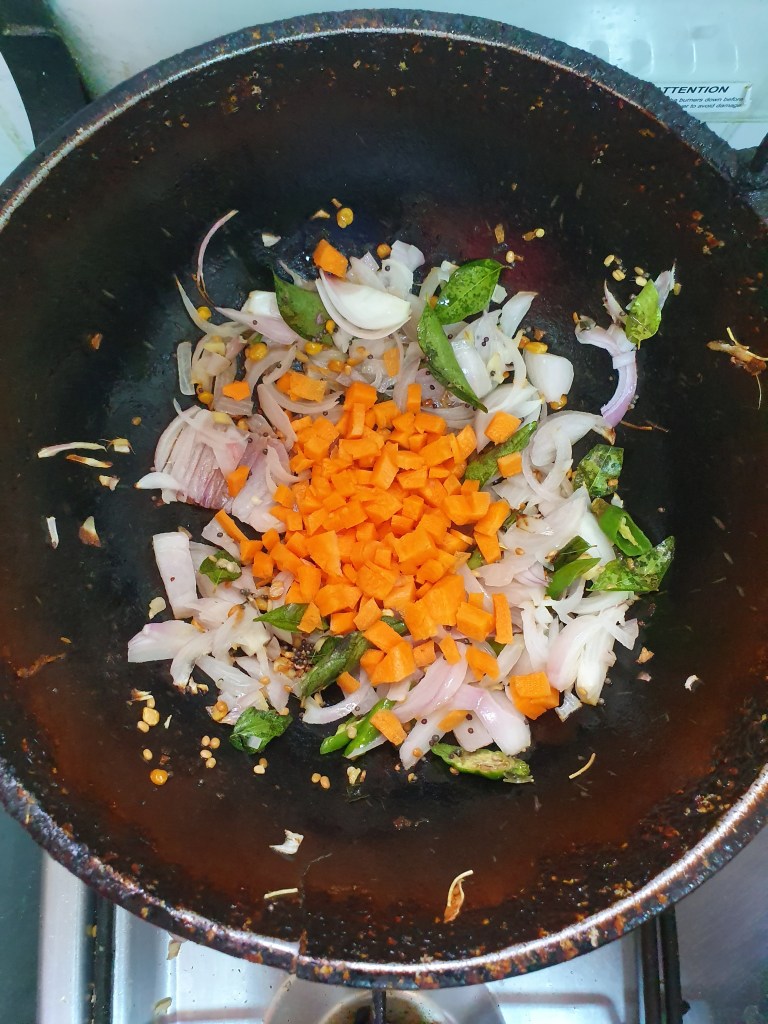
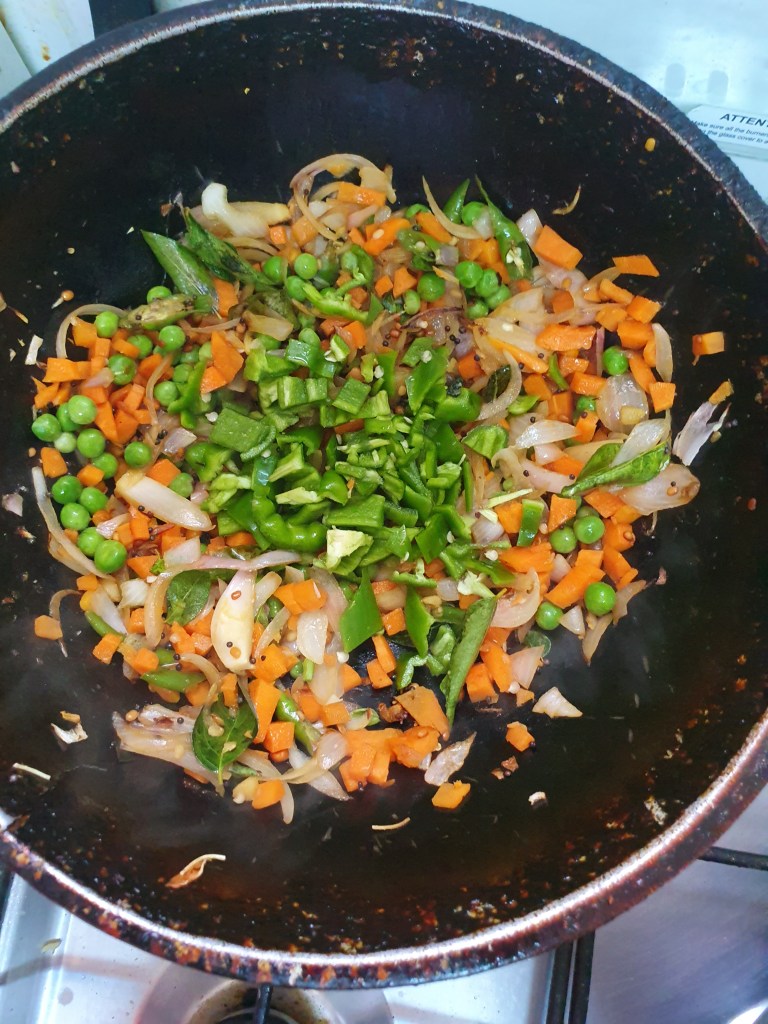
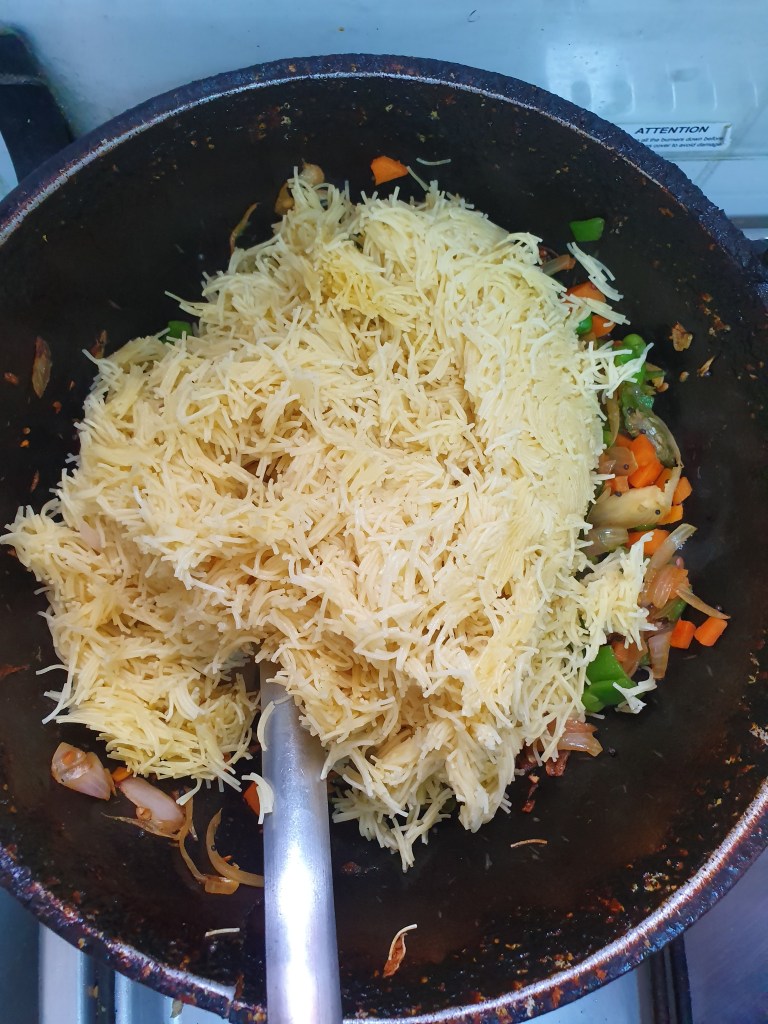
Heat another pan/kadai. Add oil. When it is hot, add the mustard seeds, udad dal and chana dal and saute them well till they turn golden in colour. (If you are using cashewnuts, add it and saute). Then, add the curry leaves, green chillies and the chopped onions. Saute till it turns translucent. Next, add the chopped carrots and saute for 2 minutes. Then in goes the green peas and the chopped capsicum. Saute it well for another 2 minutes. Sprinkle little water, add 1/4 tsp salt and then cover and cook the vegetables for 2- 3 minutes on a low flame. Open the lid and saute again. Now, add the semiya/vermicelli to it and mix it well. Keep in low flame for 3 – 4 minutes. Adjust the salt.
Add coriander leaves and lime juice to it before serving. Mix it well and serve hot.
Note: Some recipes call for roasting the semiya in ghee/oil and then adding water to it alongwith the veggies for cooking. I prefer my method of boiling the semiya in hot water, taking it off immediately and rinsing it in cold water and then adding it to veggies in the pan. This way it does not stick to each other and the oil used is also less.
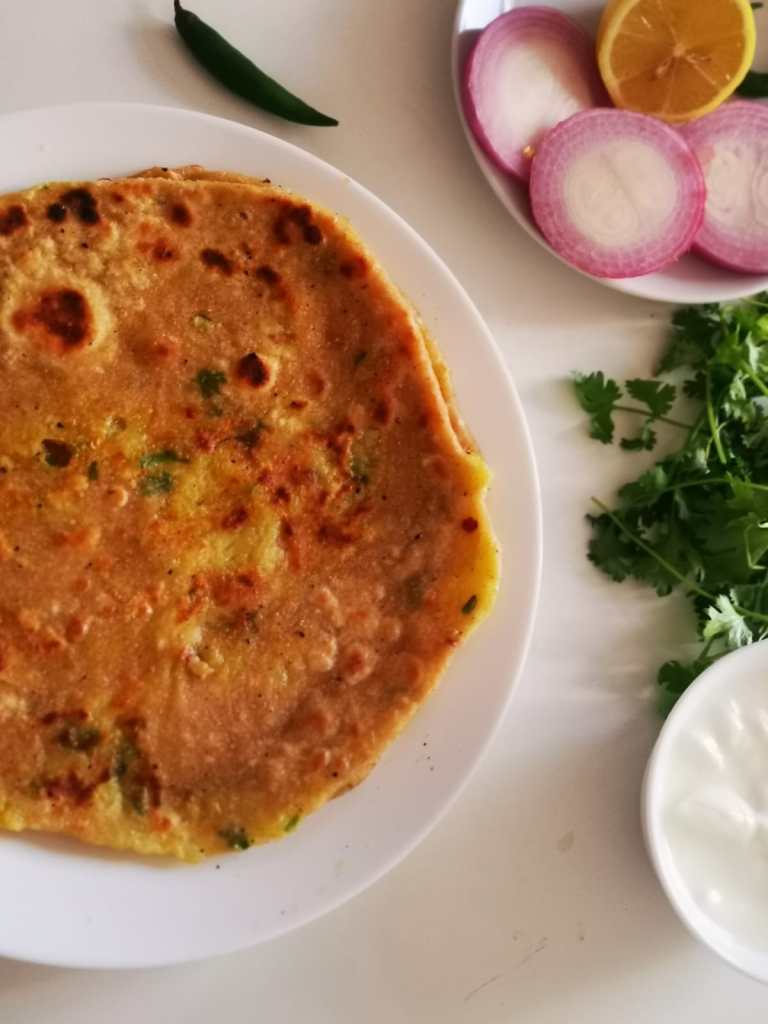
This is a bread dish from the north of India, made with the dough of whole wheat flour stuffed with a spicy potato stuffing. It is best enjoyed with yogurt, pickle and butter.
Boil potatoes
Mash them well
Finely chop onions and green chillies
Add the powders and chillie flakes
Mix the potatoes, onions, chillies and coriander leaves
Make a flour dough
Divide them into equal sized balls
Faltten a ball
Stuff some potato mixture into it
Gently press the ball and roll it out
The parathas should be atleast 2 to 3 inches thick.
Ingredients:
Potatoes – 4 big
Onion – 1 big finely chopped
Green chillies – 4 finely chopped
Cumin powder/Jeera powder – 1/2 tsp
Coriander powder – 1/2 tsp
Salt as needed
Coriander Leaves – 1 tbsp chopped
Red chillie flakes – 1/2 tsp
Oil/Ghee for cooking – As required
For dough:
Wheat flour – 2 cups
Salt – to taste
Water – 1/2 cup
Preparation:
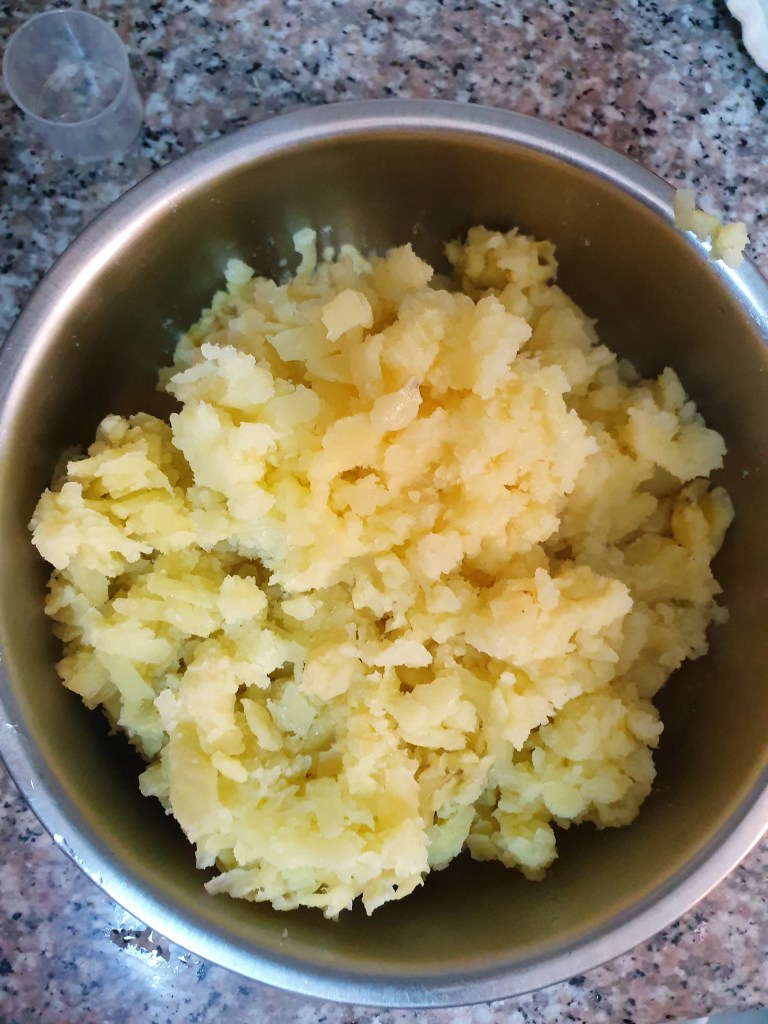
Boil the potatoes well and grate it so that there are no lumps in it. You may also mash it well making sure there are no lumps.
In a mixing bowl, add the grated potatoes, chopped green chillies, coriander leaves, red chillie flakes, chopped onion, coriander powder, jeera powder, salt and mix well. Keep it aside.
In another bowl, add the wheat flour, salt. Add water gradually and knead the dough. The dough should be pliable and soft. Rest the dough for 10 minutes.
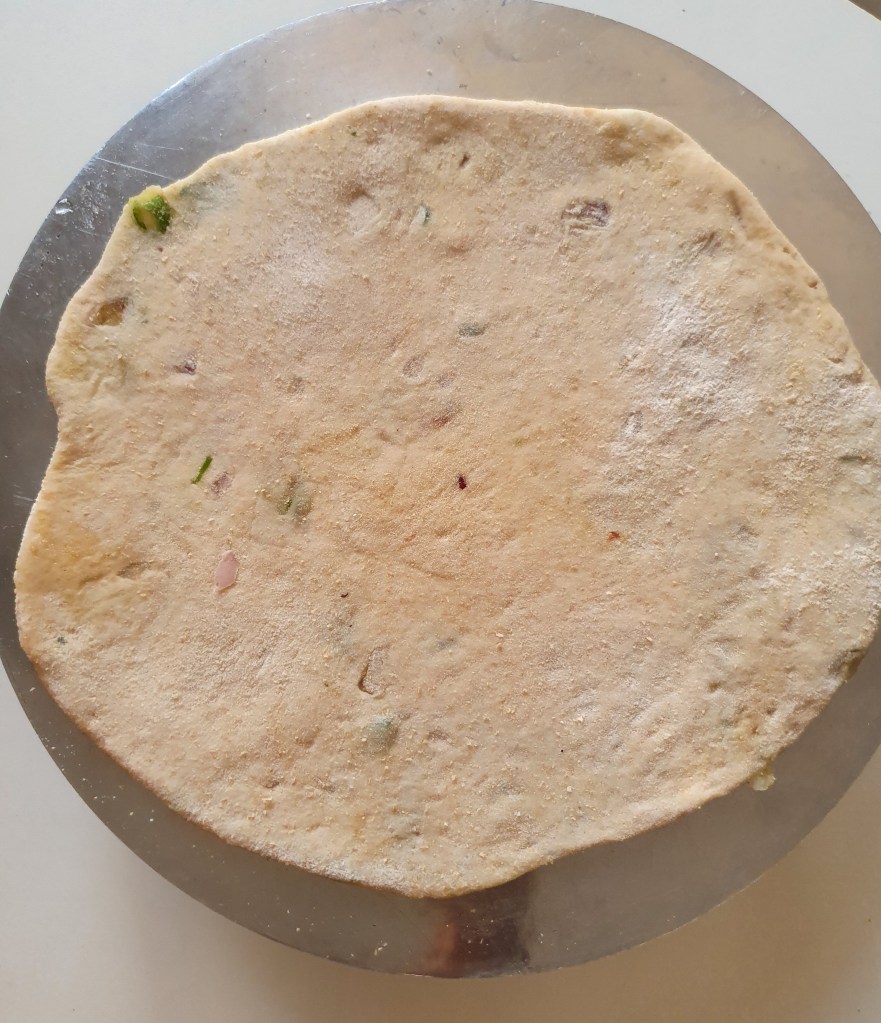
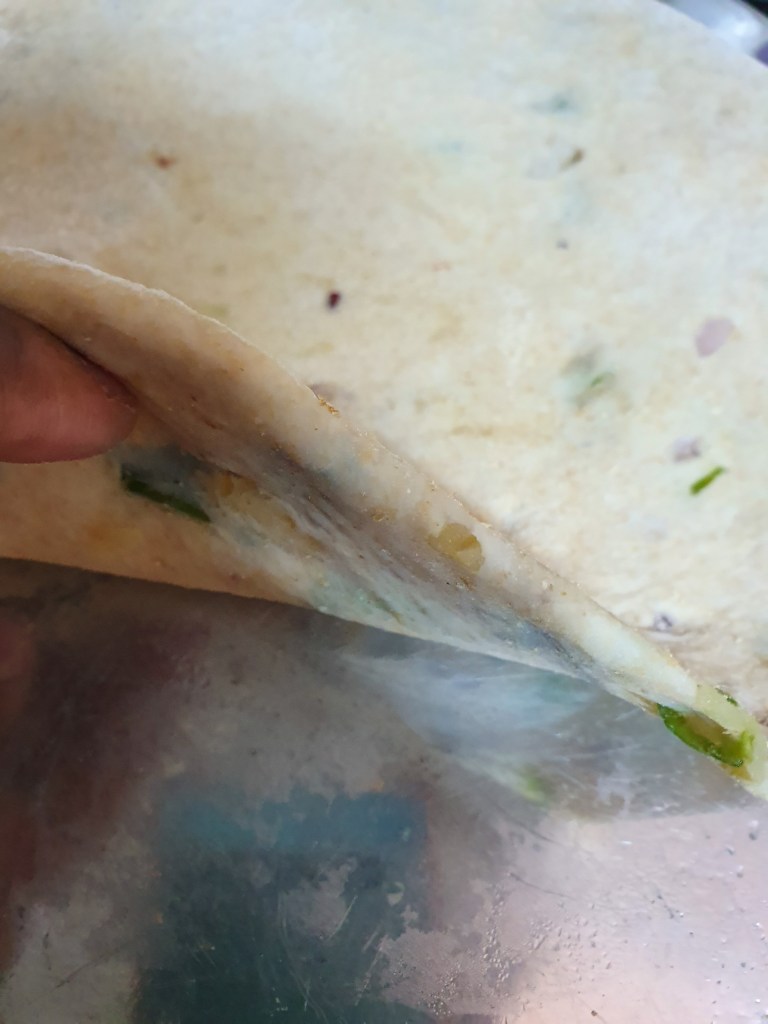
Make small-medium balls of the dough and roll them out into 3 inch circles. Add a spoonful of potato filling in the centre and seal it with little oil. Gradually press the rolling pin on all sides while making the parathas. Be very careful to apply pressure evenly. It is very important to ensure that your potato mixture is mashed well and not lumpy or you will never be able to make perfect parathas. Seal the dough and round it with your fingers. Now roll them with a rolling pin into round parathas. Apply the pressure very evenly and gently on all sides. Press very lightly so that the mixture does not come out.
Heat an iron tawa and roast the parathas, cooking them on both the sides with a spoonful of ghee/oil. If you want to use less ghee/oil on the parathas, first roast them on both the sides on low flame and when they are slightly crispy, apply ghee/oil with a kitchen brush on both the sides. You must keep the flame low.
Arisi maavu ragi adai (Rice flour and finger millet adai) is a traditional flatbread from Tamilnadu which can be served for breakfast.
Ingredients:
Brown Rice flour – 1 cup
Ragi powder – 1/4 cup (optional)
Onions – 1 large (chopped finely)
Green chillies – 2 (chopped finely)
Jeera/Cumin seeds – 1/2 tsp
Ginger – 1 tsp
Coconut grated – 1 tbsp
Curry leaves – 4 or 5 chopped
Coriander leaves – 1 tbsp chopped
Salt – As needed
Warm water – 1/2 cup
Preparation:
Heat a pan. Add oil and when it becomes hot, add the cumin seeds. When it starts to sizzle, add the green chillies, ginger, onions and the chopped curry leaves and saute it well. Take it off the fire.
Take a mixing bowl and add the rice flour and the ragi flour to it. Add the sauteed onions and green chillies which were kept aside. Also, add the coriander leaves and grated coconut to the flour mixture. Next, add little warm water and salt and make a soft dough out of it. It should be softer than the normal chapati dough. Cover and rest the dough for 5 minutes.
Heat a tava or griddle. Take a lemon sized ball and make an adai out of it. You can grease a banana leaf or a ziploc cover and make place the dough ball on it. Flatten it with your fingers to make a 5″ diameter.
Gently transfer the rolled out dough to the hot griddle and drizzle a few drops of oil all around. Cook on low heat until both the sides turn crisp. You can also cover and cook to speed up the cooking process.
Have leftover cooked rice and don’t know what to do with it?? These soft idlis are the perfect way to use it up. Made with semolina and cooked rice, this is a healthy breakfast to start the day with.
Makes 15 idlis
Ingredients:
Leftover cooked rice – 1 1/2 cups
Semolina/Rava – 1 1/2 cups
Yogurt/Curds – 3/4 cup
Cashewnuts – 7 pieces
Red chillies – 3
Green chillies – 3 chopped
Cumin seeds/Jeera – 1 tsp
Curry leaves – 2 stalks chopped
Whole Pepper – 10
Udad dal – 1 tsp
Enos fruit salt – 1 1/2 tsp or soda bi-carbonate – 1 tsp
Water – 1/2 cup
Salt – as required
Preparation:
Chop the cashewnuts into two and break the red chillies into 3 – 4 pieces and keep aside.
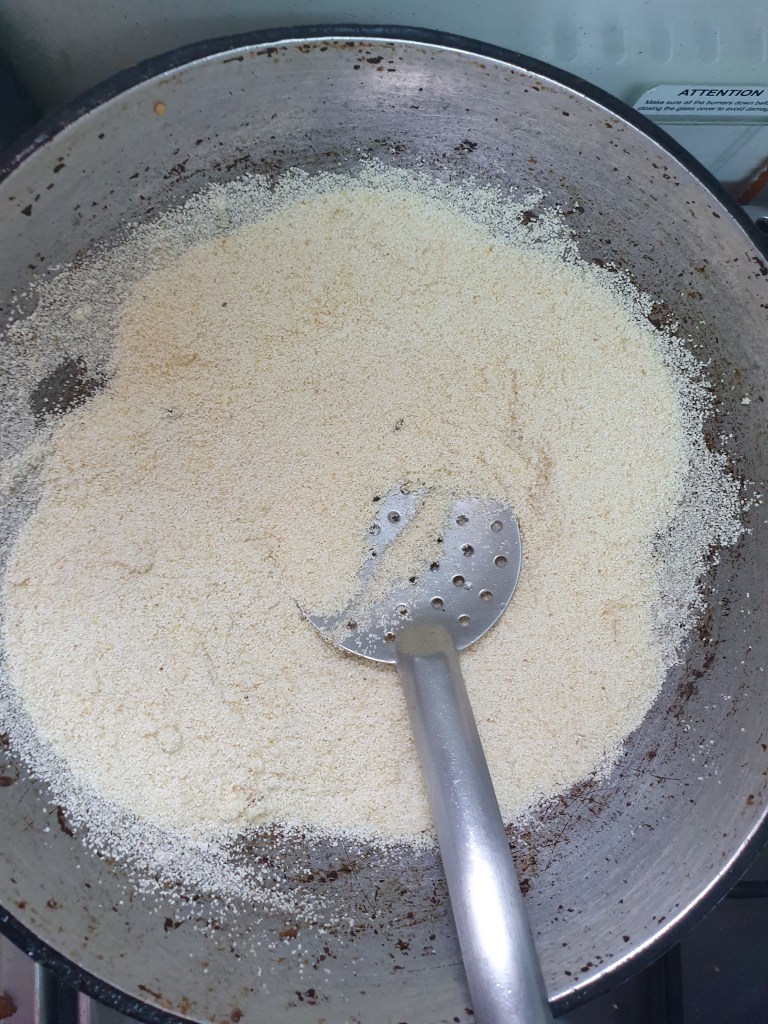
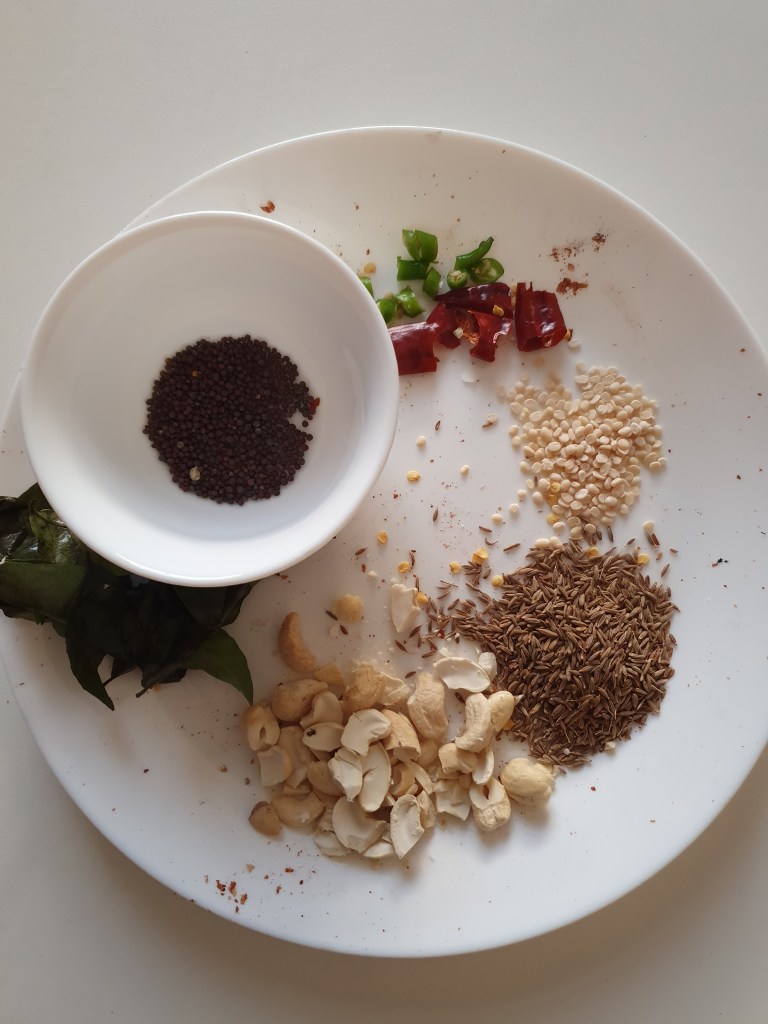
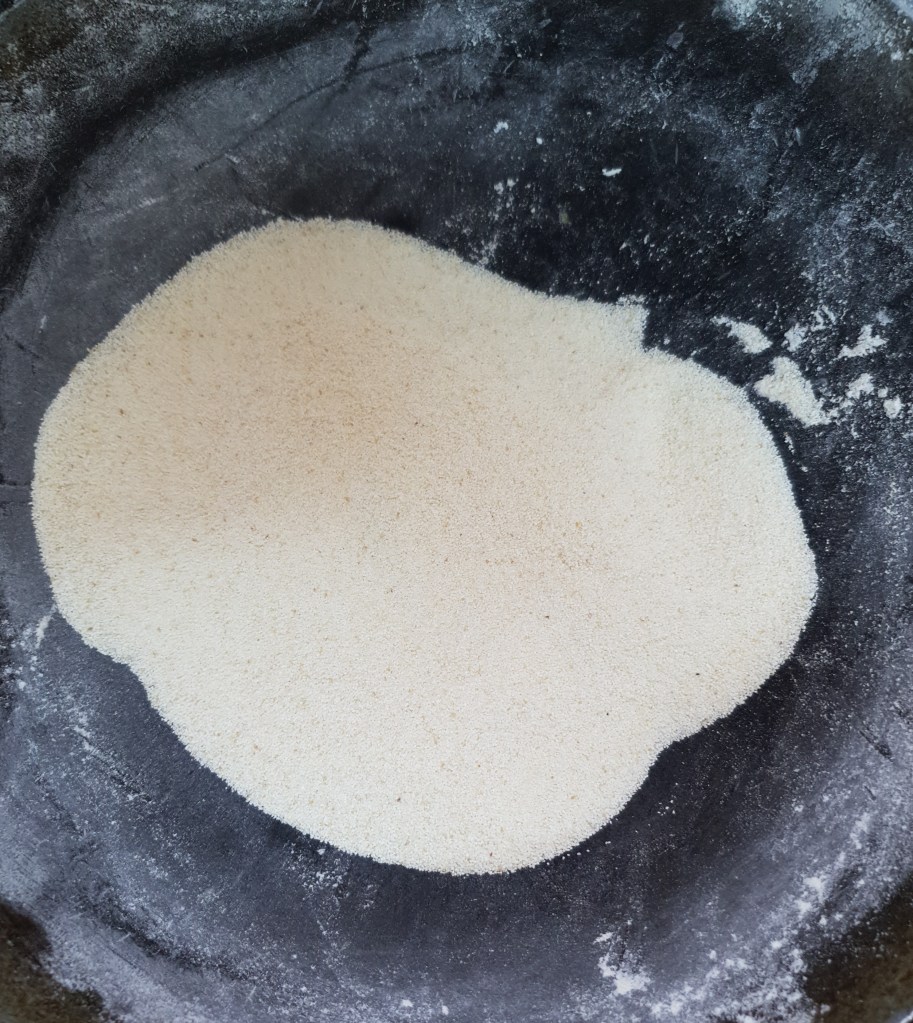
In a pan, dry roast the semolina on a low flame for 2 -3 minutes. Keep it aside. In the same pan, heat oil. When it becomes hot, add cumin seeds and udad dal. When it starts sizzling, add the red chillies, green chillies, curry leaves, whole pepper and the cashewnuts and saute well. Lastly, add asofoetida. Take it off the flame and let it cool.
Transfer the cooked rice to a mixer and grind it to a fine paste. Add the semolina, 1/2 cup of water, yogurt and mix well. Make sure that there are no lumps. Next, add the seasonings and salt to this batter.
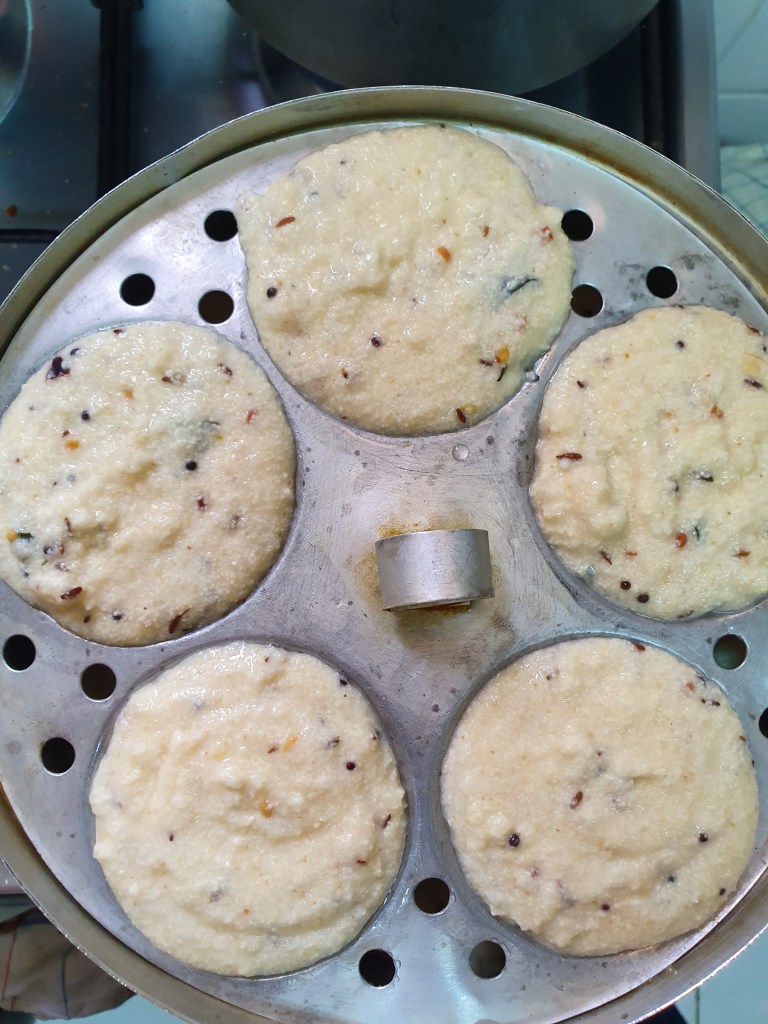
Next, grease the idli plates. Just before adding the batter in the plates, add the enos fruit salt to the batter. It will start frothing. Mix well and using a ladle, spoon in 1/2 spoon of the batter into each of the plates.
Once enos fruit salt is added to the batter, the batter has to be used immediately and cannot be stored or kept in refrigerator. Therefore, it is advisable to add eno to the required amount of batter. Add eno again for the second batch of idlis to be made.
Place the plates in a steamer and steam for 12-13 minutes. Put off the flame and let it sit for 5 minutes. Open and using a wet spoon, take out the idlis and serve it with any chutney of your choice.
Ragi/Finger millet is a power house of minerals like iron, calcium and protein. In rural India, this grain is consumed by rural folks because of its high protein, low glycemic index and affordability.
A good alternative to the rice idlis that we all make, these ragi idlis are very soft, porous and very fluffy.
Ingredients:
Urad Dal – 1/2 cup
Idli Rice – 1 cup
Whole grain ragi – 1 cup
Fenugreek seeds – 1 tsp
Salt – to taste
Water – 1 cup for grinding
Preparation:
Wash and rinse the ragi and rice. Soak it together with 4 cups of water for 4-5 hours. Also, wash the udad dal and soak it with 1 1/2 cups of water for 4 -5 hours.
Drain the water and in a mixie or wet grinder, grind the ragi and rice together to a fine paste, adding 1/2 cup of water. Next , add the udad dal and grind it to a smooth paste. Add enough water (around 1/2 cup) to the batter while grinding. As udad dal grinds, it will turn fluffy and soft. Remove from the grinder/mixer and transfer to a vessel.
In a wide tall vessel, combine both the rice and the udad dal batter and mix it together with clean hands. The vessel should be tall and slightly wide as the batter may rise while fermenting. I always add salt to the batter before fermenting it.
Cover it with a lid and ferment overnight or for 8 hours.
Once fermented and risen, mix very gently to combine. Pour into greased idli moulds and steam it for 12 minutes for soft and spongy idlis. After the idlis have cooled down a bit, using a wet spoon, remove the idlis from the mould.
Another one from the idli repertoire is the wheat idlis. Idli for a South Indian is like pasta for an Italian. These instant idlis are nutritious and delicious. Also, serves as an alternative breakfast food for people with diabetes as it does not contain rice. Quick and prepared in a jiffy, there is no soaking and fermentation process involved like the regular idlis.
Makes 16-20 idlis.
Ingredients:
Wheat flour – 1 cup
Semolina – 1/2 cup
Curds/Yogurt- 1/2 cup
Chopped green chillies -2
Coriander leaves – 1 sprig
Groundnuts roasted and deskinned -1/4 cup
Salt to taste
Turmeric powder – 1/4 tsp
Eno fruit salt – 1 tbsp
Grated carrrot – 1/4 cup
Boiled peas – 1/4 cup
Capsicum- 1/2 piece chopped fine
Water – 1/2 cup
For Seasoning:
Ghee/Oil – 1 tbsp
Mustard seeds – 1tsp
Urad dal – 1tbsp
Curry leaves – 5 to 6
Preparation:
Slightly mash the boiled peas and keep it aside. (I have used frozen peas).
Heat a pan. Add wheat flour to it and roast it on a low flame for 2 -3 minutes. Take it off the heat and cool it. The texture of the wheat flour after roasting should be slighlty coarse (like that of rice flour). Roasting the wheat flour well is the key procedure for this idli but do not roast it until it turns brown in colour as the idlis may turn bitter. Remove the wheat flour and set it aside.
Heat the same pan. Add the semolina and dry roast it well. Keep it aside.
In a mixing bowl, add the wheat flour and semolina. Next add the boiled and slightly mashed peas, grated carrots, fried groundnuts, turmeric powder, salt, curry leaves, coriander leaves, water and yogurt. Adjust the water according to the consistency of the batter. Combine all the ingredients with a whisk. Keep the batter aside for 10 minnutes.
Meanwhile, in a pan, pour oil. When it becomes hot, add mustard. When it splutters, add udad dal and curry leaves. When the dal becomes brown, remove and add this to the batter.
Grease the idli moulds. Before pouring the batter into the moulds, add the eno to the batter. It will start frothing up . Mix well once and pour half ladle into the moulds and steam for 15-17 minutes.
Note: Add the eno just before pouring the batter into the moulds. You cannot store the batter once eno is added, therefore take only the required amount of batter and add eno. If you need more batter to make idlis, add eno again, pour it into moulds and steam.




























 Meal Haven