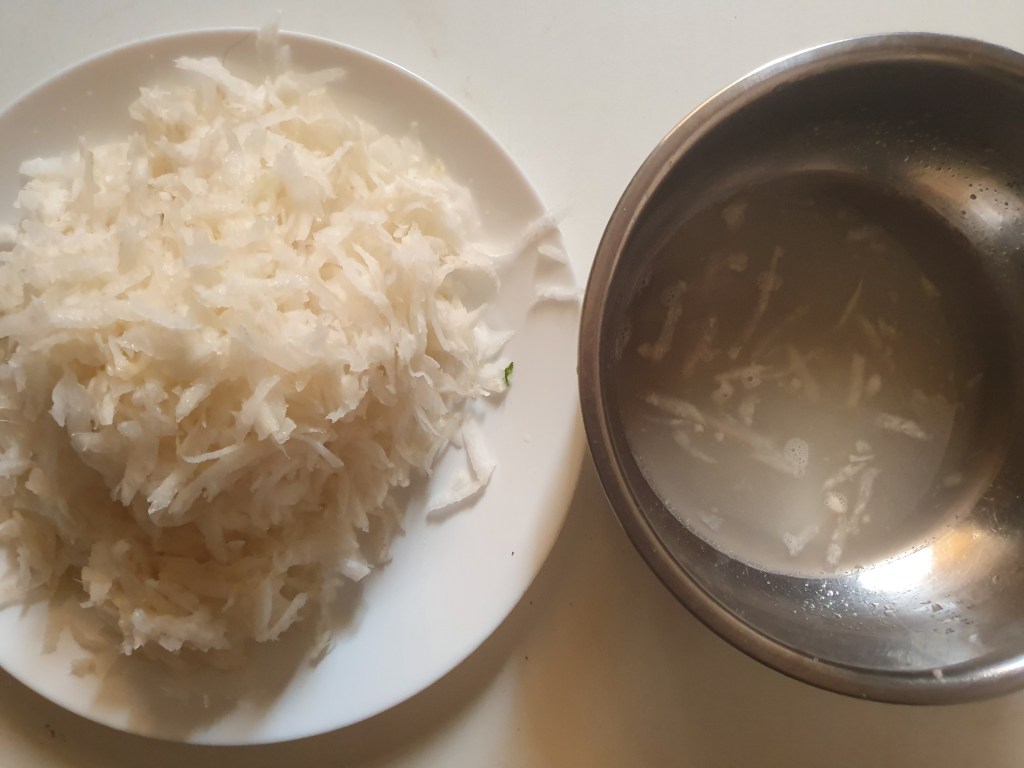
Take a bowl and grate the radish. Keep it aside. Squeeze the radish well and take out all the water. Keep the water aside as you can make the flour dough with this water.
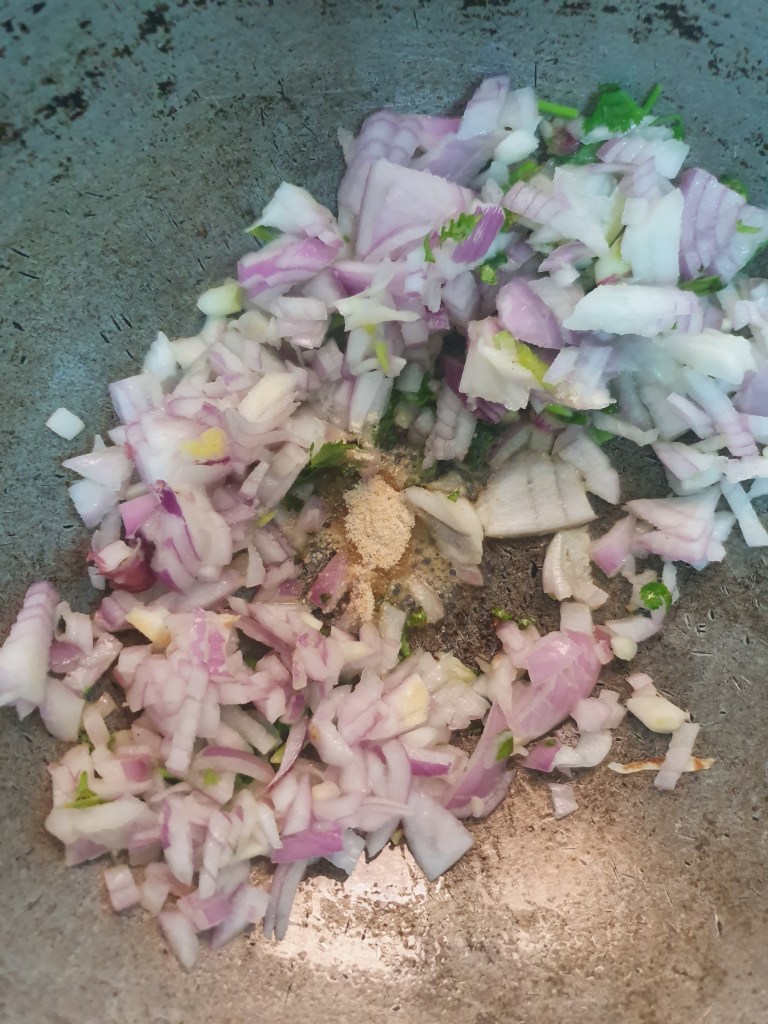
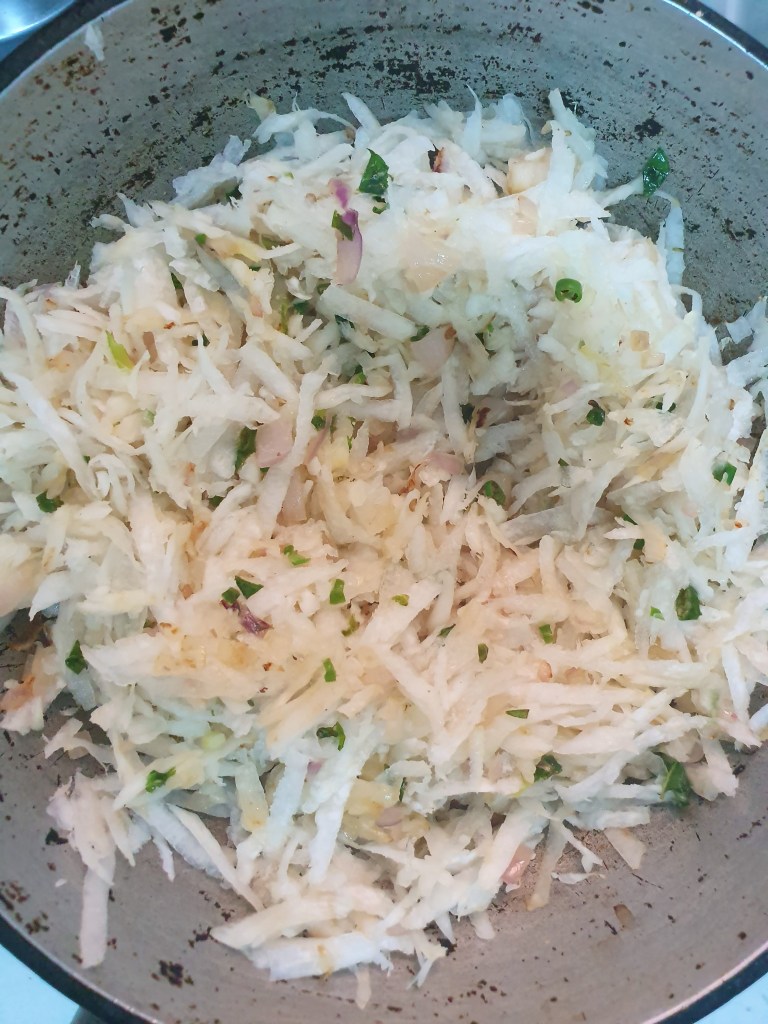
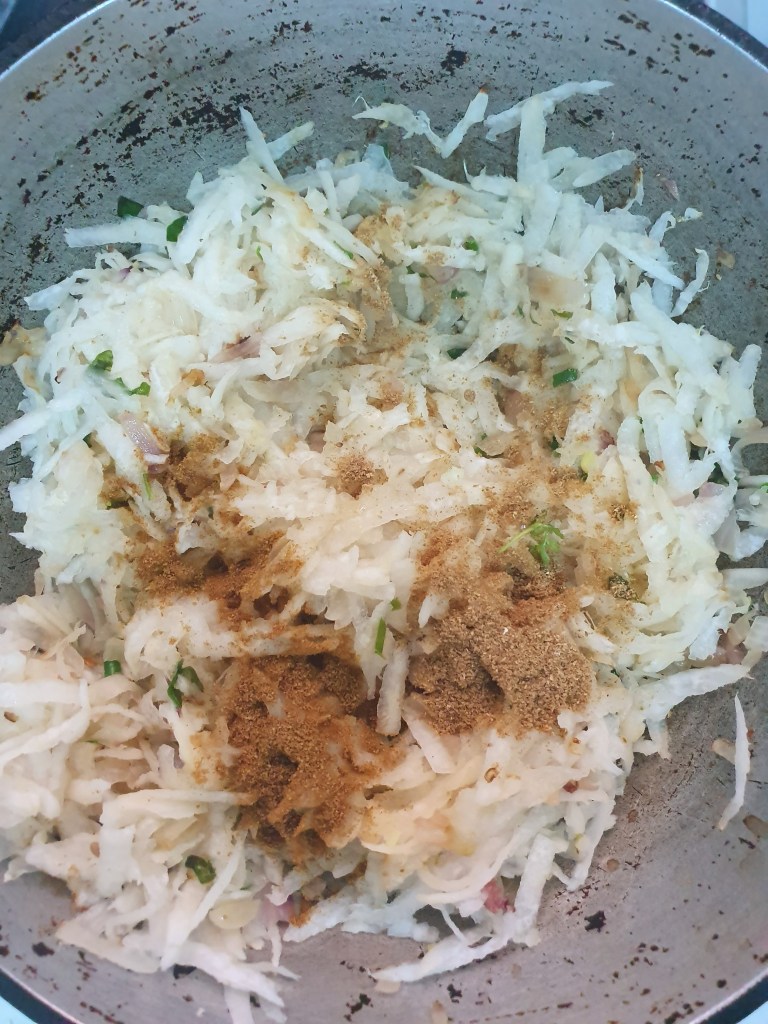
Heat oil in a pan. Add the chopped green chillies, chopped curry leaves, asafoetida and onions. Saute well till the onions turn translucent. Next, add the grated and squeezed radish and saute well. Then, add the coriander powder and the garam masala powder and saute until the raw smell disappears. Add coriander leaves and cook till the mixture becomes dry. Make sure that it does not have any moisture in it. Remove it to a plate and let it cool.
Making the dough:
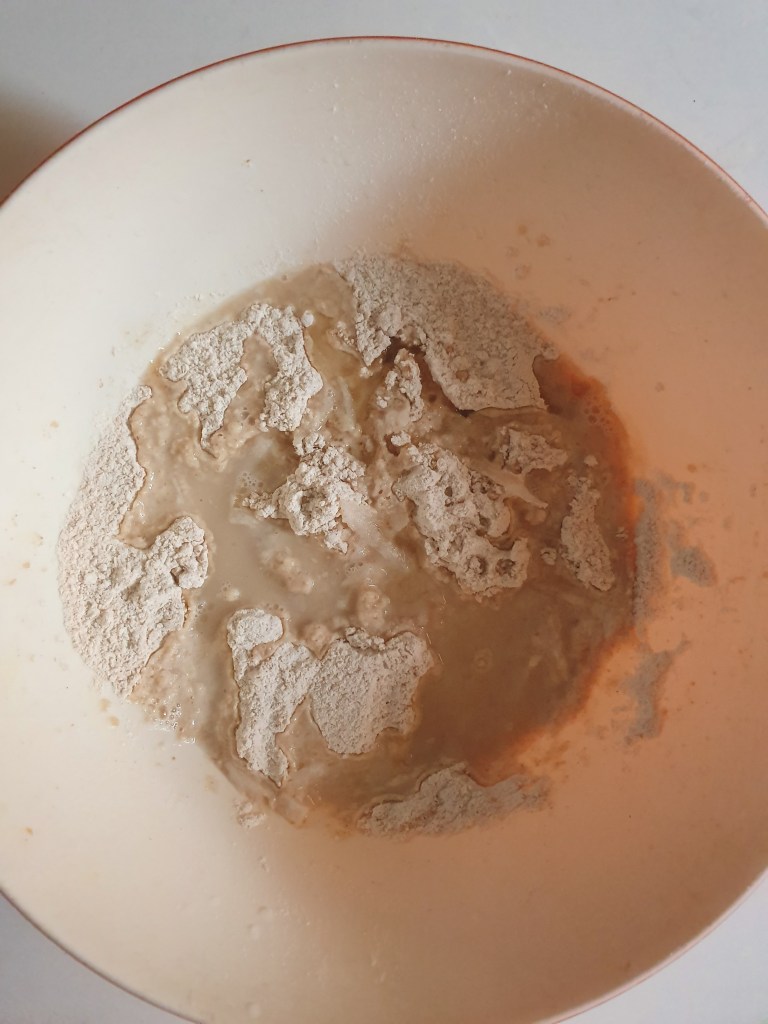
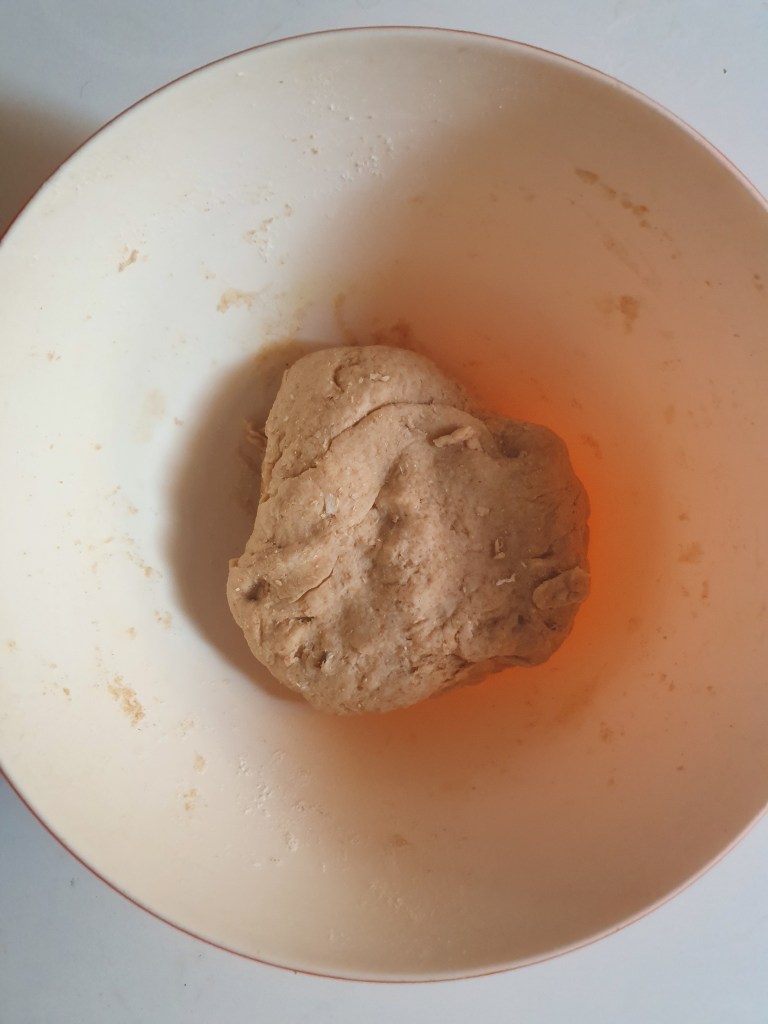
In a bowl, add the flour, salt and the water squeezed out from the radish. Start kneading the dough adding a little more water. Knead it into a smooth but not firm dough. The dough should be soft and pliable. Rest it for 10 minutes and cover with a cloth or cling film.
Assembling the paratha:
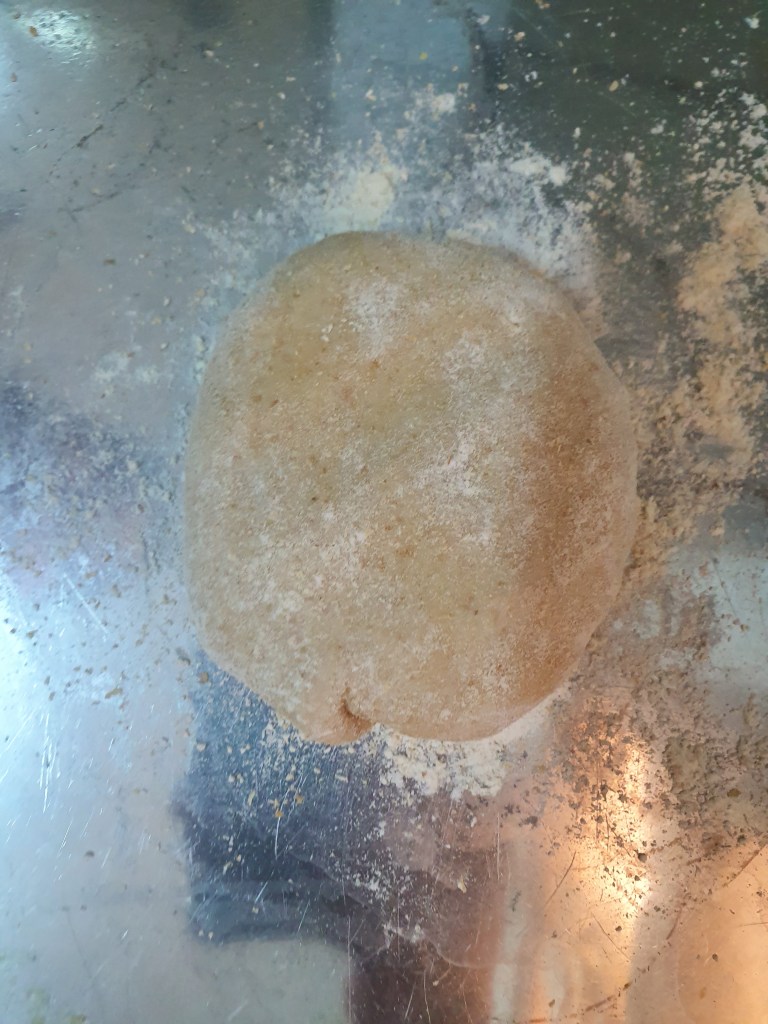
Make smooth balls from the dough and flatten them slightly by rolling it with a rolling pin. Roll it into 4-5 inch diameter circle. Add ¼ tsp of oil and spread on it before placing 1 1/2 tbsp of radish mixture on it, in the centre. Gather the edges and pinch it into the centre. Seal it tightly and flatten by pressing gently.
Dust into fry flour again and roll it gently into 6 inch diameter circle.
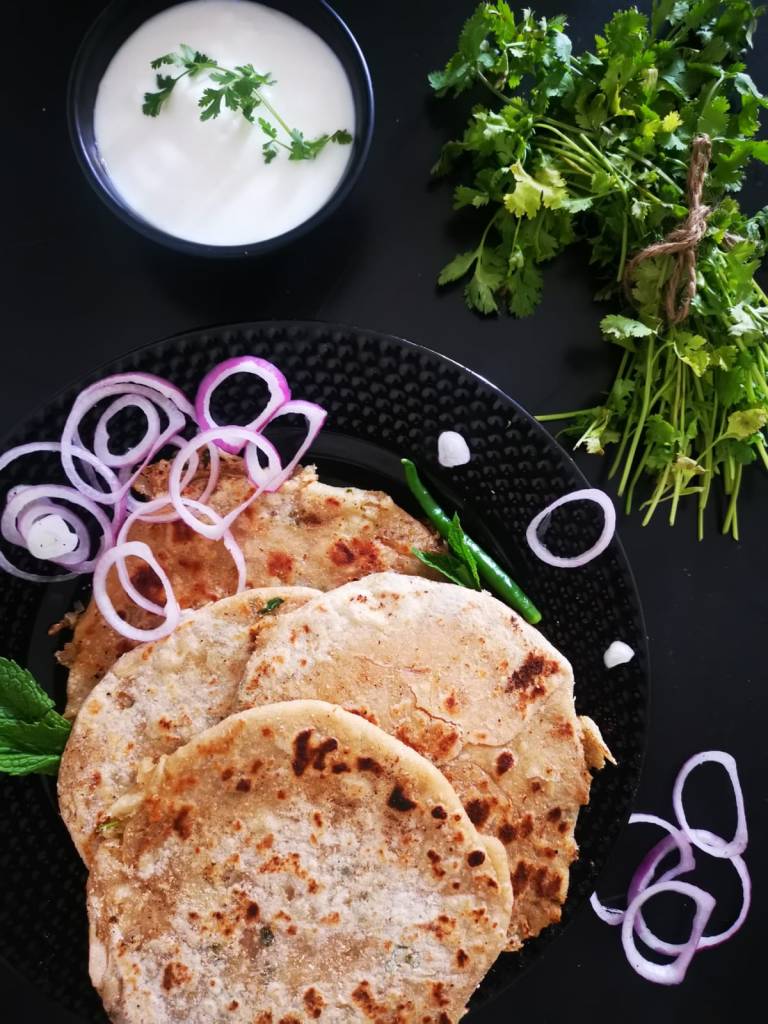
Heat a tawa and when it becomes hot, place it on the hot tawa and cook both sides brushing little oil on it. Repeat the same process for the rest of the parathas.
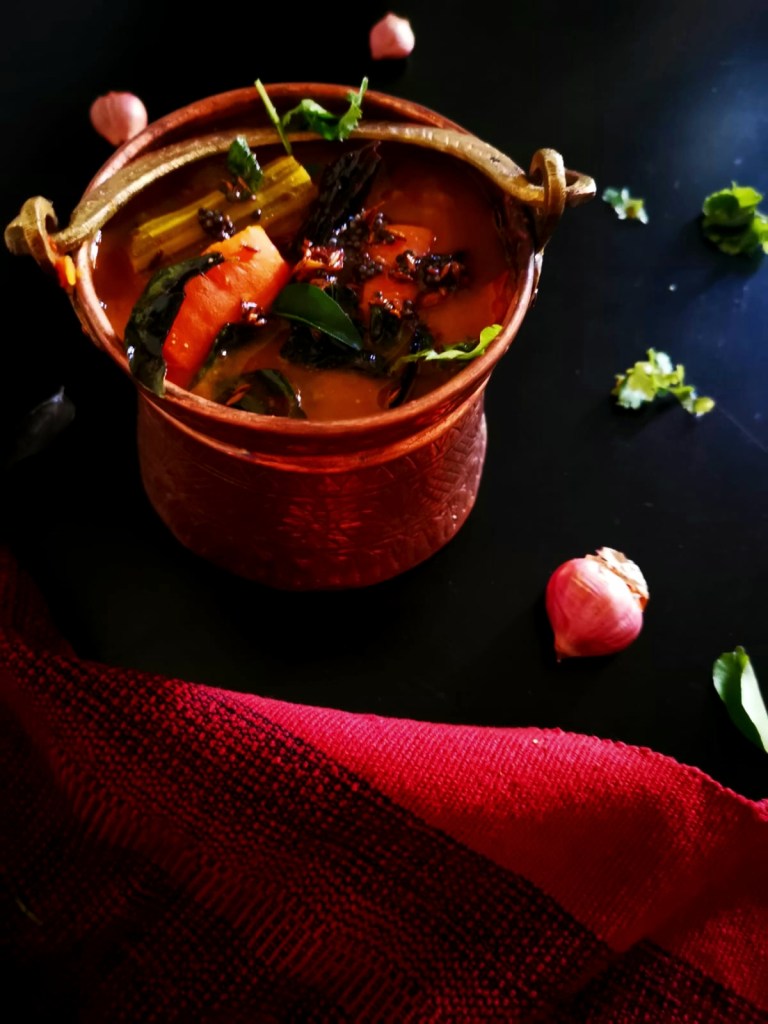
This sambar is specially prepared on occassions and goes well with idli and dosas. The term ‘arachuvitta’ means to grind. Here the coconut and spices are sauteed and ground which gives this sambar a distinct taste.
Ingredients to be ground to make the paste
Fry the chana dal, coriander seeds, pepper, fenugreek seeds and red chillies
Add coconut and saute till it becomes slightly golden in colour
Transfer to a mixie
Grind to a smooth paste
Veggies and tamarind required for sambar
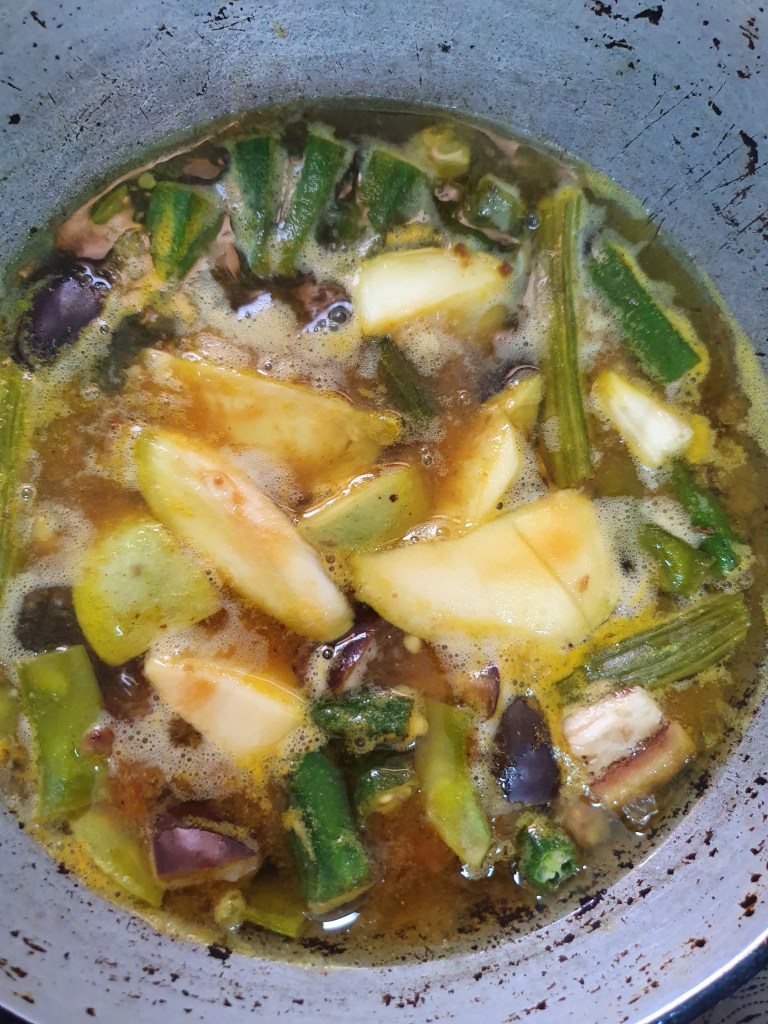
Boil the vegetables separately
After it is cooked, add the ground paste and cooked dal into it.
Ingredients:
For Paste
Coriander seeds – 2 1/2 tbsp
Red chillie – 5
Bengal gram dal/Chana dal – 1 tbsp
Fenugreek seeds – 1/4 tsp
Whole pepper – 1/2 tsp
Fresh grated coconut – 1/4 cup
Raw rice – 1/4 tsp
For sambar:
Tur dal – 1/2 cup
Tamarind – 1 small lemon sized ball
Shallots – 6 -7
Tomato – 2 small
Carrots – 1/2
Ladies finger – 4-5
Brinjal – 2 small
Drumsticks – 1 long (cut into 5 – 6 pieces)
Coriander leaves – 1 tsp chopped (for garnish)
Jaggery – a small piece (optional)
Oil- 1 tbsp (preferably gingely oil)
Salt – to taste
For seasoning:
Oil – 1/2 tsp
Mustard seeds – 1/4 tsp
Asafoetida – a pinch
Jeera/Cumin seeds – 1/2 tsp
Curry leaves – 2 sprigs
Preparation:
Soak the tamarind ball in 1/4 cup warm water for 10 minutes. Squeeze it out well and strain the pulp. Keep it aside.
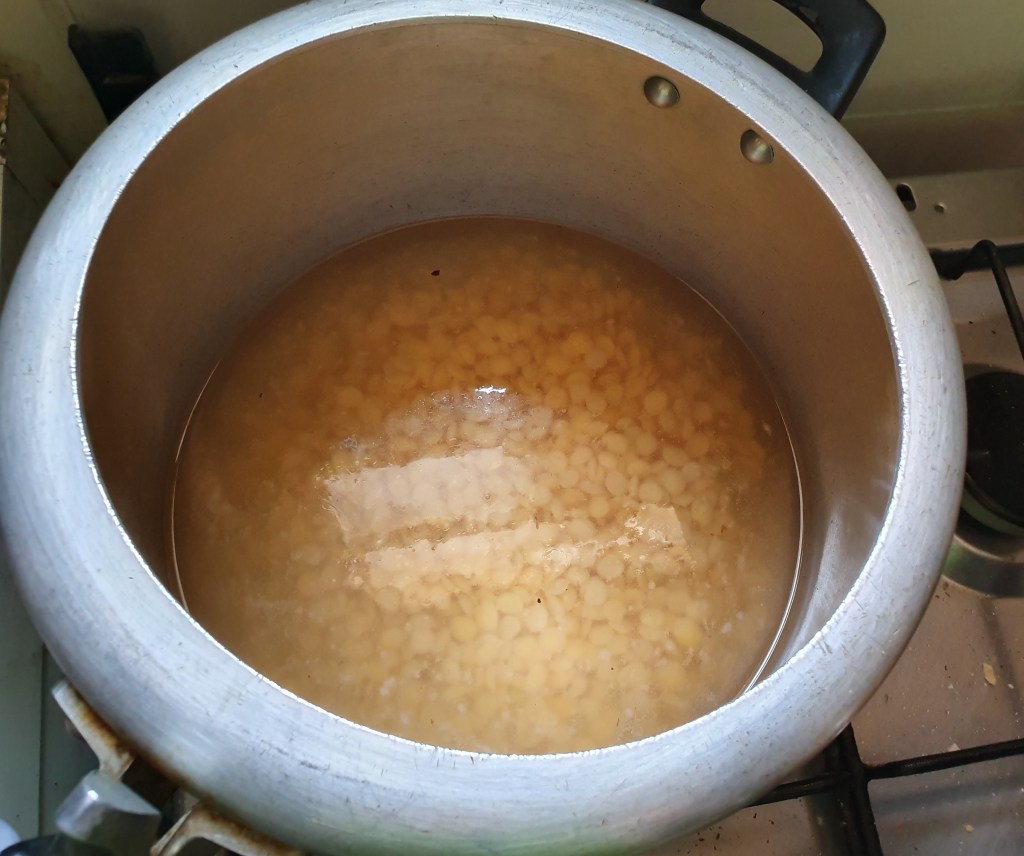
Take a pressure cooker and add the cleaned tur dal to it. Add about 1 1/2 cups to it and cook for 3 -4 whistles. Remove and when the pressure is released, mash the dal well and keep it aside.
Meanwhile, prepare the paste. Take a pan and add the bengal gram dal and coriander seeds. Saute it well and add the fenugreek seeds, pepper and the red chillies, Fry it well for 3 – 4 minutes and then add the coconut lastly. Roast for a few seconds till it turns slightly brown. Remove from fire and let it cool. Transfer to a mixie and let it cool. Grind to to a smooth paste (some like it to be a coarse paste).
In another pan, add all the vegetables and 1/4 cup of water and let it cook. When it is almost cooked, add the tamarind pulp and boil once. If you are using jaggery, add the jaggery. Then, add the mashed dal and the ground paste to it and on a medium flame, let it simmer for 3-4 minutes.
Season the sambar with the ingredients mentioned ‘under seasoning’. Garnish with coriander leaves.
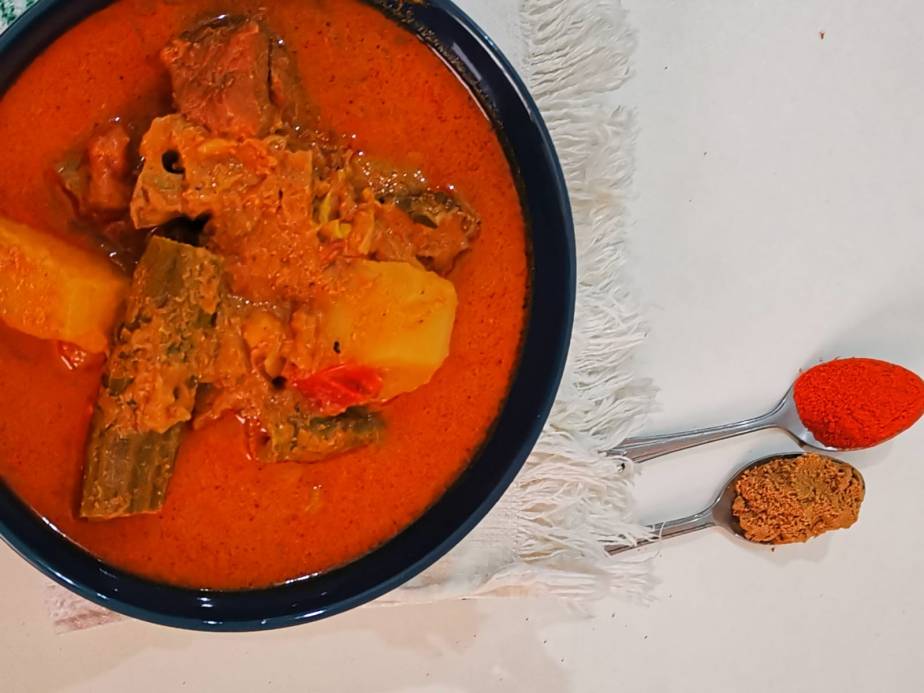
A typical tamil style mutton curry which is cooked using drumsticks and potatoes. You can serve it with chapathi, dosas or rice.
Ingredients:
Mutton – 1/2 kg
Ginger-garlic paste – 1 1/4 tbsp
Red chillie powder – 2 tsp
Coriander powder – 2 tsp
Turmeric powder – 1/2 tsp
Cinnamon – 1/2 inch piece
Cloves – 2
Onion – 2 medium
Coriander leaves – 2 tbsp (chopped)
Drumstick – 1
Potato – 1 small
Coconut shredded or cut into pieces – 1/2 cup
Poppy seeds/Khus-khus – 1 1/2 tsp
Tomato – 2 medium
Thick tamarind pulp – 1/2 tsp
Salt – to taste
Preparation:
Wash the mutton and keep it aside, adding some salt and turmeric to it. Grind the coconut in a mixer alongwith poppy seeds to a fine paste. You may add 2 tbsp of water to make it into a smooth paste. Dice the potato and chop the onions , tomatoes and drumstick.
This is a one pot dish and you can prepare this curry in a pressure cooker. Heat a cooker and add oil. Add the cinnamon, cloves and the chopped onions. Saute for 5 minutes until the onions turn pinkish in colour. Then, add the ginger-garlic paste and saute until the raw smell disappears. Next, in goes the tomatoes and the red chillie powder, coriander powder and saute for another 3 to 4 minutes. When they are sauteed well, add the washed mutton, salt, tamarind pulp and 1 tbsp of coriander leaves and saute once again for 3 to 4 minutes. You need to add 2 1/2 cups of water to it and enough salt. Close the cooker with the whistle on. After the first whistle, reduce the flame to low and cook for a further 4 to 5 whistles or on slow flame for aout 15-20 minutes, depending on the tenderness of the meat.
After 20 minutes, when the pressure cooker has cooled down, open it and add the drumstick, potatoes and the ground coconut. Close the cooker again and cook it until you hear the first whistle or for 4-5 minutes. Take it off the stove immediately.
Garnish it with coriander leaves and serve with rotis or rice.
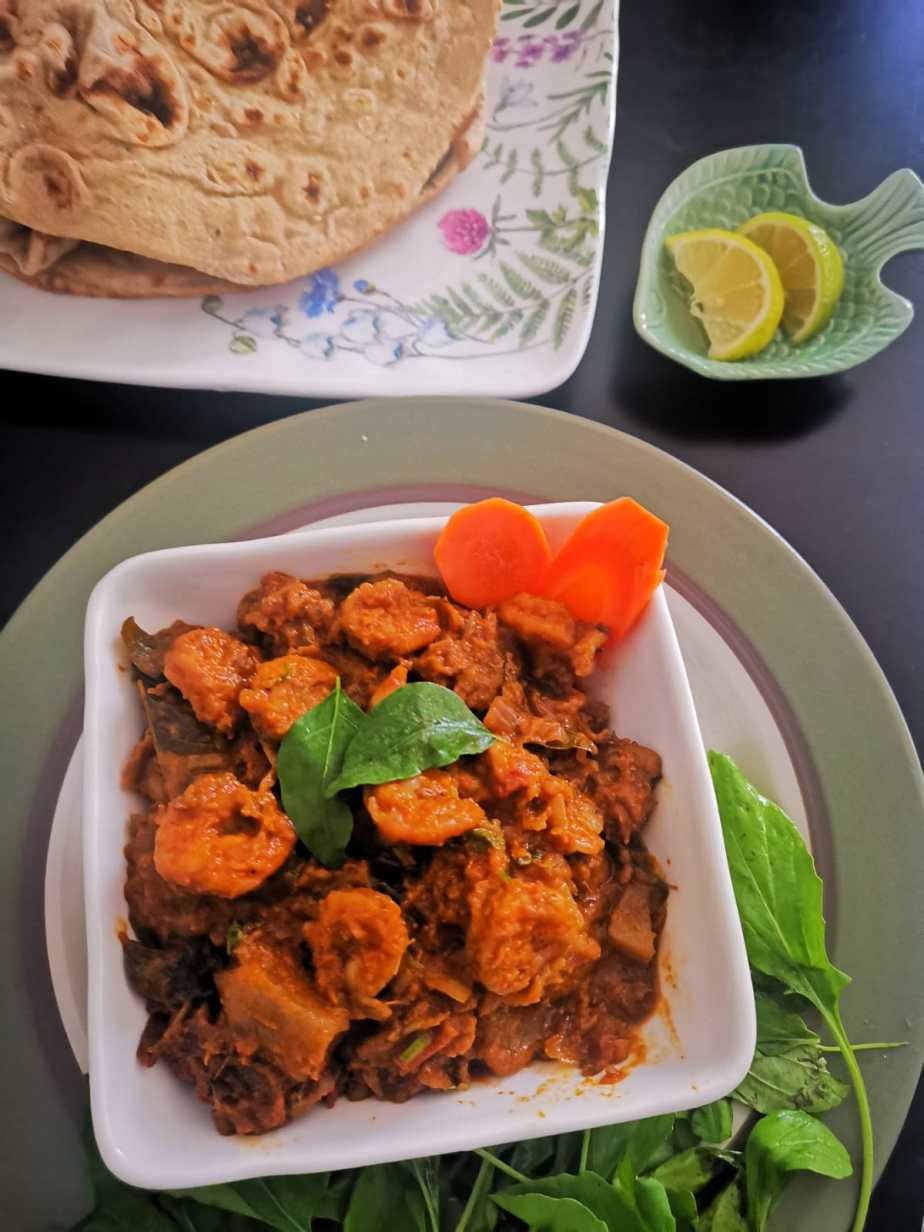
A favourite sea food dish when accompanied by curd rice or rasam rice is pure bliss….It can also be served with rotis or chapathis. Some people add a pinch of garam masala powder at the end but I prefer to skip it.
Ingredients:
Deshelled and Deveined Prawns – 1/2 kg
Onions – 2 big
Potato – 1 big (optional)
Tomatoes – 2 medium
Ginger garlic paste – 1 tbsp
Curry leaves – 2 sprigs
Red chillie powder – 1 1/2 tsp
Coriander powder – 1 1/2 tsp
Turmeric powder – 1/2 tsp
Chopped Coriander leaves – 1 tbsp
Oil – 1 tbsp
Salt to taste
Water – 1/4 cup + 2 tbsp
Preparation:
Finely chop onions, dice the potatoes and tomatoes. Keep it aside. Marinate the prawns with 1/4 tsp turmeric and a little salt and keep it aside for 10 – 15 minutes.
Heat a pan. Add oil. Add the finely chopped onions and saute till it becomes translucent. Then, add the ginger garlic paste and saute for 4 minutes until the raw smell disappears. Next, add the curry leaves and the chopped tomato and saute till it becmes mushy. Add the chillie powder, coriander powder and turmeric powder and saute it well, adding 2-3 tbsp of water in between. Add the potatoes, salt and saute it for a good 7 -8 minutes on low flame. When it is 3/4th cooked and all the water has been absorbed, add 1 tbsp of coriander leaves, followed by the prawns. You may add 1/4 cup of water and stir well. Keep it covered on a low flame until the prawns are cooked. This may take only about 5 -6 minutes. If the prawns are cooked for a long time, it will turn rubbery.
Remove from fire and garnish it with coriander leaves.
If you have vadagam , you may use it for seasoning or
Mustard Seeds – 1 tsp
Jeera/Cumin seeds – 1/2 tsp
Curry leaves – 1 stalk
To grind
Tomato – 1 medium
Onion – 1 medium
Curry leaves – 3 or 4
Ginger – 1/2 inch piece
Garlic – 3 cloves
Grated Coconut – 1 tbsp
Saunf – 1/4 tsp
Preparation:
In a bowl, soak the tamarind with 1/4 cup warm water and squeeze it well.
Wash the colocasia well. Take off the skin and cut each one into 2 to 3 pieces and boil it separately in water. Cook until done and discard the water.
Grind the items under ‘to grind’ to a fine paste in a mixie.
Heat oil in a pan. Add the items mentioned under ‘seasoing’ . then, add the ground paste to it and saute it well for about 5 minutes. Now add the boiled colocasia and saute well. Add the coriander powder, pepper powder, chillie powder, cumin powder, turmeric powder and stir it until the raw smell goes off. Squeeze out the tamarind and add the tamarind extract to it alongwith 2 cups of water. Boil it well on low flame for about 10 minutes and then add the prawns.
Close and let the prawns cook for about 3 – 4 minutes on low flame. Do not cook the prawns too long as it may turn rubbery. Adjust the salt and take it off the fire.
Garnish it with coriander leaves before serving. This curry goes well with rice and dosas.
A mind blowing marinated chicken recipe with very little oil. Al Faham is a popular Arabic chicken recipe which is marinated with Arabic spices and charcoal grilled to perfection. I have prepared this on a pan/tawa at home and it was equally delicious.
Ingredients:
Chicken – 500 gms
Yogurt – 1 tbsp
Pepper powder – 1/2 tsp
Oil – 1/2 – 1 tbsp
To Grind:
Cumin seeds/Jeera – 2 tbsp
Saunf /Aniseed – 2 tbsp
Coriander seeds – 2 tbsp
Cinnamon – 1 inch piece
Whole Peppercorns – 1 tbsp
Whole Dried red chillies – 3 -4
Turmeric Powder – 1 tbsp
Kashmiri chillie powder – 1 tsp (for red colour only)
Onion – 1 small
Ginger – 1/2 inch piece
Garlic – 3-4 cloves
Green chillie – 1
Tomato – 1 small
Salt to taste
Preparation:
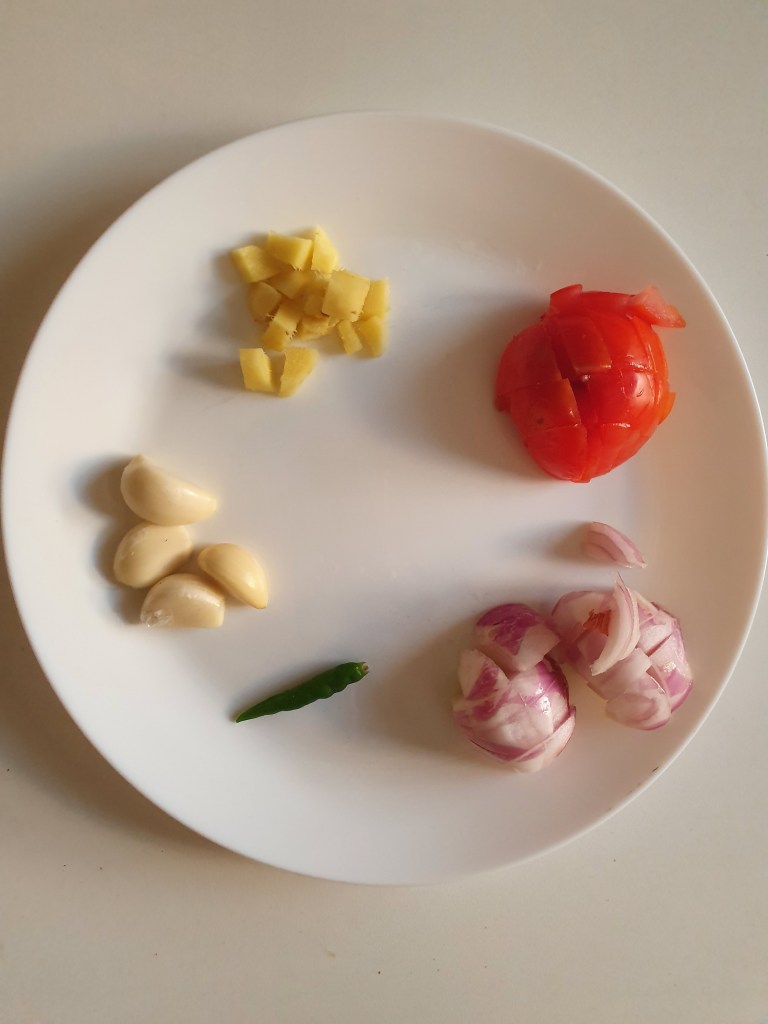
Cut the chicken into fairly big pieces and make slits on it. Grind the items listed under ‘ to grind’ and keep it aside. To it, add yogurt, salt and pepper powder. Mix well.
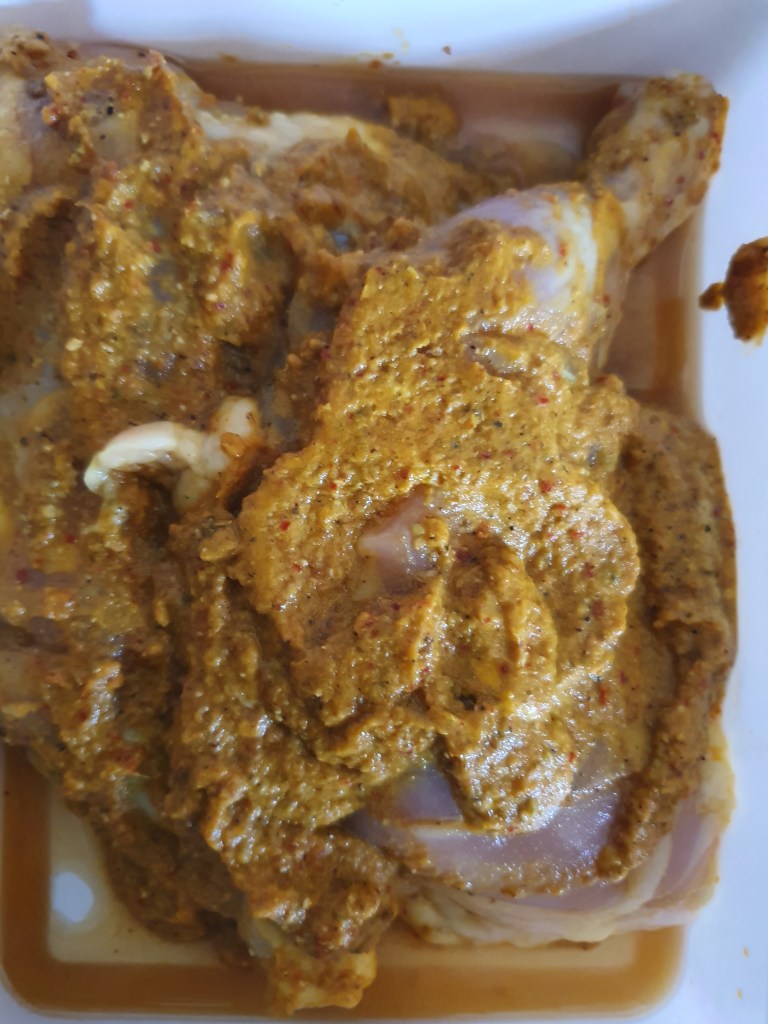
Spread this misture on the chicken pieces and marinate it for 6 – 7 hours preferably or 2 hours, in case you are short of time.
Take a pan and heat it. Add 1/2 cup of water to it and place the chicken pieces on it and cook on low heat for 5 -6 minutes. Turn and cook the other side of the chicken. When the chicken is almost cooked and the liquid evaporates, take the chicken pieces out.
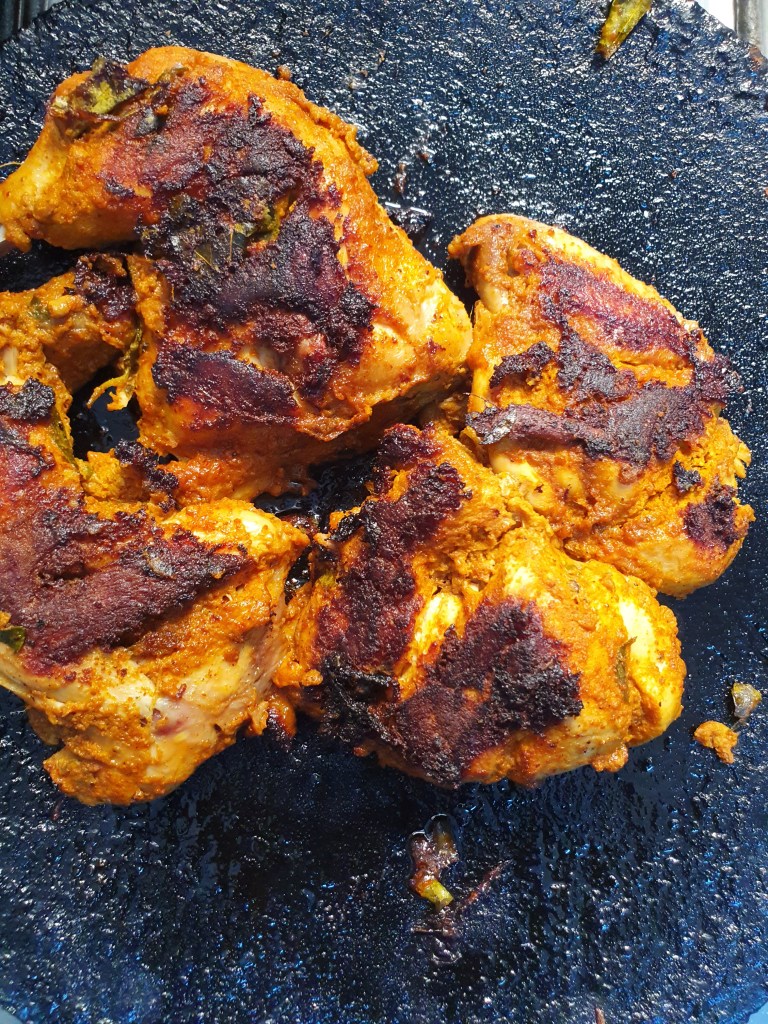
Heat another pan. Add 1/2 tbsp of oil and place the chicken pieces on it and cook on low heat for 5 – 7 minutes. Flip to the other side when done. Make sure that it does not burn.
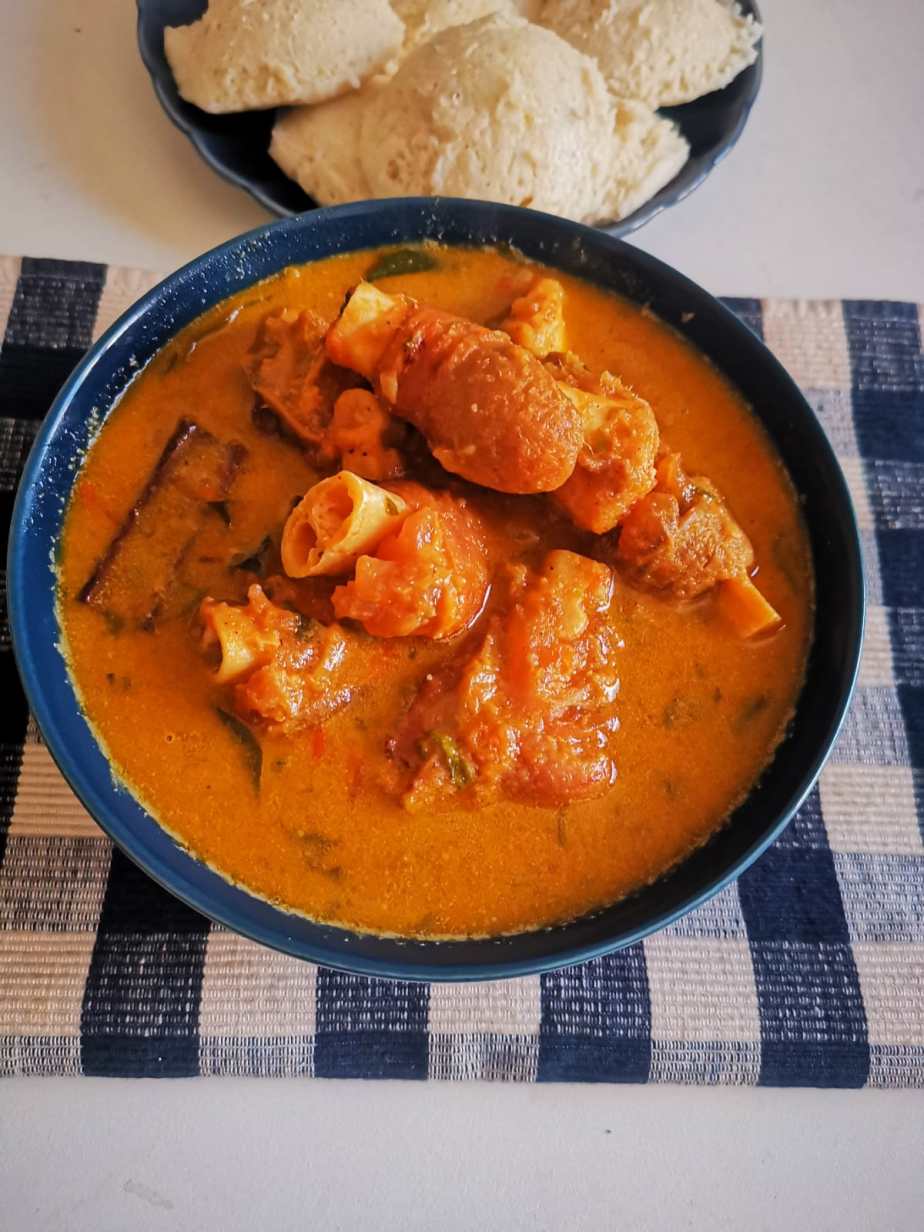
Paaya means ‘legs’ in Urdu language. A bone broth full of flavour which helps strengthen bones, joints and nails. It is served for breakfast and as part of lavish meals or festive occassions. It is made extensively in the winter months because of the wonders it can do to your immune system.
Ingredients:
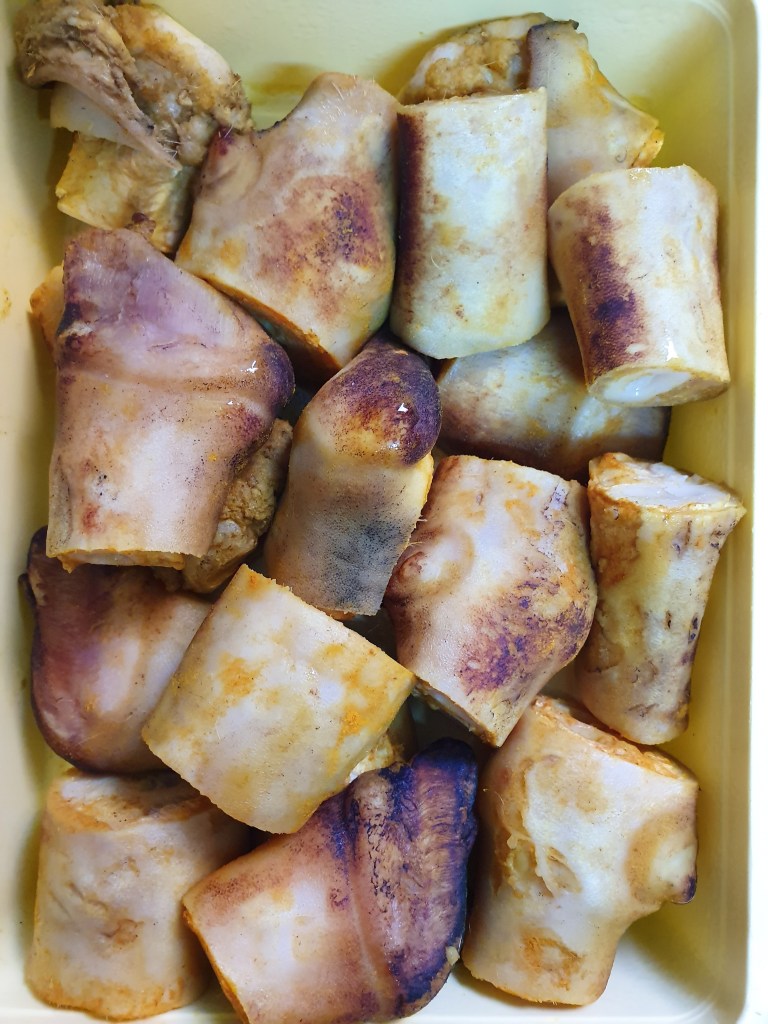
Paya (Lamb trotters) -4 cut into 12 pieces
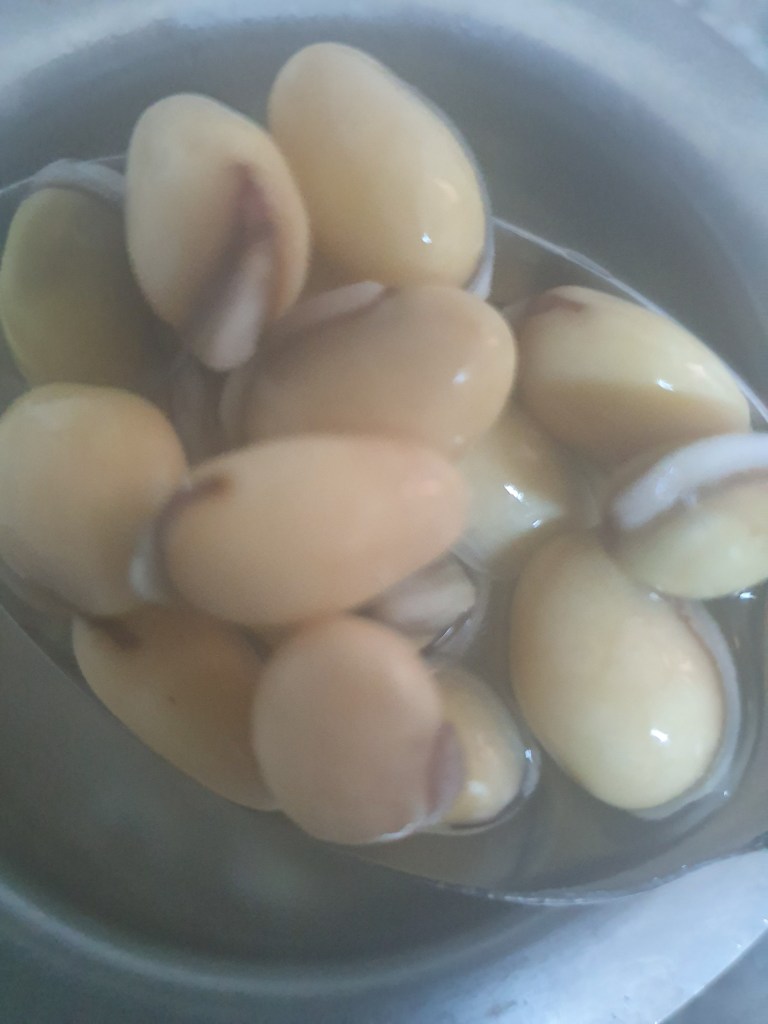
Mochai (dried beans) – 1/4 cup
Onion – 1 1/2 big
Tomato – 1 1/2 big
Cinnamon – 1/2 inch piece (2)
Cloves- 2
Bay leaf – 1
Curry leaves – 7 or 8
Mint leaves – 2 tbsp chopped
Coriander leaves – 2 tbsp chopped
Roasted green chillie paste – 2 tbsp
Chillie powder – 1/2 tsp + 1/2 tsp
Turmeric powder – 1/2 tsp
Grated Coconut – 2 tbsp (ground to a fine paste)
Fennel seeds/Saunf – 1/2 tsp
Ginger-Garlic paste – 1tbsp + 1 tbsp
Water – 4 cups
Preparation:
Soak the dried beans(mochai) in water for 8 hours. The next day, wash it again and pressure cook it with 1/2 tsp salt and 1 1/2 cups of water for 2 whistles. It should not become too mushy when cooked. Reserve the water and do not throw it away. (Use it to make the lamb trotter curry).
Wash and clean the mutton paya/trotters well. Add a tsp of turmeric powder and keep it aside.
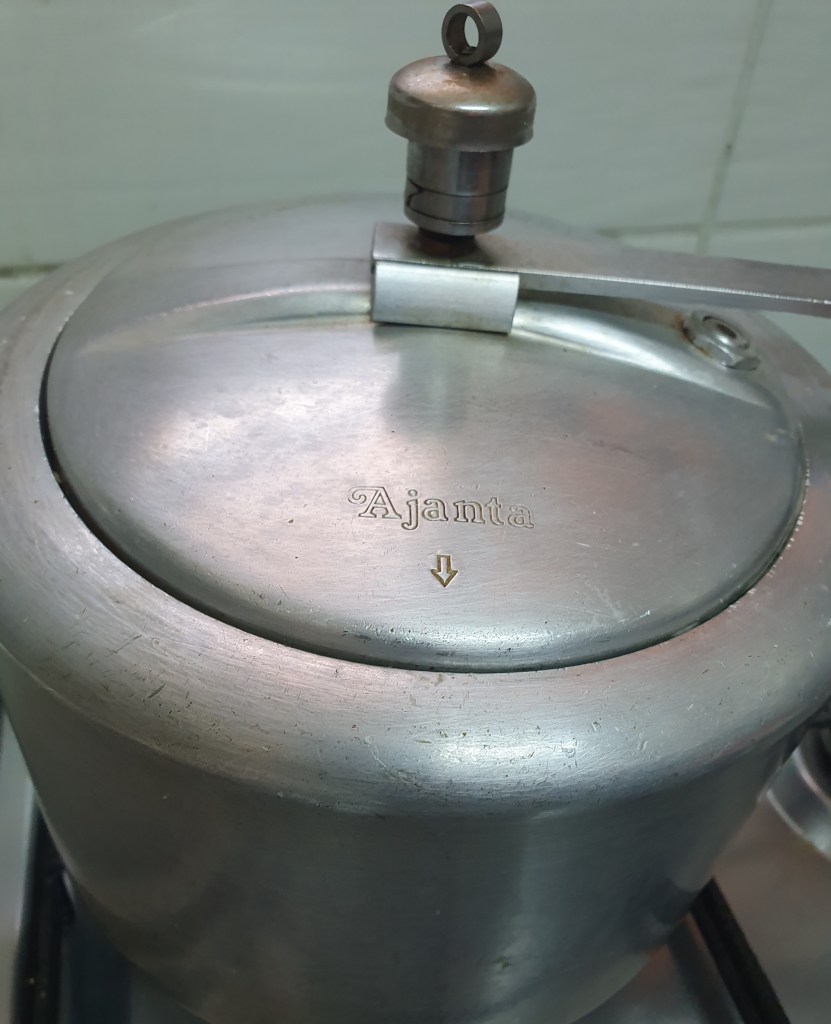
Take a pressure cooker. Place the trotters in it alongwith 1 tbsp ginger-garlic paste, salt and 1/2 tsp chillie powder. Add 4 cups of water (add the water in which the beans were cooked and measure it to 4 cups ) and cook for around 1 hr 15 minutes on medium fire. (The trotters take a long time to cook but if it is tender, it may cook within an hour). Remove and check after an hour if it is cooked or else, cook for a longer time.
In a pan, heat a tsp of oil . Add 6 chopped green chillies and roast it well alongwith 1/2 tsp of saunf or aniseed. Grind it with a tbsp of water and keep it aside.
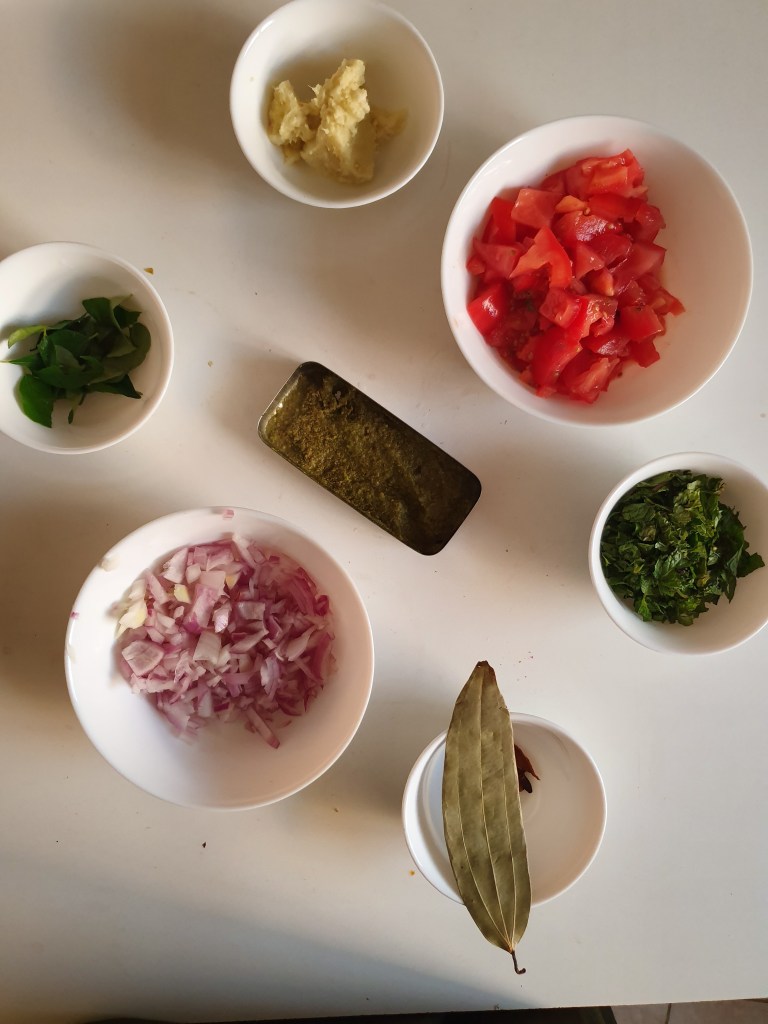
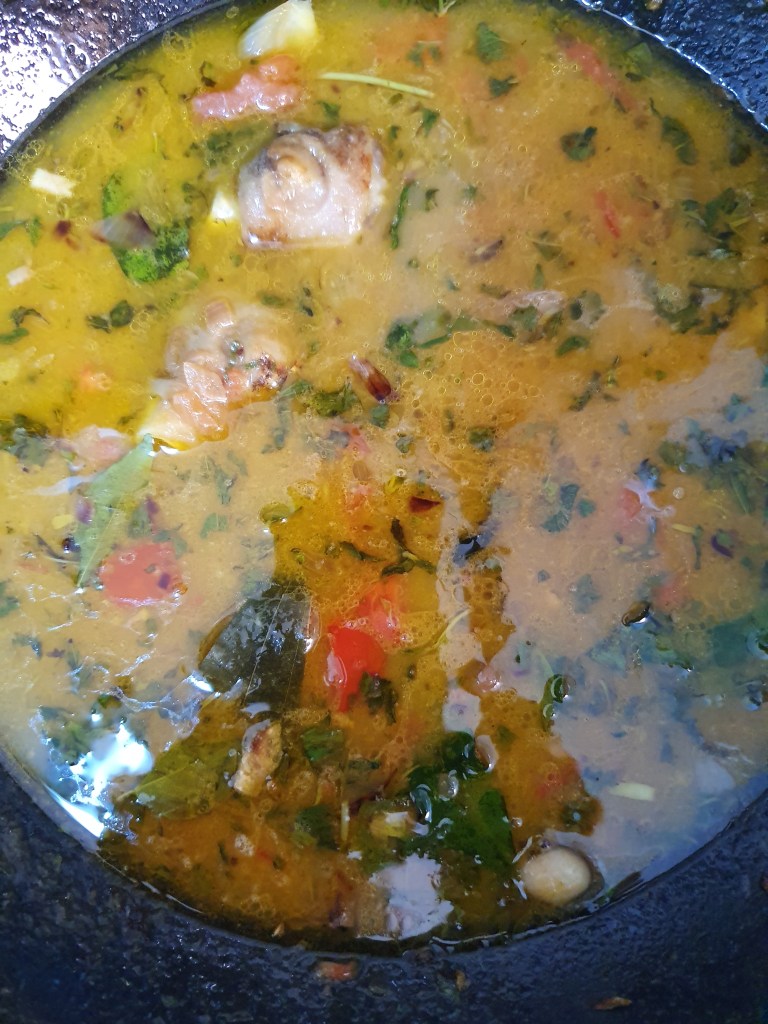
In the same pan, heat a tbsp of oil. Add the bay leaf, cinnamon, cloves, chopped onions and saute well. Add 1 tbsp ginger-garlic paste and saute well until the raw smell goes away. Next, add the mint leaves and coriander leaves and saute. Add in the tomatoes, ground green chillie paste, 1/2 tsp chillie powder and saute until it becomes mushy. Now, add in the cooked trotters/paya and the cooked beans and boil for 3-4 minutes. Boil for a longer time if the gravy is too watery.
Add the ground coconut paste and boil again for 4 – 5 minutes. Garnish with coriander leaves and serve hot with idlis or dosas.
A delicious lamb curry with the versatile spinach. A dish that you could make for your pot-lucks, house parties or game nights. The unique blend of spices, lamb and greens makes it a favourite all of at home. Unlike other lamb curries, ginger is not used in this recipe.
Ingredients:
Mutton – 1/2 kg
Small potatoes – 3 (boiled and peeled)
Palak – 1 bunch
Methi leaves – 2 small bunches
Onion – 2 big (chopped)
Tomatoes – 2 medium
Lime – 1/2
Water – 2 cups
To Grind:
Green chillies – 6
Kashmiri chillies – 5 (not spicy)
Cumin seeds – 1 tsp
Green Corianderleaves – 1/2 cup
Mustard – 1 tsp
Coriander seeds – 1 tbsp
Cardamom – 4
Cloves – 5
Cinnamon – 2 inch piece
Garlic – 1/2 pod
Salt to taste
Oil – 1 tbsp
Preparation:
Wash and clean the mutton and keep it aside.
Clean and chop the palak and methi leaves and keep it aside. Boil potatoes separately and dice them. Saute the diced potatoes in little oil until they are cooked. Remove and keep it aside.
Grind the items mentioned under ‘to grind’ and keep it aside.
In the same pan, add little oil and saute the onions until they are well browned. Add the tomatoes and saute for 2 minutes. Then, add the mutton pieces and fry until the masala dries up. Now, add the ground masala and saute until the raw smell goes away. Make sure it does not stick to the bottom of the pan and burn. When you start to get a nice aroma, add the chopped palak and methi leaves and saute until it is reduced to a pulp.
Add 2 cups of water and salt to taste. Transfer it to a pressure cooker and cook for 4 whistles and on low flame for 20 minutes or until the meat is tender.
Lastly, add the potatoes and juice of 1/2 lime to it. Serve hot with chapathi or rice.
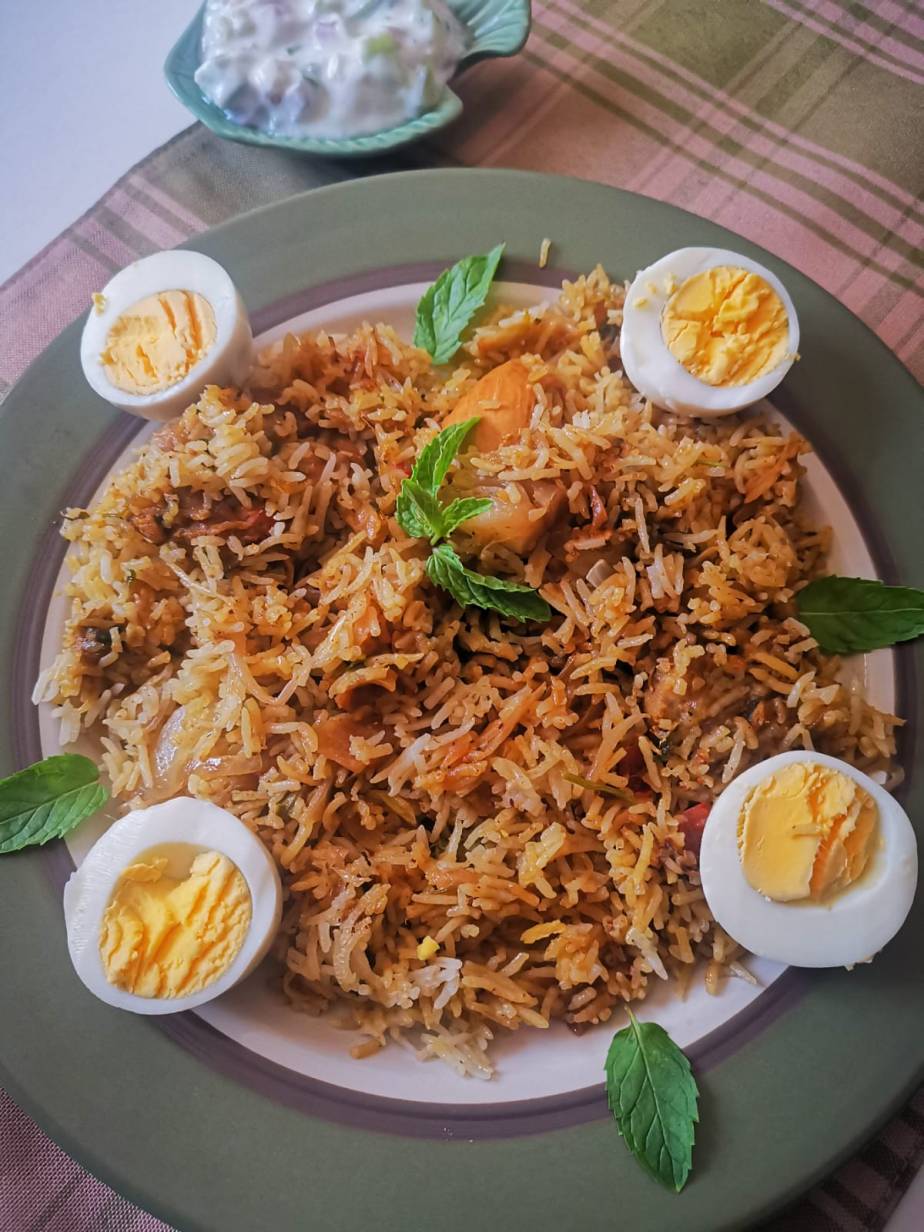
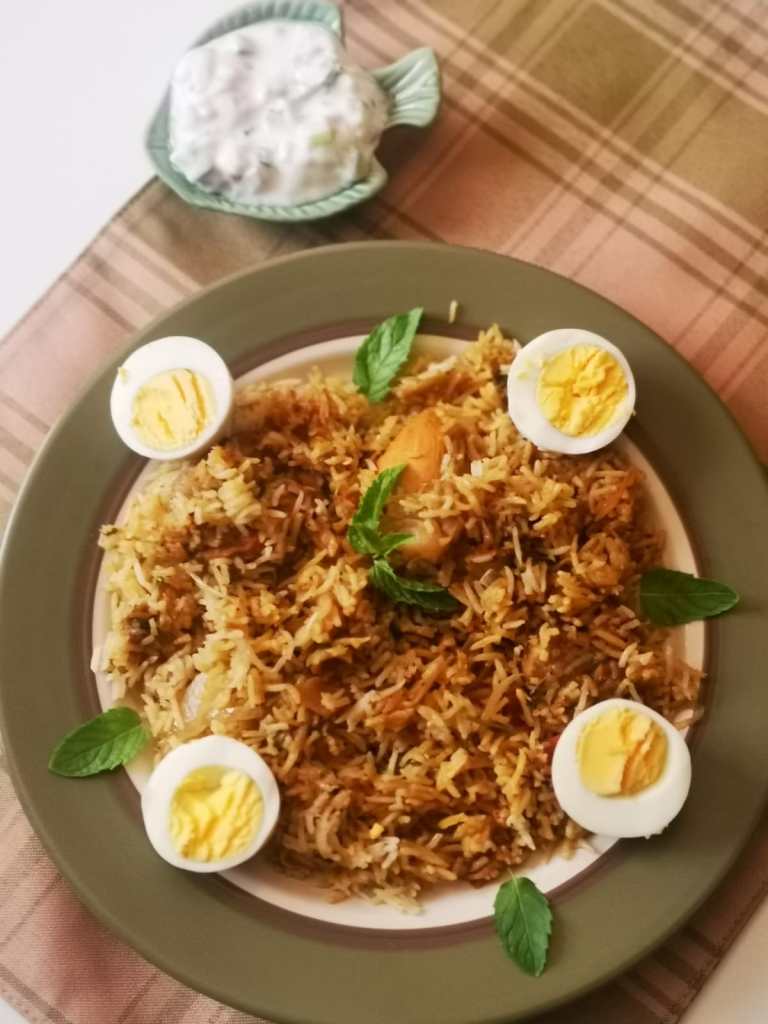
Biriyani is one of my favourite food and this recipe in particular which has been passed on from my grandmother to my mom and then onto me, is one of my favourites. Getting the right consistency of rice in the biriyani is the challenging part. This one is slightly different from all other biriyani recipes as the green chillies are roasted in oil with whole garam masalas and ground to a fine paste which makes it flavourful. Also, yogurt and lime juice are the key ingredients as compared to tomatoes in other biriyanis.
1
2
3
4
5
6
7
8
9
10
11
12
13
14
15
16
17
18
19
20
21
22
23
24
25
26
27
Ingredients:
Basmati Rice – 3 cups
Water – 4 1/2 cups
Lime juice – 1 tsp
Coconut milk powder – 1 tbsp or thick coconut milk – 1/4 cup
To grind (for chicken masala and rice)
Whole Green chillies – 10
Cloves- 4
Cardamom – 4
Cinnamon – 6 (1/2 inch pieces)
Aniseed/Saunf – 2 1/2 tsp
Oil – 1/2 tsp
For the chicken masala:
Onions – 4 big sliced
Yogurt – 4 tbsp
Chicken – 750 gmps
Turmeric powder – 1 tsp
Lime Juice – 1 1/2 tsp
Ginger garlic paste – 2 tbsp
Coriander leaves – half a handful
Mint leaves – half a handful
Tomato – 1 small
Red chillie powder – 1 tsp
Salt- to taste
Oil – 1 tbsp
Green chillie paste ground – 1/2 of the amount mentioned
Garam masala powder – 1/4 tsp
Water – 1/2 cup
For Rice:
Onions – 2 big (sliced)
Ginger garlic paste – 1/2 tsp
Green chillie paste ground – 1/2 of the amount mentioned
Cinnamon – 2 (1/2 inch piece)
Cloves – 2
Bay leaves – 2
Coriander Leaves – half a handful
Mint leaves – half a handful
Oil – 1 tbsp
Ghee – 1 tbsp
Preparation:
Clean the chicken, wash it well and marinate it with the yogurt, turmeric powder and 1/2 tsp salt and keep it aside for 30 minutes.
Wash the basmati rice well and soak it for 30 minutes in 6-7 cups of water.
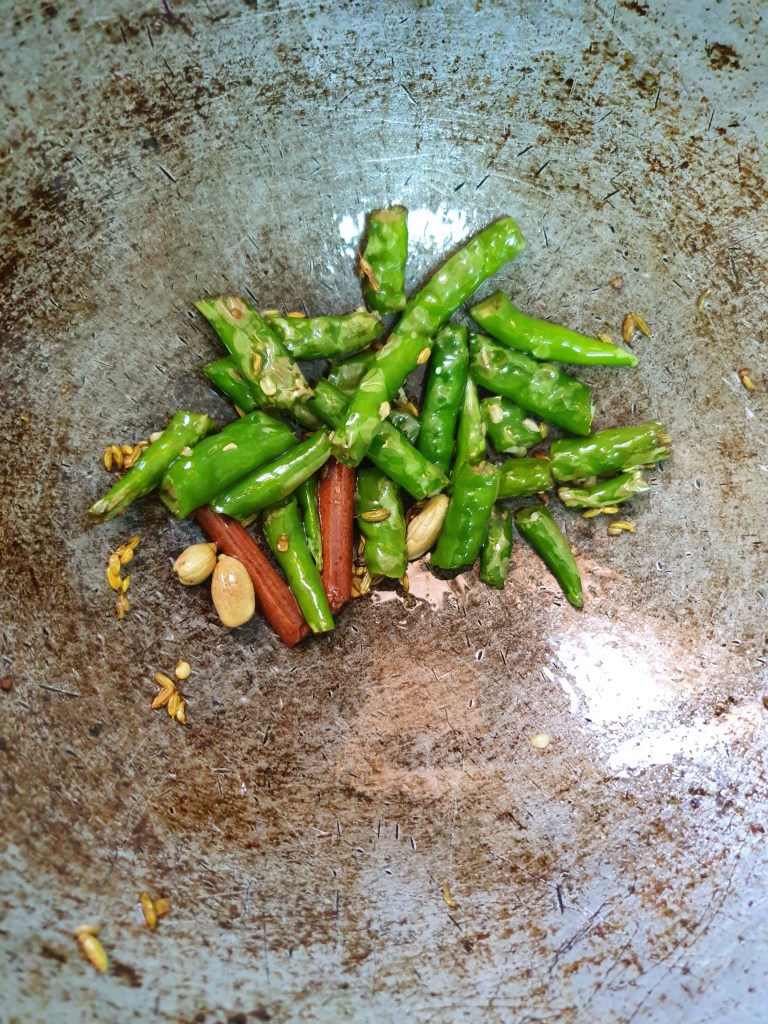
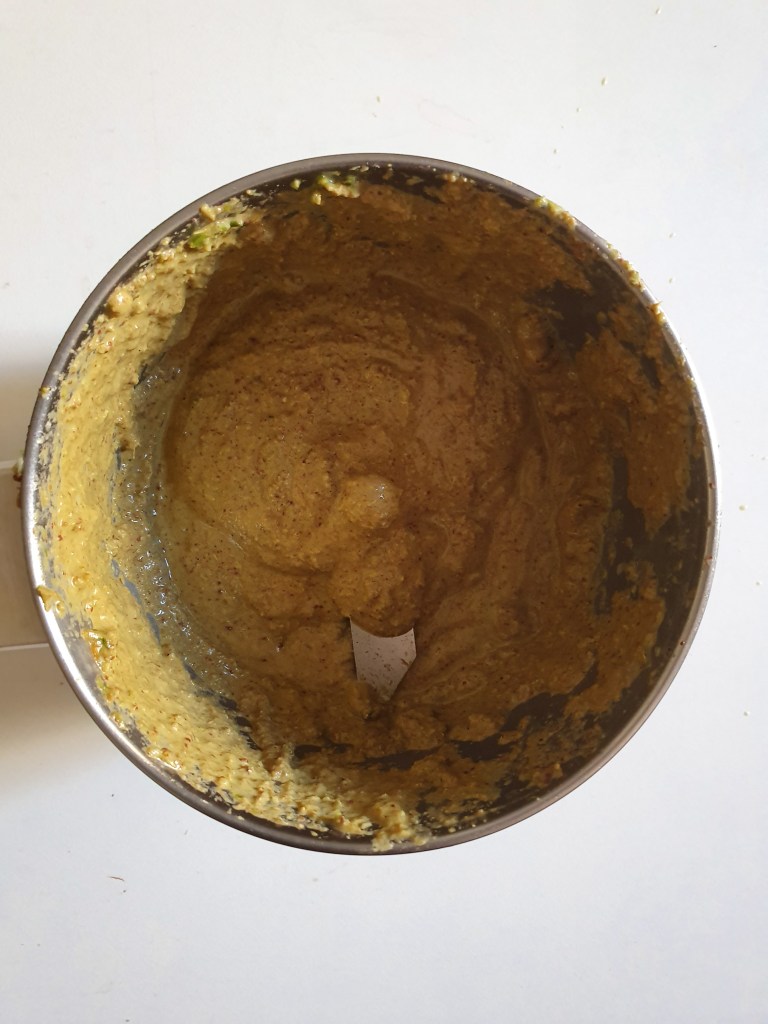
In a flat bottomed pan, add oil and heat it. Add the chopped green chillies and saute it for a minute (pic 2). Then add the aniseed, cinnamon, cloves and cardamom and saute it well for another 2 minutes (pic 3). Put off the flame, transfer it to a mixer (pic 4). Let it cool for 10-15 minutes. Grind it to a smooth paste (pic 5). Keep it aside.
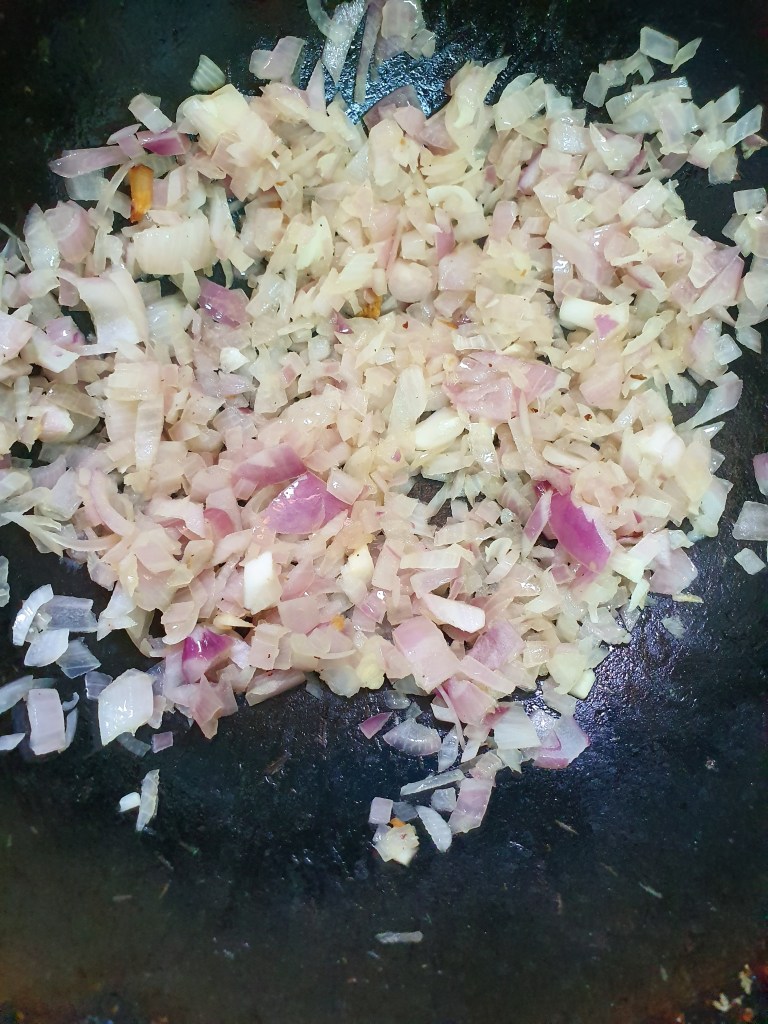
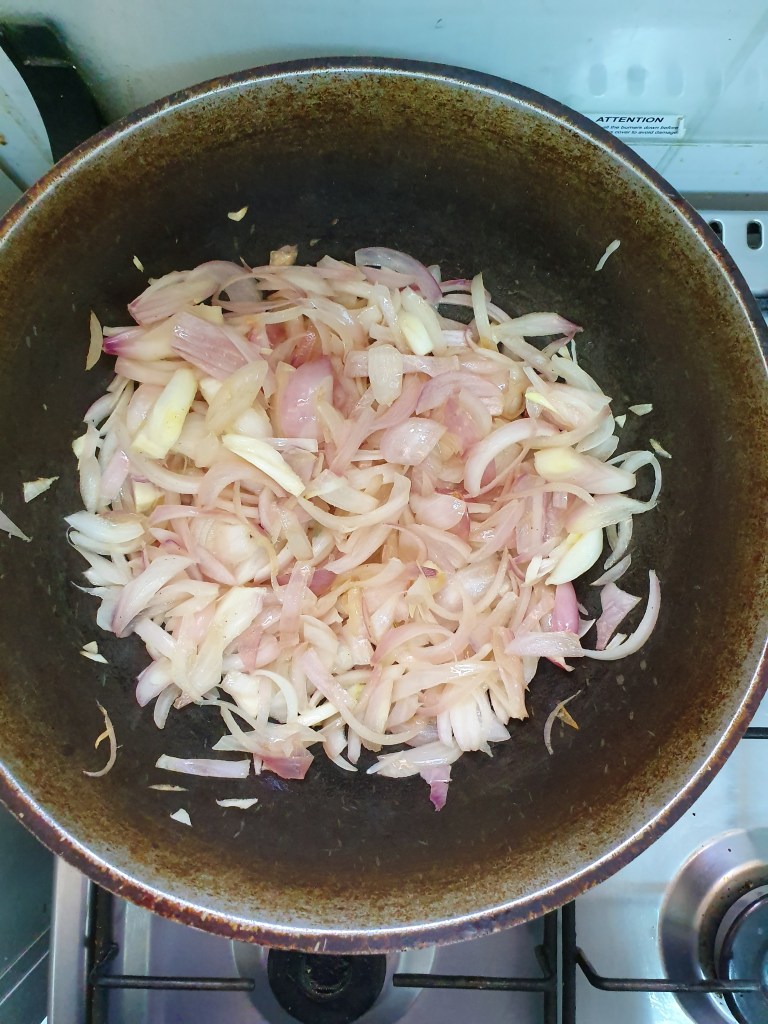
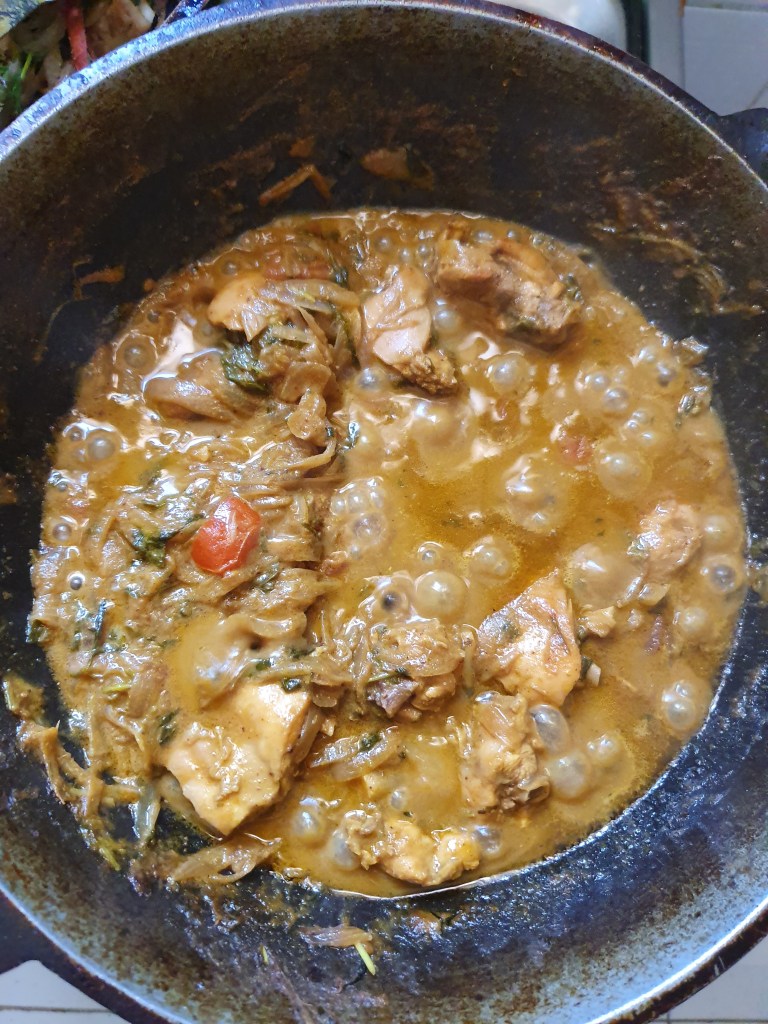
In the same pan, add oil and proceed to make the chicken masala. When the oil is hot, add the onions (4 sliced) and saute till it becomes translucent (pic 7). Add the garam masala powder and then add the ginger garlic paste and saute well until the raw smell goes off (pic 8). Next, in goes the half of the ground chillie paste (pic 10) and the coriander and mint leaves (pic 11). Saute it well for 3 minutes and add the chopped tomato, lime juice and the red chillie powder (pic 12). Saute until it becomes mushy. Now, it is time to add the marinated chicken (pic 13). Stir it well, lower the flame to low and close and cook adding 1/2 a cup of water (pic 14). Adjust the salt seasoning . After 7 minutes, open and saute again until it has a masala consistency and is not watery (pic 15). Put off the fire and keep it aside.
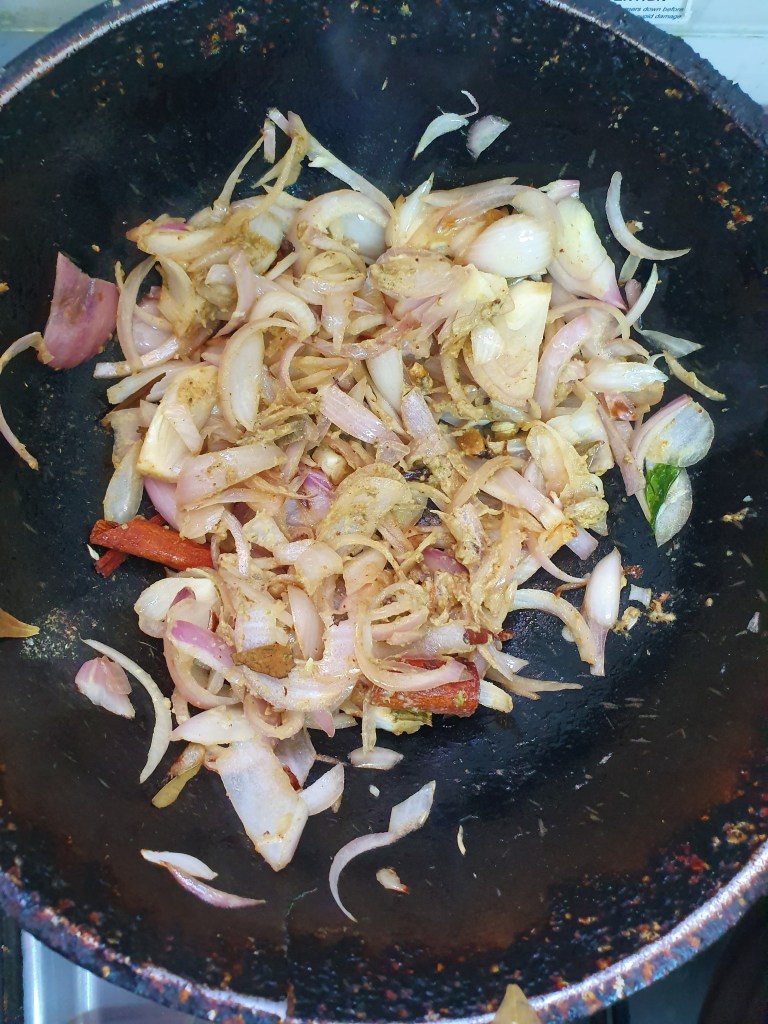
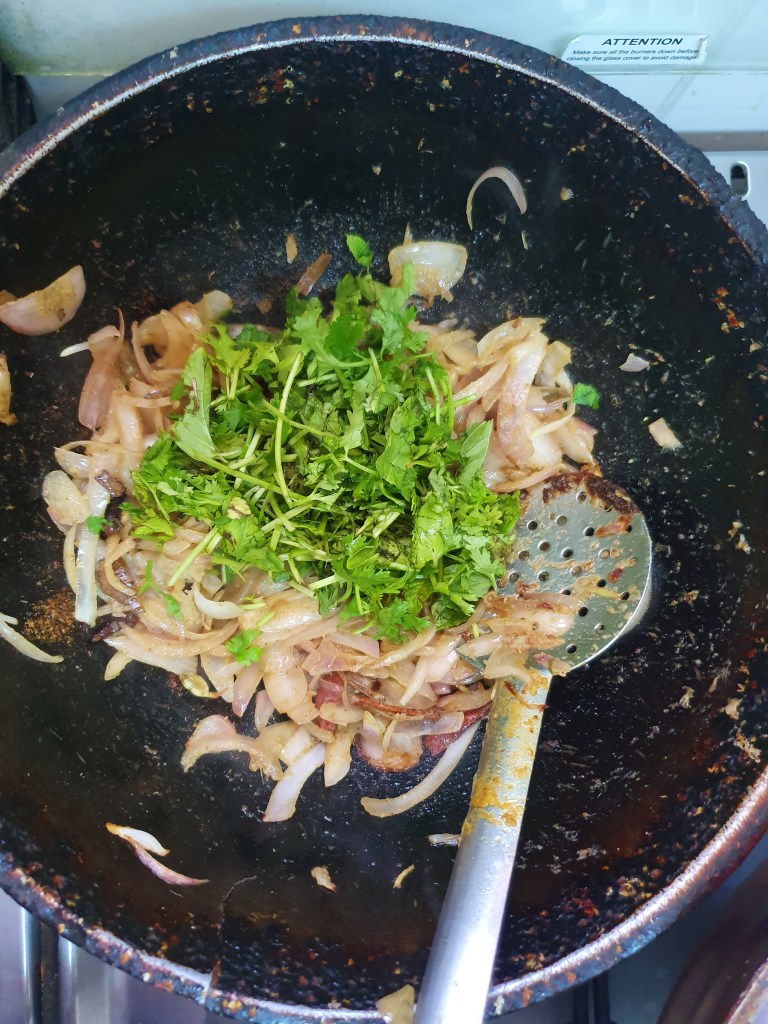
Now, proceed to cook the rice. In another flat bottomed wide pan, heat oil and ghee. Add the whole garam masala (cardamom, cloves, cinnamon and bay leaves) and when it starts to become brown, add the sliced onions (2) and saute well (pic 17). Then, add the ginger garlic paste and half of the green chillie paste and saute again until the raw smell disappears. Add the mint leaves and coriander leaves and saute again (pic 18). Drain the basmati rice and add it to the pan (pic 19) and gently saute it once or twice very gently making sure that the grains do not break (pic 20).
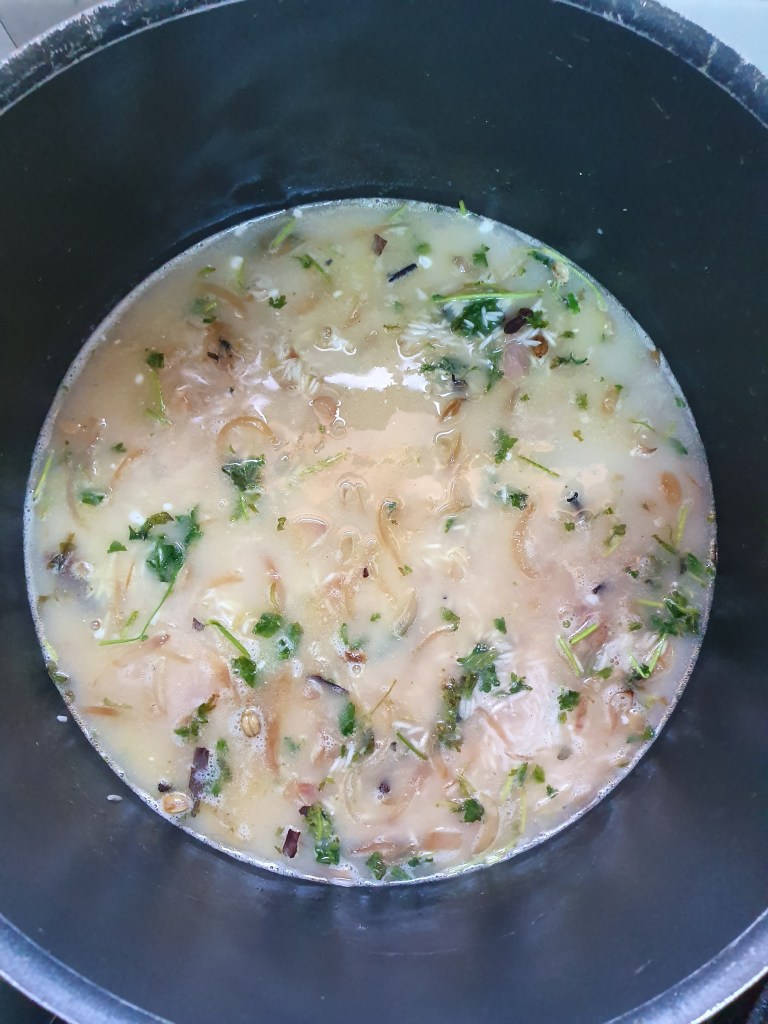
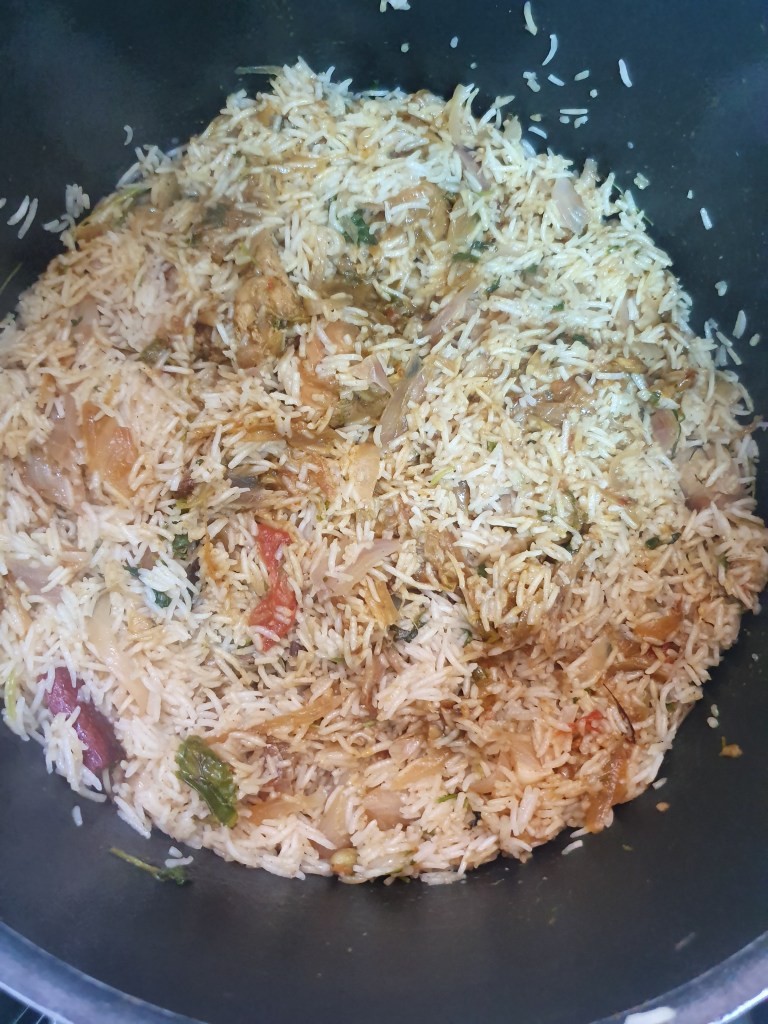
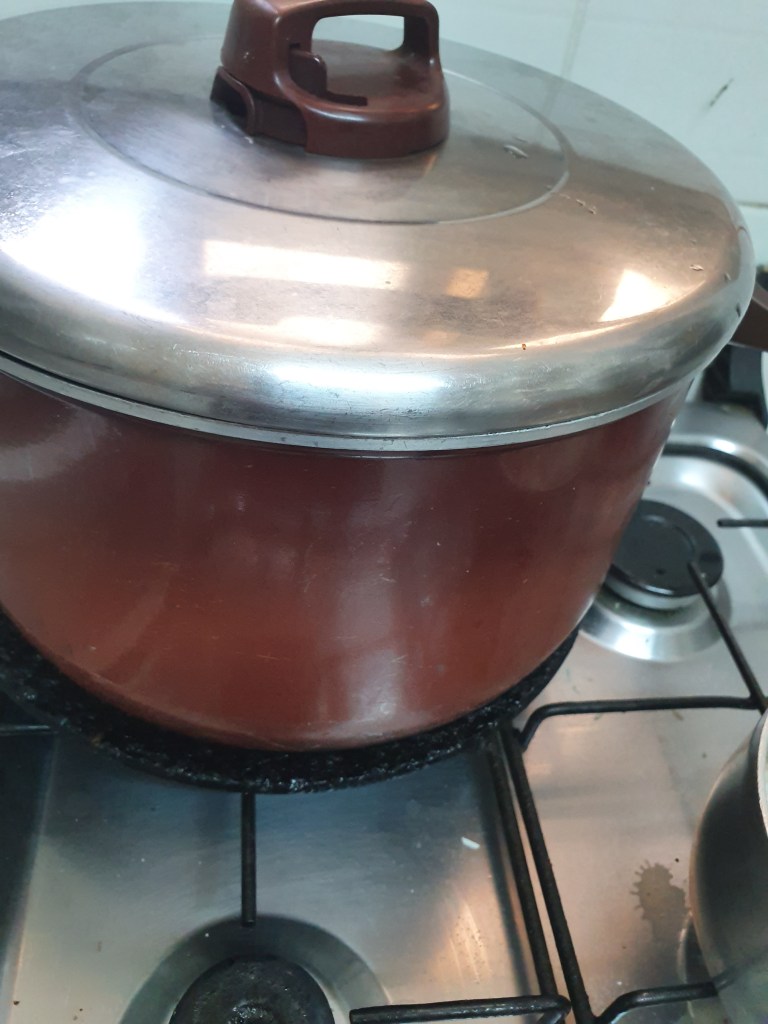
Add 4 1/2 cups of boiiling water and coconut milk powder (or thick coconut milk) to the rice (pic 21). Adjust the salt, add lime juice and close the lid (pic 22) and let it cook on high for 5 minutes (pic 23). When the grains are 3/4 cooked (pic 24), add the chicken masala to the rice (pic 25) and gently mix well to combine. At this point, heat a cast iron tava and place the pan on top of it (pic 26). Close tightly and reduce the flame to slow and cook for 20 minutes. Do not be tempted to open it but make sure the flame is kept low.
After 20 minutes, open and check if the rice is cooked. If not, close and keep it for some more time.
Serve the biriyani onto a serving dish and garnish it with coriander leaves.
A healthy alternative to the traditional dish from Karnataka, made with oats, lentils and veggies. This dish has to be eaten hot and if left to become cold, will not taste good.
Ingredients:
Oats – 1 1/4 cup
Tur dal – 1 cup
Water – 4 cups
Peas – 6 to 7 pods
Carrot – 1 small
Beans – 4 to 5
Shallots – 5
Potato – 1 small
Ghee – 2 to 3 tablespoon
Tamarind water – 1/4 cup
Bisi bela powder – 4 tbsp or more if you want spicier
Jaggery – 1/4 tablespoon
Cashews – 10 – 12 pieces
Salt to taste
Seasoning:
Red chillies – 2
Curry leaves – 1 sprig
Mustard seeds – 1 tsp
Urad dal – 1/2 tsp
Home made powder
Oil – 1 tsp
Coriander seeds – 3 tsp
Urad dal – 2 tsp
Bengal gram/Channa Dal – 1 tsp
Cinnamon – 2 inch stick
Cloves – 2
Dry red chillies – 7 or 8
Khus khus – 1/2 tsp
Cumin seeds/Jeera – 1/4 tsp
Pepper – 1/4 tsp
Dry coconut (Copra) – 1 or coconut – 1/2
Add dal with 4 cups of water in pressure cooker and cook
Pulse the ingredients for the powder finely in a mixie.Cook the veggies in a pan.
Bisi bela baath powder:
Heat 1 tsp of oil and saute coriander seeds, jeera, pepper, bengal gram dal, urad dal, fenugreek seeds, cardamom, cinnamon, cloves and red chillies.
Saute until dal starts to change color. Add khus khus and saute for few seconds on low heat.
Add the dry coconut and saute for few minutes on low heat, stirring continuously. Or if coconut is used, it is to be roasted slightly and then powdered alongwith the other ingredients.
Turn off the heat and leave it to cool and powder it coarsely.
Preparation:
Wash dal first and cook it in pressure cooker with water for 2 whistles and keep it on low flame for 10 minutes. Put off the flame and then, open the cooker after it is cooled, mash it a little and close and keep it aside, once the dal is cooked.
Heat 1 tsp ghee. Add shallots, beans cut into 1/4 inch pieces, peas and carrot sliced small and saute for some time. When it is cooked, add tamarind water and jaggery powder.
Let it boil until raw smell leaves. Add bisi bele bath powder (I use home made powder).
Let it boil for 2 minutes. Add the mashed dal and stir well. Then add the oats and cook it well. Make sure to stir as it may turn lumpy. Keep it on slow fire for about 3 -4 minutes. You may add 1/4 cup hot water if it becomes too thick.
Heat a tbsp of ghee and fry cashews until golden, remove. In the same kadai, add the seasonings listed under ‘seasoning’ and let it splutter.Add the seasonings also to the rice and dal. Mix well and serve hot with a tsp of ghee. Garnish with coriander leaves.






































 Meal Haven