

A simple recipe which can be made using items available in your pantry. This curry acts as a good stomach cleanser and is good for digestion too. We make this quite often and can be prepared when you do not have any vegetables at home.
It is best served with rice and any poriyal of your choice.
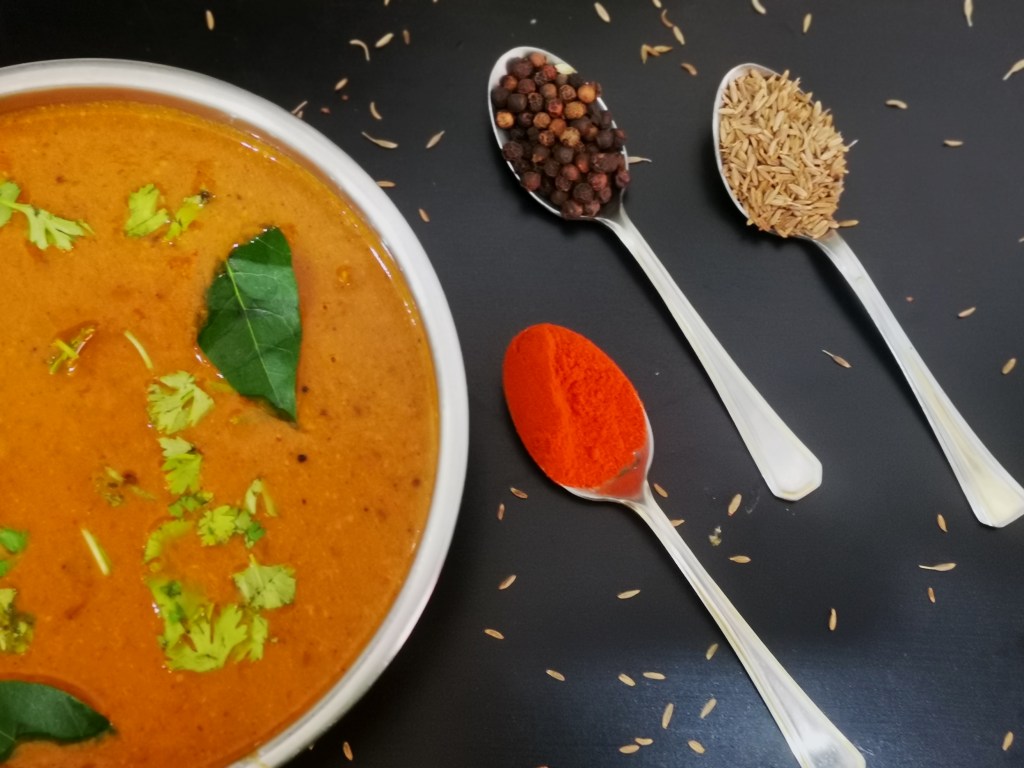
ozedfCO_vivi

Soak a small piece of tamarind in water for 15 minutes 
Saute shallots, jeera and pepper in oil (coconut need not be sauteed) 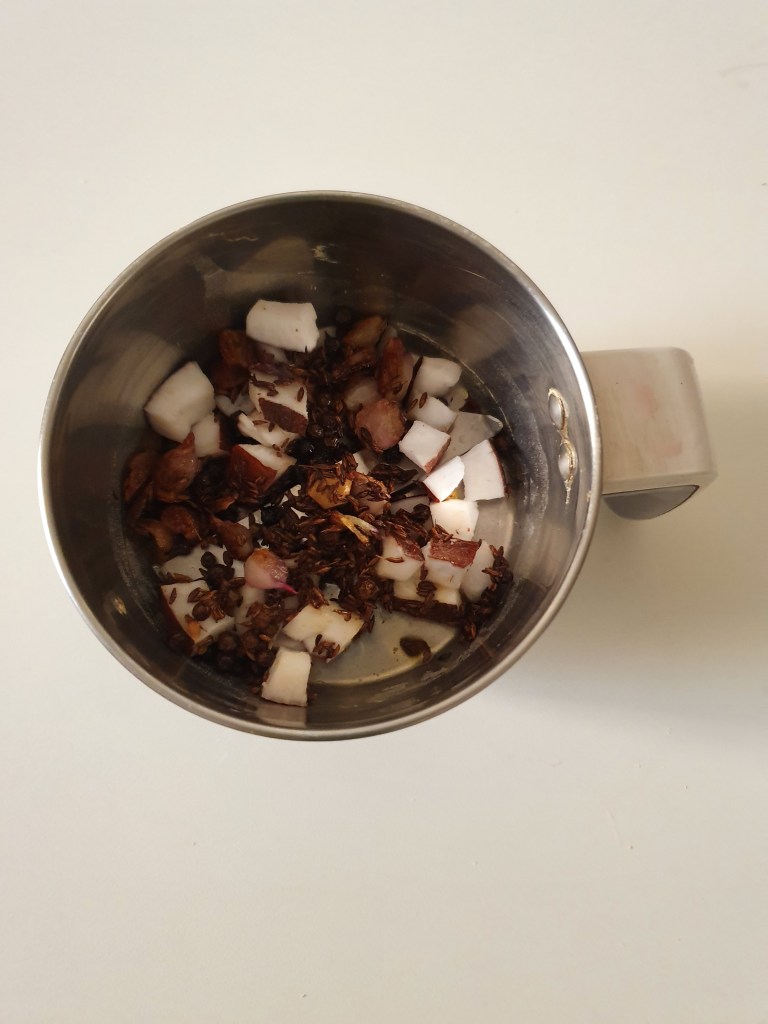
Grind it to a fine paste with coconut 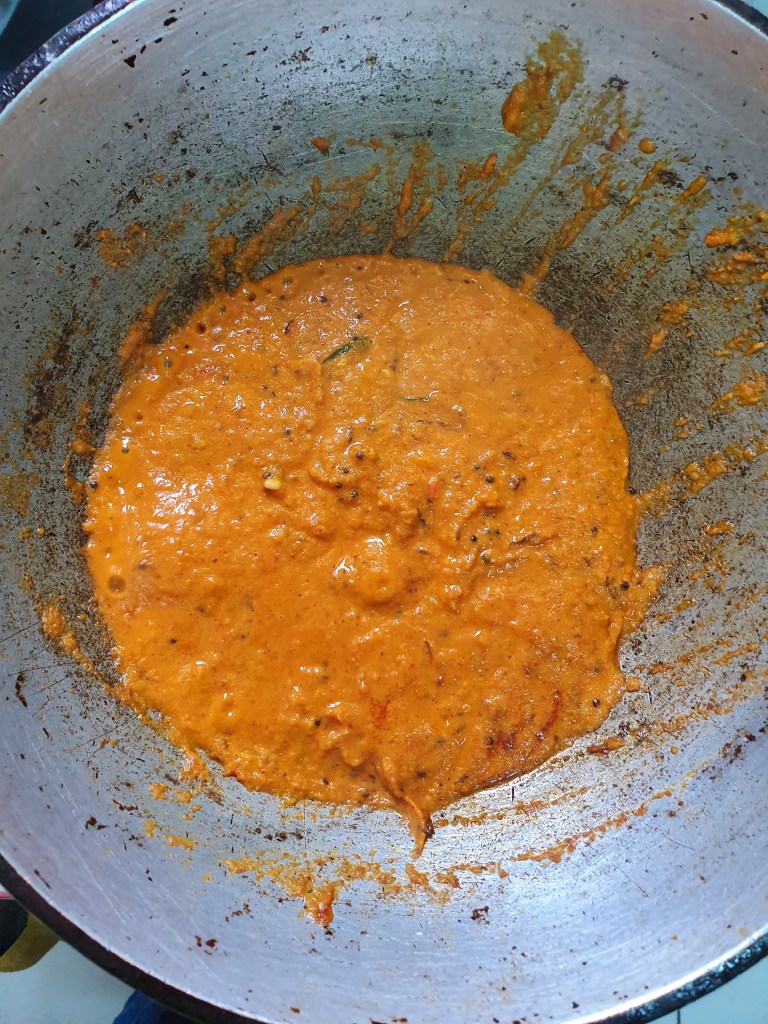
Add the paste to the pan and add the chillie powder and sambar powder
Ingredients:
Onions – 2 medium (finely cut)
Tomato – 2 medium (finely cut)
Red chillie powder – 1/2 tsp
Sambar powder – 1 tsp
Tamarind – a small ball
Water – 1/4 cup (for soaking tamarind)
Water – 1 cup
Gingelley oil – 1 tbsp or any other cooking oil
To grind:
Oil – 1/2 tsp
Shallots – 6
Jeera/Cumin seeds – 1 – 1 1/4 tsp
Peppercorns – 3/4 tsp
Coconut pieces – 1 1/2 tbsp
Water – 2 tbsp
For Seasoning:
Mustard seeds – 1 tsp
Udad dal – 1/2 tsp
Fenugreek/Methi seeds – 1/4 tsp
Jeera/Cumin seeds – 1/2 tsp
Curry leaves – 1 sprig
Preparation:
Soak the tamarind in 1/4 cup of water for 10 minutes and squeeze it well. After 10 minutes, remove the water and keep it separately.
In a pan, add 1/2 tsp oil . Wait till it becomes hot and add the peppercorns and jeera. Do not overburn the jeera or the taste may turn bitter. Next, add the shallots and saute for 2 minutes. Turn off the flame and keep it aside. When it becomes cold, transfer to a mixer and grind it alongwith coconut and 2 tbsp of water to a fine paste.
In another pan, add oil. Add the mustard and when it starts to splutter, add the udad dal, methi seeds and jeera. Add the finely chopped onions and curry leaves and saute till it becomes golden in colour. Then, add the tomatoes and keep stirring until it becomes pulpy and a paste. Now, add the ground paste, chillie powder, sambar powder, tamarind water and salt. Also, add 1 cup of water and let it boil on medium flame for 6 -7 minutes until the raw smell goes off.
Garnish with coriander leaves and serve with rice and any vegetable poriyal/thoran.
Note: For a more authentic taste, use gingelley oil. If you have vadagam, you can use it for seasoning instead of the items mentioned under ‘seasoning’.
 Meal Haven